Why Autonomy-First Men Flinch at Faith
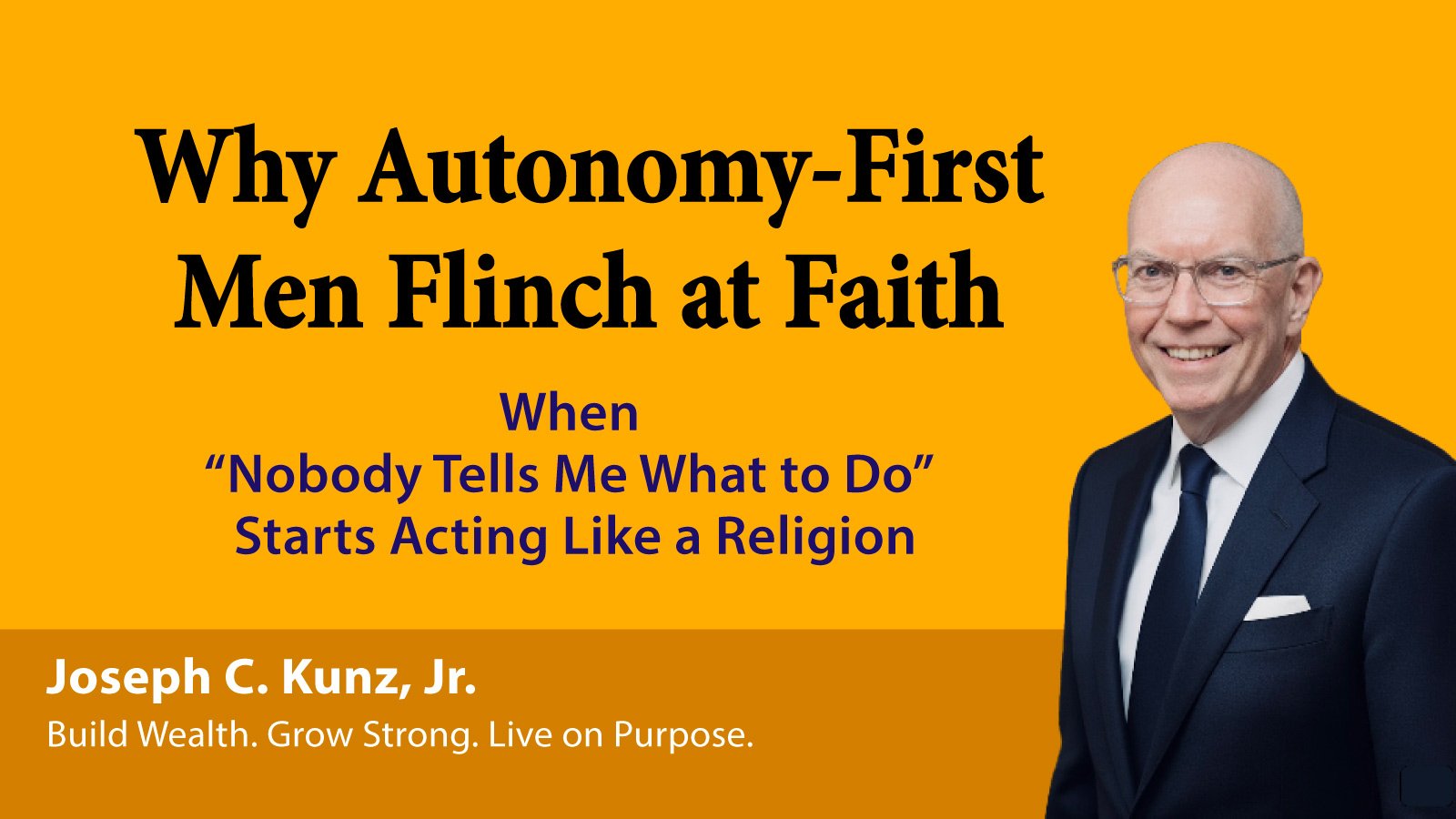
Autonomy-first thinking treats self-rule as sacred, so it flinches at faith—because faith begins where autonomy ends: surrender, obedience, and accountability to God. —Joseph C. Kunz, Jr.
When “Nobody Tells Me What to Do” Starts Acting Like a Religion
By Joseph C. Kunz, Jr.
Synopsis
This isn’t another generic complaint about modern culture, nor is it a soft plea for people to become a little more “spiritual.” In this essay, Joseph C. Kunz, Jr. argues that many men do not resist faith because they have disproven God, but because they have made autonomy sacred. When the self becomes sovereign, faith does not feel liberating. It feels offensive—because faith begins where self-coronation ends.
Kunz makes the case that autonomy-first thinking is not the same thing as strength, maturity, or self-government. It is a counterfeit freedom that treats appetite, preference, and personal will as final authority. That is why modern men often prefer spirituality without obedience, meaning without repentance, and a Creator without a Commander. But a life ruled by the self does not stay free for long. It becomes vulnerable to impulse, pressure, manipulation, and drift. What begins as rebellion against authority often ends as surrender to smaller gods.
The conclusion is simple: faith does not destroy freedom; it trains the only kind that lasts. A man becomes truly free not when nobody tells him what to do, but when he learns to live under truth, govern himself, and answer to God instead of appetite.
I. Introduction: The Most Popular God Is the Self
There is a reason faith feels offensive to the modern man.
Not because it has been disproven. Not because it is too old. Not because the modern world has finally outgrown it.
Faith feels offensive because it contradicts the religion modern man already practices.
The religion is autonomy.
Its creed is simple:
I belong to myself. I decide what is true. I decide what is right. I decide what I owe. I decide who I am. I decide what authority counts—if any.
That posture can sound brave. It can sound mature. It can even sound principled. But underneath it is a deeper claim: I am the judge.
And that is why the real conflict is not merely intellectual.
It is moral.
It is not finally a fight between reason and superstition. It is a fight between two rival thrones: the self as sovereign, or God as Lord.
Only one of them can rule a life.
II. Autonomy Is Not Self-Government
This is the first distinction that has to be made clearly: autonomy is not the same thing as self-government.
Self-government is disciplined. It means a man learns to rule himself under truth. He restrains appetite. He honors duty. He keeps his word. He answers to something higher than mood. Self-government is one of the conditions of freedom.
Autonomy-first thinking is something else.
It does not say, “I must govern myself well.” It says, “No one governs me.”
That sounds strong until life applies pressure.
Because the man who refuses all higher authority does not become free in any serious sense. He simply places himself under the strongest force inside him at the moment. Appetite takes over. Mood takes over. Ego takes over. Fear takes over. Lust takes over. Resentment takes over. Comfort takes over.
And once that happens, autonomy starts showing its real face.
It is not strength. It is self-coronation. It is not freedom. It is appetite wearing the costume of liberty.
A man who cannot say no to himself is not independent. He is undisciplined.
And undisciplined men do not remain free for long. They become easy to predict, easy to flatter, easy to steer, and easy to manage. The machine loves men like that. The crowd loves men like that. Algorithms love men like that. A man who will not bow before God usually ends up kneeling before smaller gods with better branding.
That is the irony autonomy never advertises.
III. Why “Spirituality” Remains Popular
This is why so many autonomy-first men do not call themselves atheists.
They call themselves spiritual.
They want some sense of depth. Some language of meaning. Some atmosphere of mystery. Some feeling that life is bigger than materialism. But they do not want repentance, obedience, correction, or moral authority. They want transcendence without surrender.
So they say:
I believe in something. I’m on my own journey. I’m not religious. I think there’s a higher power.
Notice what that gives them.
It gives them comfort without authority. Meaning without obedience. Mystery without submission. A Creator without a Commander.
That is why spirituality is so popular in a culture drunk on autonomy. It lets a man feel deep while remaining in charge. He keeps the language of the sacred without giving up the throne.
But faith is not self-designed spirituality.
Faith is not the self making a god in its own image. Faith is the self answering to God as He is.
And that answer includes the one word modern life cannot tolerate:
Obedience.
IV. Why Autonomy-First Men Really Resist Faith
The autonomy-first man does not flinch at faith because he is too intelligent for it.
He flinches because a real God would have claims on him.
Faith does not merely say that life has meaning. It says you are accountable. It says you must repent. It says you must forgive. It says you must tell the truth. It says you must restrain yourself. It says you must answer for your life.
That is where the pressure becomes personal.
An autonomy-first man can tolerate a useful religion. He can tolerate moral language. He can tolerate a vague Creator. He can tolerate “values.”
What he cannot tolerate is a King.
Because a King can say no.
No to appetite. No to ego. No to self-invention. No to revenge. No to lust. No to cowardice. No to the crowd. No to the lie a man tells himself when he wants permission more than truth.
And that is the point of collision.
The real issue is not whether faith makes a man feel inspired. The real issue is whether he is willing to stop acting like he is the final authority in his own life.
That is why so many men say they are open to religion as long as religion stays useful, symbolic, or therapeutic. They want help, not rule. They want support, not surrender. They want a god who serves their emotional life, not a Lord who governs their moral life.
Useful religion is still under their authority.
A true God is not.
V. What Autonomy Produces in a Man
Here is the lie autonomy tells: if no one rules me, I will finally become myself.
That sounds appealing. It is also false.
When God is removed as moral authority, something else always takes His place. Usually it is not reason. Usually it is not principle. Usually it is not some heroic form of disciplined independence.
Usually it is desire.
Feeling becomes the judge. Preference becomes truth. Impulse becomes identity. Comfort becomes law.
And that kind of life does not hold.
It does not hold in marriage, because vows cannot survive on appetite. It does not hold in fatherhood, because children do not need a man governed by mood. It does not hold in business, because discipline cannot survive where the self must always be indulged. It does not hold in suffering, because pain exposes every false god eventually.
A life built on self-sovereignty becomes fragile because the self was never designed to carry divine weight. The man who crowns himself king does not become larger. He buckles under a burden he was never meant to bear.
That is one reason so many modern people are anxious, unstable, and inwardly divided. They have been taught to worship the self while also asking the self to provide meaning, morality, identity, and salvation. The human soul breaks under that assignment.
Faith does not remove all difficulty.
But it does remove the lie that you are the center of reality.
And once that lie begins to die, strength can finally begin to grow.
VI. What Faith Actually Trains
This is where the essay must be clear, because many men hear all of this and assume faith means passivity, softness, or surrender in the worst sense.
It does not.
Faith does not destroy freedom. It trains the only kind of freedom that can survive pressure.
Faith teaches a man to govern himself. It trains him to say no to himself before life humiliates him for never having learned how. It forms restraint under temptation, courage under pressure, integrity when nobody is watching, humility when he is wrong, duty when he is tired, and forgiveness when bitterness feels justified.
That is not weakness.
That is power under authority.
The freest man in the room is not the man with no rules. It is the man who has learned to live under truth so deeply that he can rule his impulses instead of being ruled by them.
That is also why faith has always been a threat to manipulative systems. A man who answers to God cannot be easily bought, easily seduced, easily nudged, or easily reprogrammed. He may still struggle. He may still sin. He may still fall short. But he is no longer living as a servant of appetite or a disciple of the crowd. He has a higher allegiance.
And higher allegiance produces stronger men than autonomy ever will.
VII. Conclusion: Come Home—But Not as King
I am not writing this to sneer at autonomy-first men. I understand the appeal. I understand why modern men distrust institutions, manipulation, hypocrisy, and fake piety. Some of that distrust is earned.
But autonomy as a creed will still fail them.
It cannot save a man from himself. It cannot make him clean. It cannot make him brave. It cannot make him faithful. It cannot carry him through suffering without turning him bitter. It cannot teach him to govern himself because it has already made the self the judge.
Faith begins where that lie ends.
It begins when a man stops negotiating with truth. It begins when he stops pretending he is the judge. It begins when he bows—not to trends, not to branding, not to tribe, but to God as moral authority.
That is where real freedom begins.
Not the freedom to do whatever you want. The freedom to do what is right—even when it costs you.
Autonomy promises a throne. Faith gives a man a spine.
The man who will not bow before God does not stay free; he just kneels to smaller gods. —JCK
Read the Series in This Order:
We’re living in an age where contempt is mistaken for intelligence and “God talk” is treated like an academic hobby. This series calls that bluff. These essays aren’t about sounding smart—they’re about truth that forms a soul: humility instead of ego, obedience instead of self-rule, courage instead of comfort addiction. If you’re tired of the sneer and ready for faith that actually holds up, start here.
1. Disbelief Isn’t the Offense — Contempt Is
Doubt can be honest, but the sneer is a moral posture that corrodes truth, decency, and the virtues that hold society together.
2. When Intellectuals “Discover God” — What’s Missing?
Many elite “returns” stop at a safe, useful Creator, but real faith requires humility, reverence, repentance, and surrender.
3. Religion as a Tool: The New Elite Bargain
The new respectability of religion often comes with a bargain: “give us the benefits, but don’t demand obedience.”
4. Nudged by God — or Managed by the Machine?
“Nudging” is the polite language of control, but faith isn’t behavior management—it’s moral allegiance to truth that forms the soul.
5. God as a Theory Isn’t Faith
A costless “First Cause” may impress the mind, but faith begins when God stops being an idea and becomes an authority you obey.
6. Faith Isn’t a Theory — It’s Training
Faith isn’t mainly about cosmology—it’s training that builds endurance, integrity, restraint, and courage when life gets hard.
Faith isn’t proven by sounding smart; it’s forged in real tests—marriage, temptation, suffering, duty, and responsibility.
8. Why Autonomy-First Men Flinch at Faith
Autonomy worship makes the self the judge, so faith feels threatening—because faith begins where self-rule ends.
Start at #1, or pick any title that hits your nerve and jump in.
Related Book: Your Freedom Is Being Hijacked—And You’re Calling It “Autonomy”
“Autonomy” sounds brave. It sounds like independence. Strength. Self-rule.
But a lot of what passes for autonomy today is just a polished way of saying: Nobody tells me what to do—not even God.
And that’s the problem.
Because when you crown yourself king, you don’t become free. You become ruled—by whatever is loudest inside you: appetite, ego, resentment, fear, lust, comfort.
That isn’t freedom. That’s impulse with a diploma.
And here’s what makes it worse: the world loves autonomy-first men because they’re easy to manage. If you answer to nothing higher than yourself, you’ll eventually answer to the machine—the crowd, the algorithm, the pressure, the appetite, the latest approved opinion.
Faith threatens all of that because faith begins with one sentence modern life can’t tolerate:
I am not the judge.
That’s why this essay matters. Not as theory—as a warning. Because your kids don’t need a father who’s “authentic.” They need a father who’s steady. And steadiness doesn’t come from self-worship. It comes from self-rule. And self-rule begins with surrender to something higher than the self.
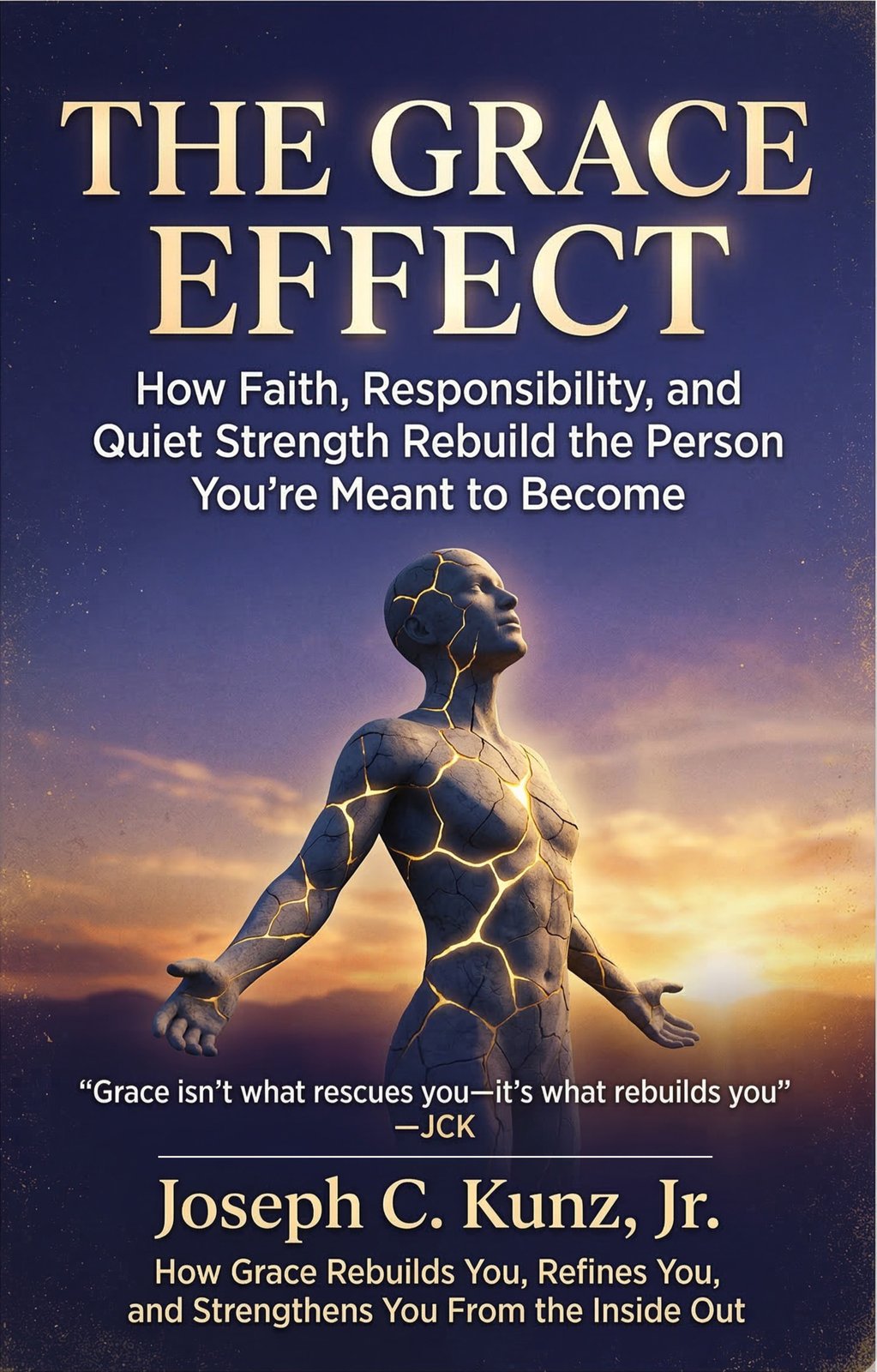
That’s why I wrote The Grace Effect.
Not to give you religious vibes. To build men who can govern themselves. Men who can endure suffering without turning bitter. Men who can resist corruption when compromise is easy. Men who can lead their families with courage instead of mood.
Because grace isn’t softness. Grace is strength under control. And in a world that calls self-indulgence “freedom,” you’re going to need that strength on purpose.
Read The Grace Effect here: Real freedom starts when self-rule replaces self-worship. The Grace Effect — Build Strength With Grace.
In Formation Now.