Religion as a Tool: The New Elite Bargain

When elites praise religion as “useful,” they often want its social benefits without surrendering to its authority—turning faith into a tool instead of a throne. —Joseph C. Kunz, Jr.
When Society Falls Apart, Faith Becomes “Useful”… but Still Not True
By Joseph C. Kunz, Jr.
Synopsis
Religion is becoming respectable again in elite conversation—not always as truth, but as a stabilizer. In this essay, Joseph C. Kunz, Jr. argues that many modern “pro-religion” voices don’t return to faith with humility, repentance, or reverence. They return with a bargain: We’ll take the benefits, but we won’t bow to the authority.
Kunz explains why this posture is seductive, why it quietly insults believers, and why a society can’t survive long on borrowed moral capital. Faith is not a coping tool or a social technology. It is allegiance to something real—and it demands a different posture than applause, analysis, or management.
If you only want religion for what it does, you don’t want God—you want a tool that keeps you in charge. —JCK
I. Introduction: When the Sophisticated Suddenly Get Serious
There is a strange shift happening right in front of us.
For decades, religion was treated as a private hobby. Something harmless. Something emotional. Something for simple people who needed comfort.
The credentialed class didn’t always attack faith openly. They didn’t need to. They just treated it as irrelevant. A quaint leftover from a less enlightened age.
Then the modern world did what it always does when it cuts itself off from moral roots.
It started to rot.
Families weakened. Communities thinned. Meaning evaporated. Freedom turned into appetite. And people who were promised “liberation” began to look exhausted, anxious, angry, and spiritually hungry.
Now something interesting is happening.
Some of the same people who once treated religion like superstition are suddenly saying religion is important. They’re calling it valuable. They’re calling it necessary. They’re reconsidering it in public.
In one sense, good.
Better to reconsider than to sneer. Better to read than to mock.
But there’s a problem believers are not allowed to mention without being accused of “judgment.”
A lot of this new respect for religion feels less like conversion and more like utility.
And that changes everything.
Because religion can’t be both a tool you use and a truth you obey. Sooner or later, you need to choose.
II. The New Respectability of Faith: We Need Religion Again Is Not the Same as God Is True
When fashionable people shift their views, they rarely admit they were wrong.
They say instead that “the conversation has evolved.” They say new evidence has emerged. They say they’ve matured.
But the evidence for faith’s power did not show up last Tuesday.
Faith has always formed people. It has always built families. It has always produced courage, restraint, and sacrifice. It has always taken suffering and given it meaning instead of letting it turn into bitterness.
So, what changed?
Not the evidence.
The desperation changed.
The modern experiment—life without God, without moral authority, without sacred obligation—has produced a society that is often comfortable, yet collapsing from the inside.
So, religion is welcomed back into polite society.
But not as truth.
As a stabilizer.
Not as something to kneel before.
As something to use.
This is the first missing thing in many elite rediscoveries: they want what religion does without granting what religion is.
They want the outcomes without the authority. They want the fruit without the root.
That sounds reasonable until you realize what it actually means:
They want to stay in charge.
III. The Elite Bargain: Give Us the Benefits, But Don’t Ask Us to Bow
Here is the bargain you can hear in the background of many modern religious “reconsiderations”:
• Religion keeps marriages together.
• Religion gives people meaning.
• Religion reduces chaos.
• Religion restrains the masses.
• Religion builds community.
Some of that is true.
But notice what’s absent.
There’s no reverence. No repentance. No confession. No surrender.
It’s not God is holy.
It’s religion is helpful.
It’s not I was wrong to dismiss the sacred.
It’s society needs this.
A man can admire religion the way he admires a well-designed bridge. He can even support it. He can say, This is good for people.
But admiration is not worship.
And support is not surrender.
This is why the “religion is useful” posture can quietly insult believers. Because it treats faith like a product.
As if the Church is a civic program.
As if prayer is a mental health technique.
As if God is a lifestyle upgrade.
But faith, as believers understand it, is not a human invention designed to make life smoother.
Faith is a response to something real.
And if God is real, then faith is not optional.
If religion is merely useful, then it has no authority.
If it has no authority, then it is not faith.
It is therapy with candles.
And therapy cannot command the human soul.
IV. The Tool vs. the Throne: The Test That Exposes Whether a Return Is Real
Here’s the clean way to separate genuine return from refined utility:
If God is a tool, you stay in charge.
If God is true, He is a throne.
A tool exists to serve your goals.
A throne exists to rule your life.
A tool never contradicts you.
A throne corrects you.
A tool helps you feel better.
A throne tells you the truth.
A tool is picked up when convenient.
A throne is honored even when costly.
That’s why the educated class often prefers a safe, abstract God.
A Creator. A First Cause. A cosmic architect.
A Creator is comfortable because a Creator can remain distant. A Creator can be discussed in a lecture hall and filed away as “plausible.” A Creator can be affirmed without obedience.
But the God of serious faith is not just an explanation.
He is an authority.
And the modern mind resists authority like a man resists a mirror when he knows he’s guilty.
That is why so many polished “returns” stop at the doorstep. They are willing to call God possible. They are not willing to call Him Lord.
And that’s not a minor detail.
That’s the whole thing.
Because faith does not begin with God might exist.
Faith begins when a man stops negotiating.
V. The Moral Capital Problem: You Can’t Live Forever on Borrowed Restraint
Here is the part many modern commentators don’t want to say out loud.
A society can coast on moral capital for a while.
It can inherit habits it no longer understands. It can benefit from virtues it no longer teaches. It can enjoy the stability produced by faith while mocking the people who still practice it.
But moral capital runs out.
You cannot mock discipline and still enjoy order.
You cannot undermine marriage and still get stable children.
You cannot celebrate indulgence and still get self-control.
You cannot treat truth as preference and still get trust.
This is why some elites are suddenly “pro-religion.” They can feel the foundations cracking.
But if the goal is merely to restore social order while leaving the soul untouched, the project will fail.
Because what faith builds is not only public stability.
It builds private virtue.
It builds the kind of man who tells the truth when lying is easy.
The kind of woman who keeps her vows when feelings shift.
The kind of parent who sacrifices without applause.
The kind of citizen who can govern himself—so he doesn’t need to be governed like an animal.
That is the quiet miracle of faith: it trains self-rule.
And any society that loses self-rule eventually invites external rule.
So yes, religion has social benefits.
But that’s because it is true.
Not because it is convenient.
VI. Welcoming the Latecomer Without Losing Your Mind: Charity Without Naïveté
Now let me say what needs to be said so cynicism doesn’t win.
People can change. Profoundly. Even late. Even after decades of mockery. Even after years of smugness.
Grace does not check a man’s résumé before it knocks.
So, believers should not sneer at late seekers. We should not demand instant maturity. We should not confuse awkward beginnings with bad faith.
But we also should not pretend that every elite appreciation for religion is a conversion.
Some men return because they encountered truth.
Others return because the world is collapsing and religion looks useful again.
The difference is revealed by posture.
Does the man stand over faith as an evaluator?
Or does he stand under God as a creature?
Does he speak as a manager of social outcomes?
Or as a sinner in need of mercy?
Does he want religion to stabilize others?
Or does he want God to rule him?
That’s the line.
And believers are not “judgmental” for noticing it. They are simply honest.
Because faith is not a tool for social engineering.
Faith is surrender.
VII. Conclusion: Faith Doesn’t Return as a Decoration
Religion is not a trend. It is not a cultural patch kit. It is not a public-health intervention for anxious societies.
God is either real—or He is not.
If He is real, then you don’t “use” Him.
You obey Him.
And if our society is truly rediscovering faith, then the rediscovery cannot stop at usefulness. It must move through humility, repentance, and reverence.
Because if the educated class praises religion only as a stabilizer, they will treat it like an instrument.
But if they return because it is true, they will treat it like a throne.
That is the difference between admiration and worship.
That is the difference between analysis and surrender.
That is the difference between a fashionable pivot and a changed soul.
Religion can’t be your tool and your truth at the same time. If God is real, He isn’t useful—He’s Lord. —JCK
The Series: Faith That Holds Up
We’re living in an age where contempt is mistaken for intelligence and “God talk” is treated like an academic hobby. This series calls that bluff. These essays aren’t about sounding smart—they’re about truth that forms a soul: humility instead of ego, obedience instead of self-rule, courage instead of comfort addiction. If you’re tired of the sneer and ready for faith that actually holds up, start here.
1. Disbelief Isn’t the Offense — Contempt Is
Doubt can be honest, but the sneer is a moral posture that corrodes truth, decency, and the virtues that hold society together.
2. When Intellectuals “Discover God” — What’s Missing?
Many elite “returns” stop at a safe, useful Creator, but real faith requires humility, reverence, repentance, and surrender.
3. Religion as a Tool: The New Elite Bargain
The new respectability of religion often comes with a bargain: “give us the benefits, but don’t demand obedience.”
4. Nudged by God — or Managed by the Machine?
“Nudging” is the polite language of control, but faith isn’t behavior management—it’s moral allegiance to truth that forms the soul.
5. God as a Theory Isn’t Faith
A costless “First Cause” may impress the mind, but faith begins when God stops being an idea and becomes an authority you obey.
6. Faith Isn’t a Theory — It’s Training
Faith isn’t mainly about cosmology—it’s training that builds endurance, integrity, restraint, and courage when life gets hard.
Faith isn’t proven by sounding smart; it’s forged in real tests—marriage, temptation, suffering, duty, and responsibility.
8. Why Autonomy-First Men Flinch at Faith
Autonomy worship makes the self the judge, so faith feels threatening—because faith begins where self-rule ends.
Start at #1, or pick any title that hits your nerve and jump in.
Related Book: Don’t Let Them Rent Your Faith
They’re “pro-religion” again.
Not because they believe. Because society is cracking.
So now the elite offer a bargain that sounds reasonable—until you read the fine print:
Give us religion’s benefits… but don’t demand religion’s authority.
They want the stability. The moral habits. The family glue. The restraint. The meaning. The social order.
But they don’t want repentance. They don’t want obedience. They don’t want a God who can say No—to lust, pride, greed, and the worship of self.
In other words, they don’t want faith.
They want a program.
They want religion as therapy, tradition as decoration, and God as a tool in their toolkit—useful when things are falling apart, optional when things are comfortable.
And that is not a return to God.
That’s an attempt to control God.
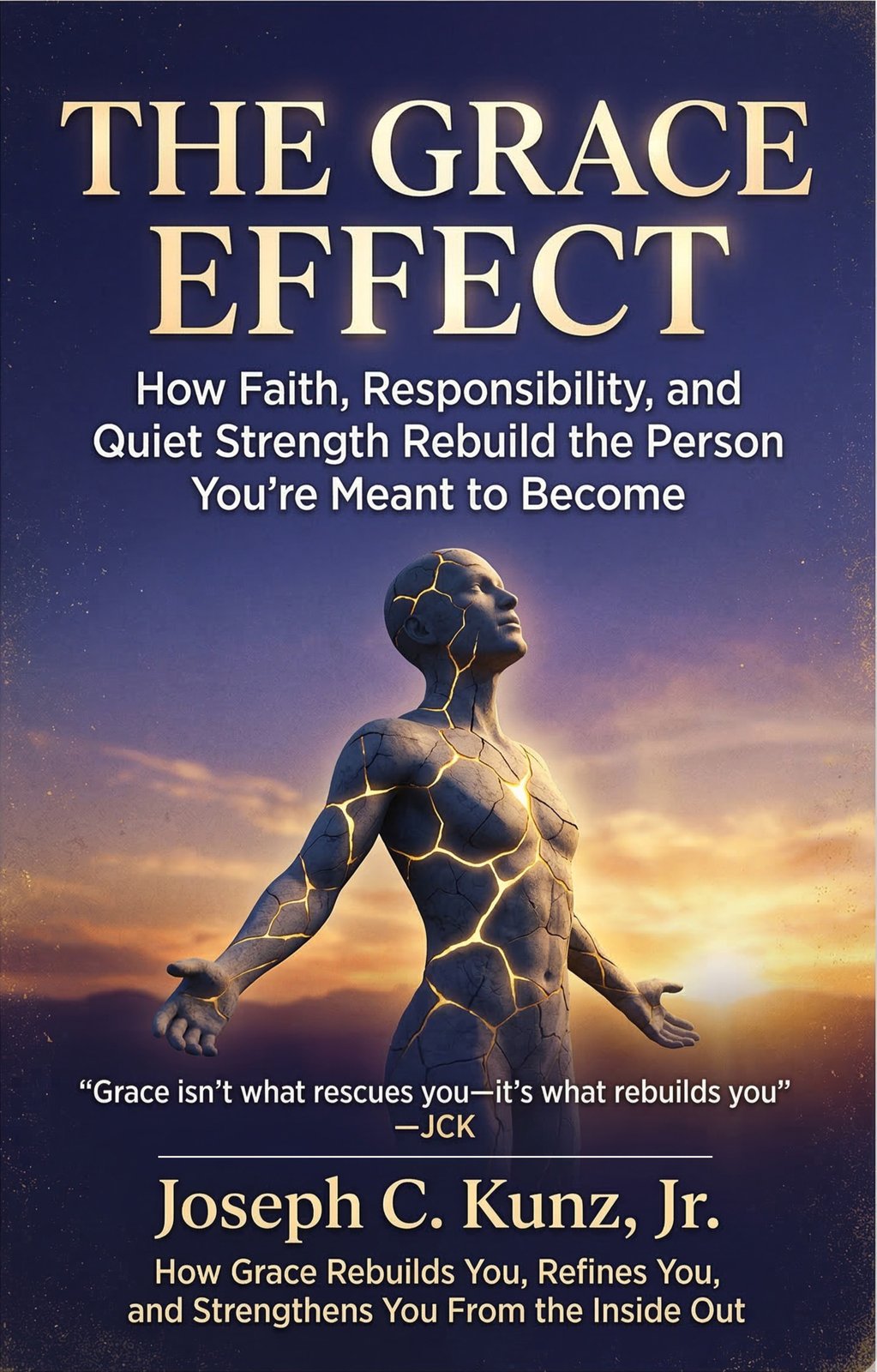
That’s why I wrote The Grace Effect.
Not to applaud “useful religion.” To build men and women who live the real thing—when it costs. When it’s unpopular. When it’s mocked. When it would be easier to compromise.
Because grace isn’t softness. Grace is strength under control. It produces restraint under temptation, courage under pressure, and integrity when no one’s watching.
And in a culture trying to rent faith for social stability, you need the kind of faith that can’t be rented—only lived.
Read The Grace Effect here: Don’t use grace. Live it. Coming soon.