There Is No Big Secret
Wealth built rightly is not greed. It is responsibility made visible through work, stewardship, provision, and service. —Joseph C. Kunz, Jr.
Wallace Wattles, Wealth, and the Moral Duty to Build
By Joseph C. Kunz, Jr.
Synopsis
This isn’t a defense of get-rich-quick thinking, magical attraction, or the shallow prosperity nonsense often attached to Wallace Wattles’ The Science of Getting Rich. In this essay, Joseph C. Kunz, Jr. argues that Wattles’ little book is best understood not as a hidden secret, but as a plainspoken argument for vision, purpose, gratitude, creative work, and the moral responsibility to build a useful and prosperous life.
Kunz makes the case that the deepest truths in Wattles’ book were not first learned by him in a classroom, business program, or self-help seminar, but in the difficult household of his youth, where his mother and brothers carried real responsibilities under real pressure. The central tension is simple but often misunderstood: wealth can become selfish, but it can also become stewardship; ambition can become vanity, but it can also become duty; capitalism can become predatory, but it can also become creative, honorable, and life-giving when governed by faith and responsibility.
The conclusion is simple: there is no big secret. A better life is not wished into existence. It is built through disciplined thought, useful work, moral seriousness, gratitude, and the willingness to become the kind of person who can carry prosperity without being corrupted by it.
The secret was never hidden. It was standing in plain sight, waiting for someone to stop wishing and start building. —JCK
I. Introduction: The Book Did Not Teach Me Magic
I did not discover Wallace Wattles because I was looking for a shortcut to wealth.
By the time I found The Science of Getting Rich, I had already spent decades working, building, providing, failing, learning, and trying to understand the relationship between faith, money, responsibility, family duty, and personal freedom.
What surprised me was not that Wattles taught me something completely new.
What surprised me was that he gave language to truths I had been trying to live since I was a teenager.
Long before I knew his name, I understood that wealth was not merely about having more money. Wealth was about becoming stronger, more useful, more capable, and more responsible. It was about being able to provide, protect, build, give, recover, and stand.
That is why I have never seen The Science of Getting Rich as a book about a secret.
There is no big secret.
There is no hidden trick.
There is no mystical formula that allows a person to sit still, think pleasant thoughts, and watch prosperity arrive like a delivery package from heaven.
That is not wealth-building.
That is fantasy with better marketing.
Wattles’ book matters for a different reason. At its best, it teaches that thought matters, purpose matters, gratitude matters, work matters, and the way a person seeks wealth matters.
That is a much more serious message than “believe and receive.”
It is also a much harder one.
II. I Learned the Principles Before I Knew the Book
I grew up around many of the ideas Wattles wrote about, although no one in my house would have called them by his terms.
We did not sit around discussing “vision,” “purpose,” “faith,” “gratitude,” “creative action,” or “the science of getting rich.”
We were too busy trying to get through the week.
As a young teenager, I watched my mother struggle to keep our household together. There were bills to pay. There was a mortgage. There were utilities. There were children to feed. There was no theory in that pressure. There was only reality.
When money is short, philosophy gets tested quickly.
It is easy to talk about vision when the lights are on, the refrigerator is full, and the bills are paid. It is something else to believe in a better future while trying to help your mother hold the line before the next bill arrives.
But that is where many of the principles were first formed in me.
My mother had little formal education. She did not have the advantages people like to talk about after the fact. She did not have a polished vocabulary for personal development, business success, or moral wealth-building.
But she had something deeper.
She had responsibility.
She had endurance.
She had faith.
She had the stubborn refusal to let hardship define the final story of her children.
My brothers and I learned from that. We learned that life does not improve because someone feels sorry for you. We learned that wishing is not working. We learned that family survival requires sacrifice. We learned that gratitude is not weakness. We learned that faith is not an excuse to avoid effort.
We learned that if a better life was going to come, someone had to build it.
That is why Wattles’ book later struck me so deeply. He was not handing me a strange new doctrine. He was naming something I had already seen in real life.
He gave structure to what hardship had introduced.
III. The Missing Conversation in School
Looking back, one of the most surprising things about my formal education is how little serious attention was given to the moral meaning of wealth.
I spent years in school. I earned degrees. I studied business. I learned concepts, systems, strategies, numbers, markets, management, and professional language.
But I do not remember anyone asking the deeper questions.
What is wealth for?
What kind of person should money help you become?
How does a man build prosperity without becoming selfish?
How does a family use money as a tool of strength rather than a source of corruption?
How does work become service?
How does business become stewardship?
How does ambition become responsibility instead of vanity?
Those questions matter.
They may matter more than the technical questions because technique without moral formation can make a person more efficient without making him better.
That is one of the reasons The Science of Getting Rich stayed with me. Wattles wrote plainly about money, but he did not treat money as merely financial. He connected wealth to purpose, growth, service, gratitude, and the development of the person seeking it.
Some readers may find his language old-fashioned. Some may find parts of the book too simple. Some may be uncomfortable with his confidence.
But simplicity is not always shallowness.
Sometimes simplicity is the result of a man trying to say plainly what more sophisticated people have buried under fog.
IV. Good Capitalism Requires Moral Formation
When I was young, I began to believe something that I did not yet have the words to explain well.
I believed that being a good Christian, a good family man, and a good capitalist were not enemies.
They belonged together.
I would phrase that more carefully now than I might have as a young man. Christianity is not capitalism. Capitalism is not the Gospel. Money is not holiness. Business success is not proof of virtue.
But work, provision, stewardship, enterprise, discipline, and honest wealth-building can be deeply moral when they are placed in the right order.
A man who loves his family should want to provide.
A person who has gifts should want to develop them.
A business owner should want to create value.
A worker should want to become competent.
A believer should not treat poverty of effort as spiritual humility.
A citizen should understand that free people must be capable people.
That is where Wattles still has something to say.
His book is not a complete moral theology of money. It is not a full business education. It is not a substitute for Scripture, prudence, skill, savings, investment, or practical judgment.
But it does insist on something important: the desire to become more, do more, create more, and contribute more is not automatically greed.
That distinction matters.
Greed wants to take.
Stewardship wants to build.
Greed says, “How much can I get?”
Stewardship asks, “What can I create, strengthen, preserve, and pass on?”
Wattles is strongest when he points the reader away from mere competition and toward creation. He understood that wealth built rightly should increase life, not diminish it.
That is a profound idea.
It is also a very American idea at its best.
Not the cheap version of America that says money is everything.
The better version.
The version that says a free person can work, build, risk, serve, create, own, provide, and leave something behind.
V. Creative Wealth Versus Competitive Wealth
One of Wattles’ most important distinctions is the difference between creating and merely competing.
That idea deserves more attention than it usually receives.
The competitive person sees wealth as a fixed pile. If you gain, I lose. If you rise, I fall. If your business succeeds, mine must be diminished. Life becomes a fight over scraps, status, advantage, resentment, and comparison.
That way of thinking is spiritually exhausting.
It also shrinks the soul.
The creative person sees wealth differently. He asks what can be built, improved, solved, served, repaired, invented, organized, taught, strengthened, or made useful.
That is a better way to live.
It is not naïve. Competition exists. Markets are real. People can be dishonest. Businesses fail. Customers choose. Money runs out. Effort does not always produce the result you hoped for.
But the creative frame changes the person doing the work.
Instead of asking, “How do I beat everyone else?” he asks, “How do I become useful enough that value flows through the work I do?”
That is not magic.
That is responsibility.
And it is one reason wealth-building should not be reduced to greed. At its best, wealth is evidence that value has been created, problems have been solved, people have been served, and discipline has been applied over time.
Of course, wealth can be gained wrongly. It can be hoarded, flaunted, worshiped, inherited badly, stolen, manipulated, or used to avoid reality.
But abuse does not erase proper use.
A hammer can build a house or break a window. The problem is not the hammer. The problem is the hand, the mind, and the moral order governing its use.
Money is like that.
So is business.
So is ambition.
VI. Gratitude Is Not Sentimentality
Wattles placed great emphasis on gratitude, and that may be one of the reasons some modern readers misunderstand him.
Gratitude can sound soft.
It can sound like a decorative virtue people mention around Thanksgiving and forget by Monday morning.
But real gratitude is not sentimentality.
Gratitude is disciplined seeing.
It is the refusal to let hardship become the only fact in the room. It does not deny pain, pressure, loss, bills, uncertainty, betrayal, illness, or fear. It refuses to let those things become God.
That matters.
A grateful person is not pretending life is easy. A grateful person is remembering that life is still a gift, responsibility is still real, and the future is still asking something from him.
In my own life, gratitude was never separate from work.
We were grateful for health because health meant we could keep going.
We were grateful for family because family meant we were not carrying the weight alone.
We were grateful for opportunity because opportunity meant the story was not finished.
We were grateful to God not because everything was comfortable, but because we had enough strength to take the next step.
That kind of gratitude does not make a person passive.
It makes him steadier.
A bitter person wastes energy arguing with reality. A grateful person begins with what remains and asks what can still be built.
That is not weakness.
That is a form of strength.
VII. The False Secret Is Easier Than the Real Work
The modern world loves the idea of a secret because secrets promise reward without formation.
That is the great temptation.
Tell me the trick.
Give me the formula.
Show me the hidden law.
Let me skip the long road.
Let me have the outcome without becoming the kind of person who can carry it.
That is why the “secret” version of wealth is so attractive. It flatters the reader. It suggests that the main problem is not discipline, skill, courage, patience, service, or responsibility. The main problem is that you have not yet learned the hidden mental technique.
That is comforting.
It is also dangerous.
Because life does not work that way.
A man can visualize wealth all day and still be lazy.
He can speak affirmations and still mistreat people.
He can imagine success and still avoid responsibility.
He can claim abundance and still refuse to learn a skill, serve a customer, control spending, repair a marriage, raise his children, tell the truth, keep his word, or show up when the work is boring.
That is not a failure of the universe to cooperate.
That is a failure of formation.
The real “secret,” if we must use that word, is that there is no substitute for becoming.
You must become more disciplined.
You must become more useful.
You must become more honest.
You must become more grateful.
You must become more courageous.
You must become more responsible with money, time, work, desire, and influence.
You must become the kind of person who can build wealth without being owned by it.
That is a much harder message than “think rich and get rich.”
It is also much truer.
VIII. Why Wattles Still Matters
I do not read Wattles as a perfect guide.
I read him as a useful one.
His book is brief, sometimes strange to modern ears, and written in a style that requires patience. Some readers will need to look past the old terminology and the confidence of his age.
But the central message remains worth considering.
Think clearly.
Act with purpose.
Be grateful.
Create rather than merely compete.
Do not apologize for wanting to become more useful, more capable, and more prosperous.
Do not treat wealth as dirty when it is built honorably and used responsibly.
Do not separate money from moral formation.
That last point is especially important.
Money does not make a person moral. But money reveals and magnifies the moral structure already present. If a person is selfish, money gives selfishness a bigger stage. If a person is responsible, money gives responsibility more tools.
That is why wealth must be connected to formation.
A foolish man with money can damage a family.
A disciplined man with money can strengthen one.
A vain man with money performs.
A grateful man with money serves.
A greedy man with money consumes.
A steward with money builds.
The difference is not merely financial.
It is moral.
IX. The Moral Duty to Build
The phrase “getting rich” makes some people uncomfortable.
I understand why.
There is a kind of wealth-chasing that is ugly. It is loud, selfish, shallow, status-hungry, and spiritually empty. It measures life by possessions and mistakes applause for meaning.
But rejecting that false version of wealth does not require rejecting wealth-building itself.
A serious person should want to build strength.
A husband should want to provide.
A father should want to leave his children more than confusion.
A mother should want stability for her household.
A worker should want dignity.
A business owner should want competence and profit.
A believer should want to use his gifts well.
A citizen should want families and communities strong enough to stand without constant dependence on broken institutions.
That requires work.
It also requires money.
Not because money is the highest good, but because money is one of the tools by which responsibility becomes practical.
Try paying a mortgage with good intentions.
Try feeding children with vague inspiration.
Try helping aging parents with slogans.
Try building a business, educating children, supporting a church, funding a mission, publishing books, or leaving an inheritance with nothing but resentment toward money.
It cannot be done.
This is why the moral duty to build matters.
To build wealth rightly is not to worship money.
It is to refuse helplessness.
It is to take your gifts seriously.
It is to strengthen your family.
It is to create value.
It is to increase your ability to serve.
It is to leave something behind besides excuses.
X. What My Mother Understood Without the Language
My mother would probably never have described her life in Wattles’ terms.
She was not giving lectures on creative wealth, disciplined thought, gratitude, or moral capitalism.
She was simply trying to keep her children moving forward.
But sometimes the deepest lessons are not taught as lessons.
They are absorbed through witness.
I saw what it meant to keep going when circumstances were unfair.
I saw what it meant to carry responsibility without applause.
I saw what it meant to want better for your children than what life had handed you.
I saw what it meant to believe, work, endure, and continue.
That kind of formation does not show up neatly on a transcript.
But it builds a man.
And when I later read Wattles, I recognized something. Not everything. Not perfectly. Not without reservations. But something real.
He was saying that life could be approached with intention rather than drift.
He was saying that thought should be disciplined.
He was saying that gratitude matters.
He was saying that creation is better than resentment.
He was saying that wealth, rightly pursued, can be part of a larger increase of life.
Those ideas did not feel foreign to me.
They felt familiar.
They sounded like a more formal version of what I had already learned around the kitchen table, in hard conversations, under financial pressure, and in the quiet determination of a family that refused to collapse.
XI. There Is No Big Secret
So no, I do not believe there is a big secret hidden in The Science of Getting Rich.
Not in the way people usually mean it.
The book does not remove the need for work.
It does not cancel hardship.
It does not guarantee wealth.
It does not turn God into a vending machine.
It does not excuse foolishness, laziness, greed, pride, or irresponsibility.
What it does is remind the reader that thought, purpose, gratitude, and creative action matter.
That is enough.
Sometimes a small book matters because it says a simple thing with enough force to make a person stop drifting.
Wattles helped me see that wealth-building is not merely a financial project. It is a formation project. It asks what kind of person you are becoming while you build. It asks whether your ambition is governed. It asks whether your work increases life or merely feeds ego. It asks whether gratitude has disciplined your vision. It asks whether your desire for more is rooted in service or appetite.
Those are not small questions.
They belong in every serious conversation about work and wealth.
XII. Conclusion: Build the Life, Not the Fantasy
The world does not need more magical thinking about money.
It does not need more resentment either.
It needs men and women who understand that prosperity is not dirty when it is built honestly, governed morally, and used responsibly.
It needs people who can distinguish greed from stewardship.
It needs families that teach children how to work, save, build, serve, give, and carry responsibility.
It needs business owners who create value instead of merely chasing status.
It needs believers who understand that faith is not an excuse for passivity.
It needs workers who know that dignity grows when effort, skill, and responsibility are joined together.
Wallace Wattles did not give me a secret.
He gave me a vocabulary.
He helped me recognize that many of the things I had learned through hardship, family, faith, business, and responsibility belonged together.
Vision matters.
Purpose matters.
Gratitude matters.
Creative work matters.
Wealth matters when it is rightly understood.
But none of it matters if a person refuses to become the kind of builder who can carry it.
There is no big secret.
There is only the life you are willing to build.
A man does not become rich in the deepest sense by getting more. He becomes rich by becoming stronger, more useful, more grateful, and more responsible for what has been placed in his hands. —JCK
Related Essays: Wealth, Responsibility, and the Life You Build
These essays continue the argument that money is never just about money. It is about responsibility, discipline, stewardship, and the kind of life a person is trying to build.
1. Why Building Wealth Is a Moral Duty If You Love Your Family
This essay argues that wealth-building is not greed when it is ordered toward provision, protection, family stability, generosity, and legacy.
Reader Comment: This is one of the clearest companion essays to There Is No Big Secret because it takes the moral argument behind Wattles and brings it directly into family life.
Quote: Money is not the highest good. But refusing to build financial strength when people depend on you is not humility. It is neglect dressed up as virtue. —JCK
2. Wealth Is a Test. Here’s How to Pass It.
This essay explains that money does not create a person’s character as much as it reveals, magnifies, and tests the character already there.
Reader Comment: Read this after There Is No Big Secret if you want to think more seriously about what wealth does to the soul, the family, and the legacy a person leaves behind.
Quote: Wealth gives a man more tools, but it also gives his weaknesses more room to operate. —JCK
Related Book: Money Without the Moral Fog
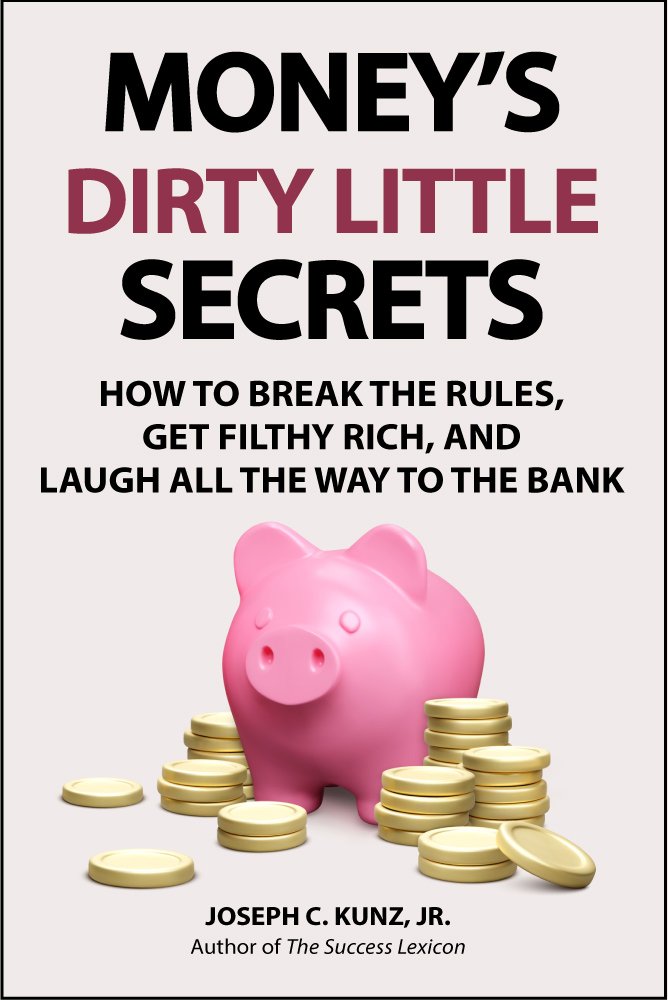
Too many people are taught to think about money in one of two broken ways. Either they worship it, chase it, and measure their worth by it, or they resent it, avoid it, and pretend financial weakness is somehow morally superior.
Both views are wrong.
Money’s Dirty Little Secrets was written to cut through that fog. It is not a book about greed, status, or pretending money can save your soul. It is a plainspoken book about financial responsibility, work, independence, discipline, and the practical truths people need if they want to build a stronger life for themselves and their families.
If you have ever felt confused by money, trapped by bills, tired of financial excuses, or unsure how wealth fits with faith, responsibility, and family duty, this book was written for you.
If you want money to serve your life instead of rule it, this book will help.
If you believe your family deserves more than drift, dependency, and wishful thinking, this book will speak directly to that responsibility.
If you are trying to build wealth without losing your soul, start here.
Available Now: Money’s Dirty Little Secrets