The Meaning the World Cannot Give
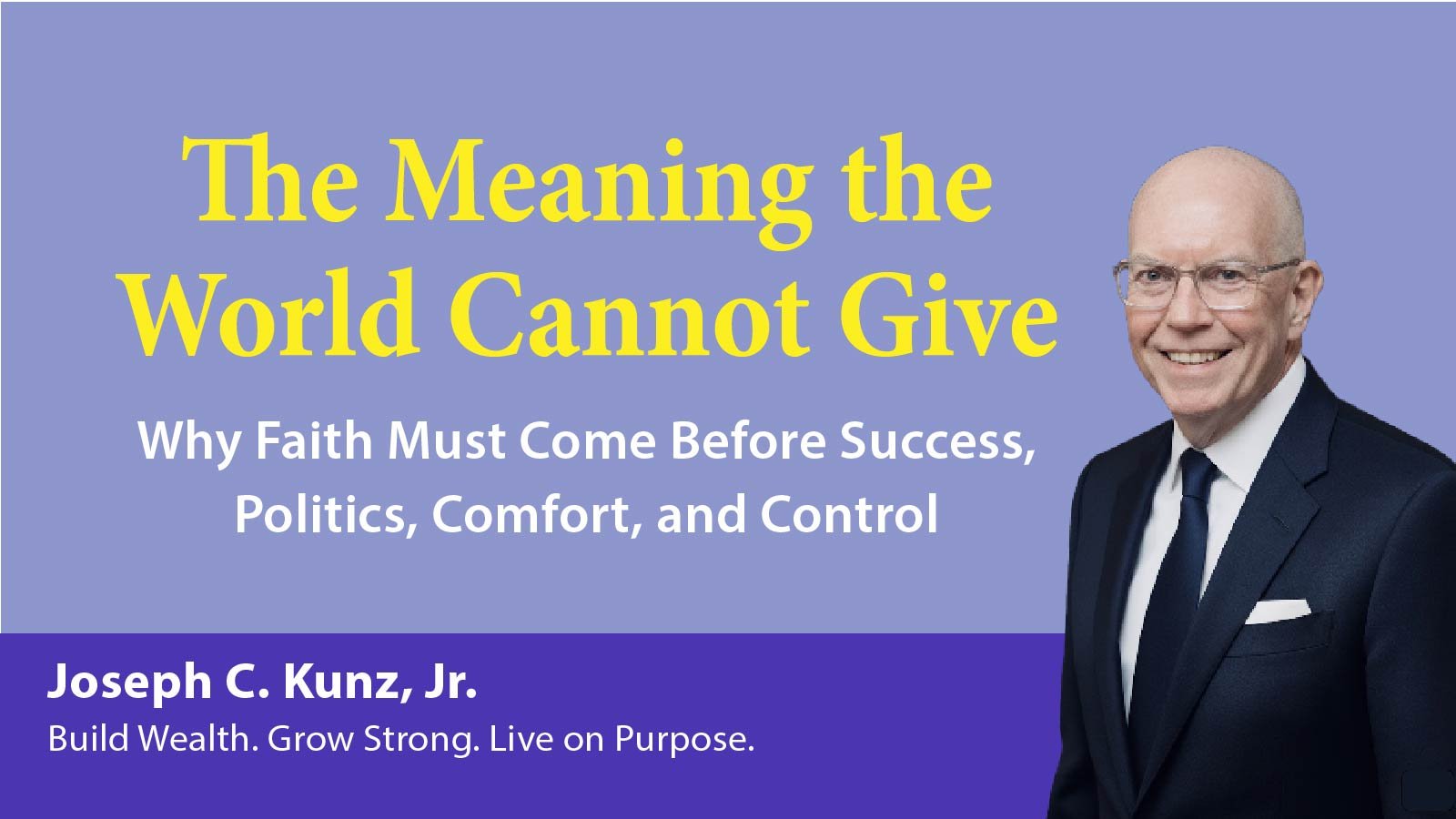
The world can give us things to chase, protect, and argue about. But it cannot give us the meaning our souls were made to live by. —Joseph C. Kunz, Jr.
Why Faith Must Come Before Success, Politics, Comfort, and Control
By Joseph C. Kunz, Jr.
Synopsis
The world offers many things that matter: work, money, achievement, politics, comfort, reputation, pleasure, family, influence, and control. In this essay, Joseph C. Kunz, Jr. argues that none of these things are evil in themselves. Many are necessary. Some are genuinely good. But none of them can carry the full weight of the human soul. Worldly things become dangerous when we ask them to give us ultimate meaning.
Kunz makes the case that Christianity does not ask us to despise work, success, money, politics, family, beauty, comfort, or achievement. It teaches us to put them in their proper place. The problem is not that people care about worldly things. The problem is that people often ask worldly things to answer spiritual questions: Who am I? Why am I here? What is my life for? What can I trust when everything shakes?
The conclusion is simple: faith must come first because only faith can rightly order everything else. Christianity does not pretend life is easy, pain is simple, or every wound explains itself. But it does teach that life is not accidental, conscience matters, guilt can lead to repentance instead of despair, suffering can be formed into wisdom, and grace can restore what the world can only accuse.
To believe in God’s providence is not to pretend that life is simple. It is to believe that life is not meaningless. —JCK
I. Introduction: The Question Beneath the Noise
Modern life is loud.
It gives us endless things to watch, argue about, buy, fear, defend, pursue, improve, measure, and compare. There is always a new crisis, a new ambition, a new product, a new outrage, a new expert, a new enemy, a new promise, and a new distraction.
Some of it matters.
Much of it does not.
But beneath all the noise there is a quieter question that does matter:
What is my life finally for?
That is the question many people avoid because it cannot be answered by activity alone. A person can be busy and still be empty. A person can be successful and still be restless. A person can win arguments and still lack peace. A person can have money, comfort, status, and control and still feel that something essential has not been named.
The world is very good at giving us things to chase.
It is much weaker at telling us why we are here.
That distinction matters because a human being cannot live well by movement alone. We need direction. We need meaning. We need moral order. We need some answer to the question of what makes a life true, faithful, worthy, and whole.
Without that answer, we start asking lesser things to do greater work than they were made to do.
We ask success to give us worth.
We ask politics to give us righteousness.
We ask money to give us security.
We ask comfort to give us peace.
We ask control to give us certainty.
We ask reputation to give us identity.
We ask pleasure to give us joy.
We ask achievement to give us justification.
And then we wonder why we remain tired.
The problem is not that these worldly things are always bad. The problem is that they are not God. They cannot give the soul what only God can give.
II. The World Can Offer Tools, Not Ultimate Meaning
The world is not useless.
A serious Christian should not speak as if ordinary life does not matter. Work matters. Money matters. Law matters. Politics matters. Health matters. Family matters. Comfort has its place. Achievement can be honorable. Order is better than chaos. Competence is better than laziness. A stable household is better than drift.
Christianity does not require us to despise the created world.
It requires us not to worship it.
That is the key distinction.
A man should work. A woman should build. A family should prepare. Citizens should care about justice, law, and public order. Parents should form their children. Business owners should be responsible. Workers should be competent. Grandparents should hand something forward. These things are not distractions from the spiritual life when they are rightly ordered. They are often part of how faith becomes visible.
But none of them is ultimate.
Work can give structure, but not final identity.
Money can provide stability, but not salvation.
Politics can shape public life, but not redeem the soul.
Comfort can relieve pressure, but not create peace.
Control can organize circumstances, but not conquer mortality.
Success can confirm effort, but not answer eternity.
The world can give us tools.
It cannot tell us what the tools are finally for.
That is why a life can look full from the outside and still be hollow inside. The calendar is full. The accounts are funded. The house is improved. The reputation is intact. The opinions are strong. The habits are efficient. The plans are detailed.
But the center is weak.
A weak center does not always show itself at first. It may hide behind discipline, productivity, confidence, humor, busyness, or public certainty. But pressure eventually tests the foundation. Loss tests it. Illness tests it. Failure tests it. Aging tests it. Disappointment tests it. Death tests it.
When those moments come, worldly things reveal their limits.
They may still help.
They cannot finally hold.
III. Success Cannot Tell Us Who We Are
Success is one of the most attractive substitutes for meaning because it feels earned.
A successful person can point to visible evidence. The business grew. The house improved. The money increased. The children did well. The reputation strengthened. The work mattered. The effort produced fruit.
There is nothing wrong with that.
Achievement is not the enemy of faith. Competence is not a sin. Building something useful can be a form of stewardship. A man who refuses to work, provide, learn, improve, and carry responsibility should not hide laziness behind spiritual language.
But success becomes dangerous when it starts answering questions it was never meant to answer.
Success can tell us what we accomplished.
It cannot tell us who we are before God.
Success can measure outcomes.
It cannot measure the soul.
Success can reward discipline.
It cannot forgive sin.
Success can build confidence.
It cannot create humility.
Success can give a man influence.
It cannot make him wise.
The danger is subtle because success often begins with responsibility. A person wants to provide, build, protect, and improve. These are good desires. But over time, responsibility can quietly become self-justification. The builder begins to believe that because he has built much, he understands the whole meaning of life.
But a man is not justified by the size of what he built.
He is judged by what he served.
That is where faith becomes necessary. Faith does not destroy ambition. It purifies it. It asks whether success has become service or self-worship. It asks whether work has become stewardship or escape. It asks whether achievement has made a person more grateful, more generous, more truthful, more disciplined, and more humble.
Success can be good.
But it must be governed.
Faith is what teaches success to kneel.
IV. Politics Cannot Save the Soul
Politics deserves a place in serious life.
Laws matter. Elections matter. Courts matter. Schools matter. Borders matter. Rights matter. Public order matters. A person who says politics never matters is usually protected by the sacrifices of people who understood that it does.
But politics becomes destructive when it becomes a source of ultimate meaning.
That is when politics starts acting like a counterfeit religion.
It gives people a tribe.
It gives them enemies.
It gives them rituals.
It gives them slogans.
It gives them sins to denounce and saints to defend.
It gives them a sense of righteousness without requiring repentance.
That last part is especially dangerous.
Christianity begins by telling me that I am a sinner in need of grace. Politics often tempts me to believe that the main problem is always somebody else. Their party. Their ideology. Their ignorance. Their corruption. Their hatred. Their danger.
Sometimes other people really are wrong.
Sometimes ideas really are destructive.
Sometimes policies really do harm.
Moral clarity requires the courage to say so.
But politics cannot replace conscience. It cannot become the place where I locate all evil outside myself. When that happens, politics does not make me morally serious. It makes me morally evasive.
A Christian can care deeply about public life without asking politics to save his soul.
That distinction is essential.
Faith should inform politics. Politics should not become faith.
Faith should give politics moral boundaries. Politics should not give faith its meaning.
Faith should teach the citizen how to pursue justice without hatred, truth without cruelty, courage without pride, and loyalty without idolatry.
Once politics becomes ultimate, people stop seeking wisdom and start seeking victory. They stop loving their neighbor and start managing their enemies. They stop asking what is true and start asking what helps their side. They stop examining their conscience and start feeding their outrage.
That is not moral strength.
That is spiritual disorder wearing public clothing.
V. Guilt Without Grace Becomes Unbearable
There is another problem modern life has not solved.
Many people still feel guilt.
They still feel shame.
They still have moral instincts. They still sense that some things are wrong, that injustice matters, that cruelty should be resisted, that human beings should not be treated as disposable, and that a life spent only on selfish appetite is not enough.
That moral instinct is not the problem.
The problem is what happens when a culture keeps guilt but loses grace.
Christianity gives guilt a place to go. It does not deny sin. It does not pretend moral failure is imaginary. It does not say that every choice is equally good or that conscience is merely a social construct. Christianity takes guilt seriously because it takes the soul seriously.
But guilt is not meant to be the final word.
The Christian pattern is not guilt forever.
It is sin, confession, repentance, grace, forgiveness, restoration, and new life.
That pattern matters because guilt without grace becomes unbearable. Shame without forgiveness hardens into despair or accusation. Moral seriousness without mercy becomes severe. A person who does not know how to receive forgiveness may also lose the ability to offer it.
This helps explain part of the harshness in modern public life.
A secular age may reject Christian doctrine while still carrying Christian moral emotions. It may keep the hunger for justice, the language of guilt, the need for confession, the fear of uncleanness, and the desire for righteousness. But without God, without grace, and without forgiveness, those moral emotions often become restless and punitive.
There is wrongdoing, but no absolution.
There is accusation, but no restoration.
There is public confession, but no real mercy.
There is shame, but no cleansing.
There is judgment, but no redemption.
That is a sad way to live.
It leaves people trying to purify themselves through activism, ideological loyalty, public denunciation, or constant proof that they are on the right side. But the burden never really lifts. The person must keep performing moral seriousness because there is no settled forgiveness.
This does not only happen on one side of politics. It can happen anywhere Christianity is hollowed out but moral intensity remains. It can happen on the Left, on the Right, in institutions, in families, online, in churches, and inside the private conscience of a person who knows he has done wrong but does not know where to take the guilt.
Christianity offers something deeper and more humane.
It tells the truth about sin without making sin the whole identity of the person.
It calls people to repentance without leaving them in despair.
It offers forgiveness without pretending the wrong did not matter.
It restores without erasing responsibility.
That is meaning the world cannot give.
The world can accuse.
The world can expose.
The world can punish.
The world can shame.
But the world cannot finally absolve the soul.
Only grace can do that.
VI. Comfort Cannot Give Peace
Comfort is not evil.
A warm home, a good meal, a quiet room, a healthy body, a stable income, and a peaceful evening are gifts. Only a foolish person despises ordinary comforts in order to sound deep.
But comfort cannot be the center of life.
Comfort is too fragile.
It depends on conditions we cannot fully control: health, money, safety, relationships, age, weather, markets, government, family, timing, and the body itself. A person who builds his meaning on comfort becomes increasingly frightened by anything that threatens it.
And many things will threaten it.
Life does not ask our permission before becoming difficult.
Christianity is honest about this. It does not tell us that faith will remove all hardship. It does not promise that every disappointment will quickly explain itself or that every wound will be resolved in this life. It does not reduce God to a provider of pleasant circumstances.
Instead, Christianity teaches a deeper peace.
Not the peace of having everything arranged exactly as we want.
The peace of being held by something greater than circumstances.
This is not easy. It is not automatic. It is not a slogan. A person may believe this truth and still struggle to live inside it. But the truth remains: comfort can soothe the body, but it cannot anchor the soul.
Comfort is a gift when received with gratitude.
It becomes a trap when treated as a right.
It becomes an idol when we organize our entire life around avoiding inconvenience, sacrifice, duty, risk, pain, and surrender.
A comfortable life is not necessarily a meaningful life.
A meaningful life may include comfort, but it cannot depend on it.
VII. Control Cannot Carry Destiny
Control may be the most respectable idol because it often looks like responsibility.
Responsible people plan. They prepare. They think ahead. They protect what has been entrusted to them. They do not drift through life waiting for someone else to fix what they refused to face.
That kind of responsibility is good.
But control goes further.
Responsibility does what can be done.
Control tries to master what cannot be mastered.
Responsibility accepts stewardship.
Control wants sovereignty.
Responsibility prepares for tomorrow.
Control wants to own tomorrow.
Responsibility acts faithfully within human limits.
Control resents the existence of limits.
This is where many serious people struggle. The careless person may need to learn discipline. But the disciplined person may need to learn surrender.
That is a different lesson.
For people who have carried weight for a long time, surrender can feel irresponsible. Trust can feel like weakness. Prayer can feel too quiet. Waiting can feel like failure. Dependence can feel dangerous.
But faith does not tell us to stop acting.
It tells us to stop pretending we are God.
There is a great difference between doing our duty and trying to control the final meaning of everything. We can love our families, but we cannot control every sorrow they will face. We can build wisely, but we cannot guarantee every outcome. We can make plans, but we cannot command time. We can protect our health, but we cannot escape mortality. We can speak truth, but we cannot force every listener to receive it.
Human life has limits.
Faith does not humiliate us by revealing those limits.
It frees us from pretending they are not there.
The man who thinks he must control everything will eventually be crushed by what he cannot control. The man who accepts stewardship under God can act with seriousness and still rest in the knowledge that he is not the foundation.
That is not weakness.
That is order.
VIII. God’s Call Is Not Always Dramatic
If the world cannot give ultimate meaning, then where does meaning come from?
Christianity answers: from God.
But that answer must be handled carefully. It should not be reduced to vague comfort or religious decoration. It should not become a slogan that avoids the difficulty of real life.
God’s call is not always dramatic.
Sometimes it comes through conscience.
Sometimes through responsibility.
Sometimes through suffering.
Sometimes through love.
Sometimes through work that must be done.
Sometimes through a child who needs formation.
Sometimes through a spouse who needs patience.
Sometimes through a failure that exposes pride.
Sometimes through a wound that teaches mercy.
Sometimes through guilt that must become repentance instead of self-hatred.
Sometimes through the quiet realization that the things we chased cannot tell us what life is finally for.
God does not speak into every life in the same way. But Christianity teaches that life is not mute. Reality is not spiritually empty. Conscience is not merely a private feeling. Duty is not merely a burden. Love is not merely chemistry. Suffering is not merely interruption. Longing is not merely appetite.
These things may become places where a person is called.
Not always with certainty.
Not always with ease.
Not always with clear explanation.
But with enough light to take the next faithful step.
This is very different from saying that every event is easy to interpret. Christians should be careful here. Not every tragedy should be explained quickly. Not every loss should be wrapped in neat language. Not every wound should be turned into a lesson before grief has had room to breathe.
But caution is not unbelief.
To believe in God’s providence is not to pretend that life is simple.
It is to believe that life is not meaningless.
It is to believe that even when we do not understand the whole plan, we are still called to faithfulness inside the part entrusted to us.
IX. Faith Gives the Other Things Their Proper Place
Faith must come first because faith rightly orders everything else.
Without faith, responsibility can become pride.
With faith, responsibility becomes stewardship.
Without faith, work can become escape.
With faith, work becomes service.
Without faith, wealth can become self-protection.
With faith, wealth becomes a tool for stability, generosity, and wise provision.
Without faith, politics can become a substitute religion.
With faith, politics remains public duty under moral limits.
Without faith, guilt can become despair, shame, or accusation.
With faith, guilt can become repentance, grace, forgiveness, and restoration.
Without faith, comfort can become entitlement.
With faith, comfort becomes gratitude.
Without faith, control can become fear dressed as discipline.
With faith, control gives way to trust.
Without faith, legacy can become vanity.
With faith, legacy becomes love handed forward.
This is why faith is not simply one interest among many. It is not a private hobby, a mood, a cultural preference, or a decorative tradition attached to an otherwise worldly life.
Faith is the foundation.
It tells the builder what he is standing on.
It tells the worker what his labor is for.
It tells the citizen what politics cannot become.
It tells the parent what formation requires.
It tells the guilty person where mercy can be found.
It tells the sufferer that pain is real but not final.
It tells the successful person that achievement is not salvation.
It tells the aging person that usefulness is not the same as worth.
It tells the dying person that death does not get the last word.
This is meaning the world cannot give.
The world can hand us instruments.
Faith teaches us the music.
X. The Meaning Christianity Gives
Christianity gives meaning because it tells the truth about the whole person.
It does not flatter us by saying we are fine as we are.
It does not crush us by saying we are beyond mercy.
It tells us we are made in the image of God, wounded by sin, called to repentance, offered grace, formed through obedience, and invited into love that is deeper than usefulness, success, status, or control.
That is a serious vision of life.
It gives dignity without illusion.
It gives responsibility without despair.
It gives mercy without moral laziness.
It gives hope without pretending suffering is imaginary.
It gives order without reducing life to rules.
It gives freedom without denying duty.
It gives forgiveness without denying guilt.
This is why Christianity can carry what worldly meaning cannot. It is large enough for birth, work, marriage, failure, repentance, forgiveness, suffering, service, aging, death, and eternity.
Politics is not large enough for that.
Success is not large enough for that.
Comfort is not large enough for that.
Control is not large enough for that.
Even family, as precious as it is, is not large enough to become God. Family is one of the great places where love is practiced, duty is learned, sacrifice becomes visible, and legacy is formed. But even family must be placed under God, or it too can become distorted by fear, control, pride, possession, or identity.
Only God can be God.
That sentence sounds simple.
Living it is not simple.
Much of the Christian life is the slow work of learning what we have placed at the center instead of Him.
XI. Conclusion: What Life Is Finally For
The world will keep offering substitutes.
It will offer more success, more politics, more comfort, more control, more noise, more distraction, more self-expression, more outrage, more pleasure, more comparison, and more proof that we matter.
Some of these things may have their place.
None can be the foundation.
A life built on success must keep succeeding.
A life built on politics must keep fighting.
A life built on comfort must keep avoiding pain.
A life built on control must keep fearing loss.
A life built on reputation must keep performing.
A life built on pleasure must keep consuming.
A life built on guilt without grace must keep accusing, confessing, proving, and punishing without ever being restored.
But a life built on faith can finally begin to receive the world without needing the world to become God.
That is the freedom Christianity offers.
Not escape from responsibility.
Not contempt for ordinary life.
Not sentimental language pasted over suffering.
Not easy answers to painful questions.
But order.
A rightly ordered soul can work without worshiping work.
It can build without worshiping success.
It can vote without worshiping politics.
It can enjoy comfort without worshiping ease.
It can plan without worshiping control.
It can love family without turning family into an idol.
It can confess guilt without being destroyed by shame.
It can receive forgiveness without pretending sin did not matter.
It can suffer without believing suffering is meaningless.
It can die without believing death is final.
That is meaning the world cannot give.
And that is why faith must come first.
Not because worldly things do not matter.
But because they matter too much to be placed in the wrong order.
The world can give a man something to chase. Only God can give him something worthy to stand on. —JCK
Related Essays: Faith, Meaning, and the Life Built on God
These essays continue the argument that faith is not a decoration added to life after everything else is built. Faith is the foundation that gives responsibility, work, family, politics, suffering, success, and legacy their proper order.
This essay argues that real Christian belief requires more than optimism, religious language, or agreement that God exists. Faith becomes real when it becomes trust, surrender, obedience, repentance, humility, and allegiance to Jesus Christ.
Reader Comment: This is one of the strongest companion essays to The Meaning the World Cannot Give because it explains why faith cannot remain a slogan. If the world cannot give ultimate meaning, then belief must become more than comfort. It must become surrender to God.
Quote: Belief becomes real when the man who knows how to carry weight finally admits he was never meant to carry God’s place. —JCK
2. The Hunger for What Is Real
This essay explains why so many people are tired of noise, performance, ideology, fake confidence, and shallow answers. It argues that beneath much of modern restlessness is a deeper hunger for truth, faith, responsibility, and a life that actually holds.
Reader Comment: Read this after The Meaning the World Cannot Give because it shows the human hunger behind the argument. People are not merely tired of politics, success, comfort, and control. They are hungry for something real enough to build a life on.
Quote: People are not only tired of lies. They are tired of living without a foundation strong enough to tell the truth. —JCK
Related Book: Faith for a Life Built to Hold
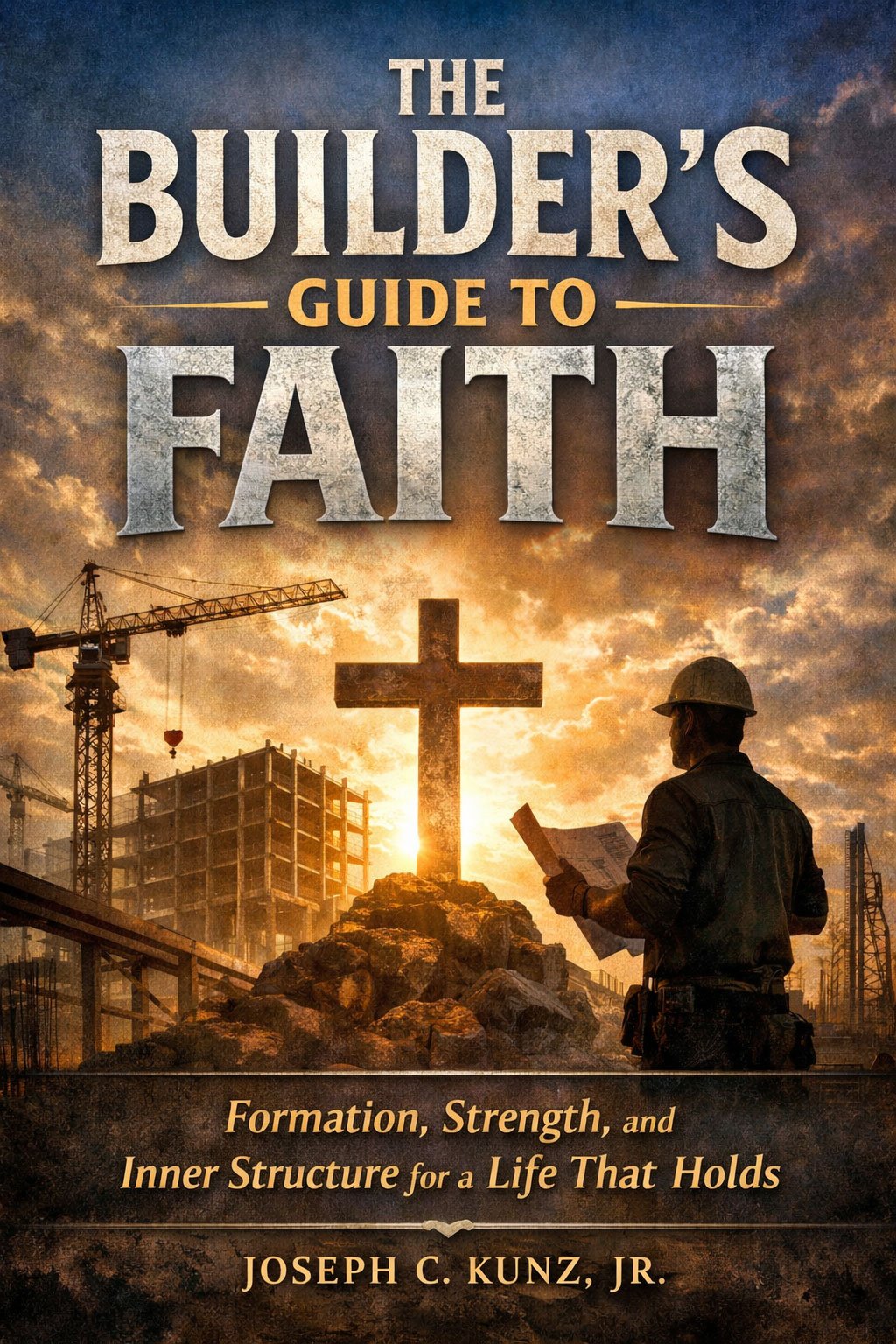
Too many people are taught to think about faith in one of two broken ways. Either they reduce it to private comfort, soft religious language, and vague encouragement, or they treat it as something separate from real life, responsibility, work, family, suffering, and the hard decisions that shape a person’s character.
Both views are too small.
The Builder’s Guide to Faith was written to bring faith back to the foundation of life. It is not a book about escaping responsibility, avoiding hard questions, or pretending that belief makes life easy. It is a plainspoken book about God, duty, surrender, conscience, responsibility, moral clarity, and the kind of faith strong enough to govern a life under pressure.
If you have ever struggled to understand how faith fits with work, family, ambition, hardship, control, repentance, forgiveness, and legacy, this book was written for you.
If you want faith to become more than a belief you respect from a distance, this book will help.
If you believe your life needs a foundation stronger than success, politics, comfort, control, or public approval, this book will speak directly to that hunger.
If you are trying to build a life that can hold without placing yourself at the center, start here.
Available Now: The Builder’s Guide to Faith