The Day My Voice Changed

A personal turning point where physical loss became a new kind of strength—and a new reason to speak with purpose. —Joseph C. Kunz, Jr.
What Brain Surgery, Facial Paralysis, and Friendship Taught Me About Clarity and Grace
By Joseph C. Kunz, Jr.
Synopsis
After brain surgery left him with facial paralysis and a weakened voice, Joseph C. Kunz, Jr. was forced to confront a version of himself he no longer recognized. What followed was not silence—but clarity. In The Day My Voice Changed, Kunz reflects on how physical loss stripped life down to what mattered most, sharpening his purpose, deepening his gratitude, and refining the way he writes, speaks, and lives.
This is not a story about recovery in the traditional sense. It is about recalibration—how hardship can quiet the noise, clarify priorities, and turn vulnerability into a steadier kind of strength. Through faith, friendship, and grace, Kunz discovered that when the voice grows quieter, the message often grows truer.
Losing my voice didn’t silence me—it focused me. When the words became harder to speak, they became more honest on the page. —JCK
I. Introduction
There’s a photo I keep in my office—taken before the surgery. My face looked normal back then. My voice was strong. I didn’t worry about being heard.
But that all changed after the tumor.
Brain surgery didn’t just affect my hearing. It altered the way I speak, the way I look, and—maybe most importantly—the way I see the world. It stripped everything down. What was left behind wasn’t weakness. It was clarity. And that clarity has changed everything about how I live and how I write.
II. What the Mirror Now Shows Me
After surgery, the physical changes were immediate and unavoidable. My face was twisted and sagging on one side. Speaking clearly became a challenge. I had to repeat myself often. And when I laughed, I caught myself covering my mouth because only half my face would respond.
It was jarring—not just to see, but to feel.
I didn’t recognize the man in the mirror. But I wasn’t just grieving the loss of symmetry or sound—I was grieving a version of myself that no longer existed. And strangely, that loss created space for something new.
III. No Time for Fluff
When life knocks you flat and strips everything down, the unnecessary falls away fast. You stop faking energy. You stop overexplaining. You stop trying to sound impressive.
I didn’t have the bandwidth for polished sentences or surface-level conversations. I couldn’t afford to waste time or words.
I wasn’t trying to impress before—and I’m certainly not now. But after everything I’ve been through, I write with even more clarity, more honesty, and a quiet kind of strength that speaks for itself. Ironically, the less I could say out loud, the more I understood what needed to be said on the page.
IV. The Unexpected Power of Friends and Family
I’ve always valued my family. That hasn’t changed. My wife, my children, my brothers, and now my grandchildren—they’ve always been at the center of my life. They’ve seen me at my strongest and at my most vulnerable, and they’ve stood by me with a kind of love that’s steady and unshakable.
But what surprised me was the grace extended by close friends. After the surgery, I became more self-conscious in social settings. It wasn’t always easy for people to hear me—or even to look at me. My smile had changed. I looked like a stroke victim. I felt exposed.
And yet, the people who mattered didn’t flinch. They didn’t look away. They didn’t rush past the awkward moments. Their presence gave me strength—and reminded me that true friendship sees through the surface and connects at the core.
That kind of support doesn’t just comfort you. It clarifies what really counts.
V. When the Voice Changes, the Message Deepens
This experience didn’t just change how I look or sound. It changed what I see. It showed me what absolutely matters—and what doesn’t. It brought my priorities into sharper focus. It made my writing more direct. More honest. More purposeful.
It’s a strange gift, but a gift all the same.
The irony isn’t lost on me: the harder it’s become to speak out loud, the clearer I’ve become about what I need to say.
VI. Conclusion: The Gift of Clarity
I never asked for this chapter of my life. But I wouldn’t erase it either. Because this is the chapter where everything got quiet enough for me to hear what matters most.
I no longer write to be heard—I write to help others see. I write to pass along what life, hardship, and grace have taught me. I write because someone out there is struggling, just like I was—and they need a sentence that gives them strength to keep going.
This is what I’ve learned: Sometimes life breaks your voice in order to sharpen your message.
And if you let it, that brokenness can become your clearest calling.
Facial paralysis took away my smile, but it gave me something else: the clarity to say only what matters—and the courage to mean every word. —JCK
Author’s Note
This story is a piece of the larger journey that shaped my writing, my worldview, and my belief in truth, clarity, and grace. For more essays and reflections, visit JosephKunz.com. If this resonated with you, I invite you to read Writing from the Inside Out, which expands on how this experience changed the way I approach writing, legacy, and purpose. —JCK
Related Essays: For Readers Who Know Strength Is Forged in Hard Places
If this essay spoke to you, these will carry the weight even further.
A deeply personal look at resilience, identity, and the quiet power of continuing to show up through adversity.
2. We Just Kept Going: A Quiet Story of Resilience
An honest reflection on pushing forward together, even when the weight of life could have stopped everything.
Reader Comment: This essay reminded me that sometimes resilience isn’t loud—it’s just refusing to quit.
Related Book: When Life Changes Your Voice, Grace Teaches You How to Use It
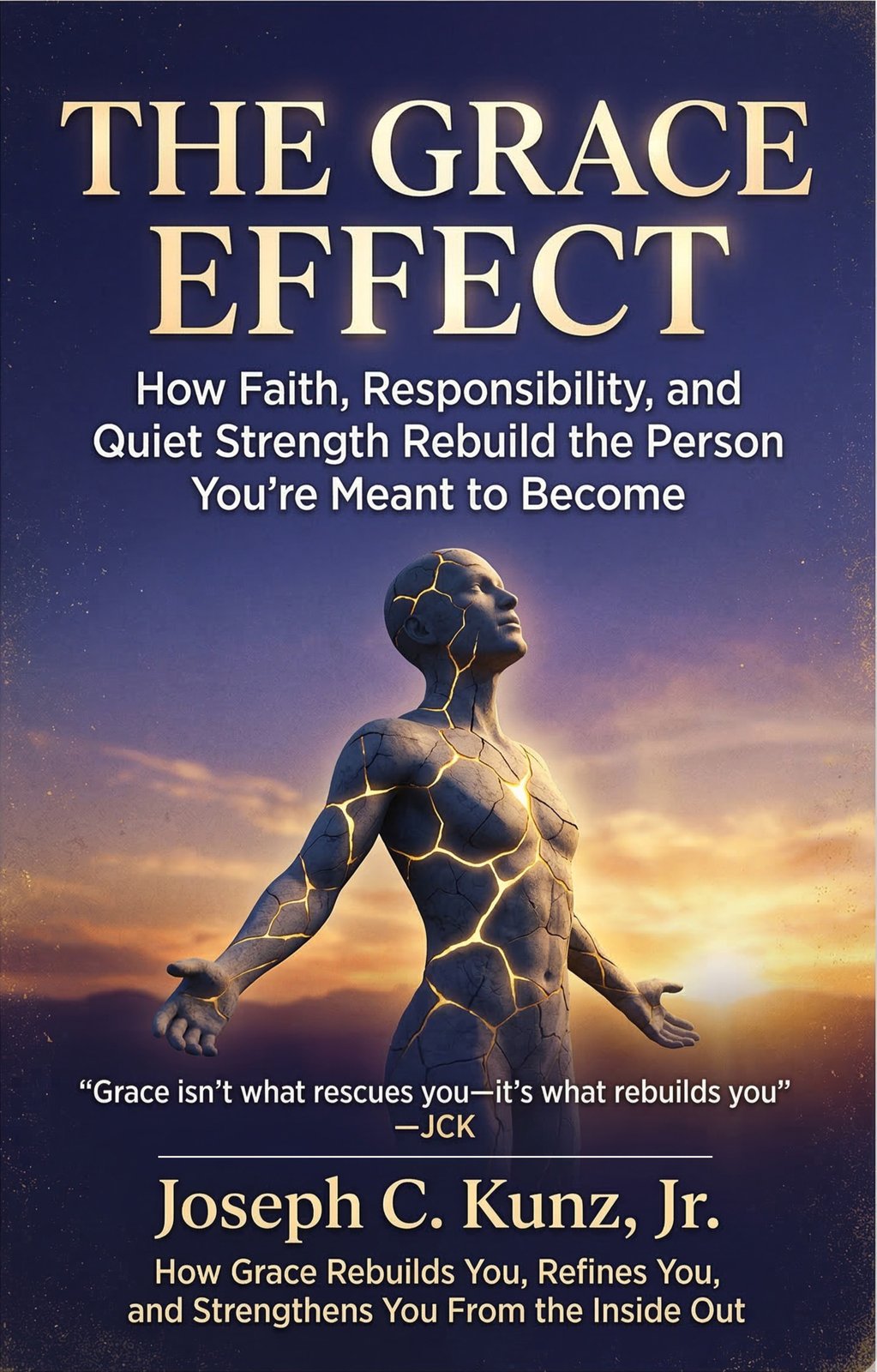
The day my voice changed wasn’t just about sound—it was about identity. It was about facing the mirror and deciding whether to break down or build up.
That’s why I wrote The Grace Effect. Because grace is what gave me the strength to stand in that moment without letting it define me.
This isn’t a book of theories. It’s my heart on the page—every scar, every lesson, every ounce of love for the people who need to know they’re not alone when life rewrites their story.
Get your copy of The Grace Effect and let it show you that even when life strips something away, grace steps in to give you back more than you lost.
Coming Soon.