Prayer Is Not the Problem
In a culture that turns holy things into spectacle, this essay argues that prayer is not the problem—performance is. —Joseph C. Kunz, Jr.
When Sacred Language Becomes Public Performance
By Joseph C. Kunz, Jr.
Synopsis
This is not an argument against prayer, public faith, or the use of sacred language in times of danger. Nor is it a reflexive defense of every public figure who invokes God, Christ, or religious language from a position of authority. In this essay, Joseph C. Kunz, Jr. examines a deeper problem revealed by a recent public controversy: not whether Americans should pray for their soldiers, but whether sacred language is being used with humility, reverence, truth, and moral seriousness—or merely as performance. Kunz reflects on how quickly modern public life turns serious matters into shallow arguments, and why people with ordinary religious common sense often understand the substance of a moment more clearly than the media class, political performers, or outrage merchants who rush to exploit it.
Kunz argues that prayer itself is not the problem. The real danger begins when holy language is treated as public theater, political branding, emotional signaling, or moral cover. He explains how words like God, prayer, blessing, sacrifice, and Jesus still carry weight in a culture that has emptied so many other words of meaning—and why that makes them especially tempting to use carelessly. The essay explores the difference between reverence and performance, between witness and stagecraft, and between genuine moral seriousness and the borrowed appearance of it. Kunz also makes the case that public responsibility requires judgment: while most people of basic faith understood the call to pray for the troops, leaders should still handle sacred language carefully, especially in moments of war, because holy things should never be used casually or theatrically.
The conclusion is simple: prayer is holy, but public life often is not. In a nation that too often remembers prayer only in moments of fear, crisis, or war, Kunz argues that the deeper issue is not religious offense, but spiritual shallowness and cultural confusion. He contends that soldiers deserve real prayer—but also truth, competence, accountability, and leaders who understand the moral weight of what they ask others to bear. This essay is about recovering the difference between sacred seriousness and public performance, and about remembering that when a culture forgets how to handle holy things with reverence, it eventually turns even prayer into one more form of theater.
Prayer is holy. Performance is not. A nation gets weaker when it confuses the two. —JCK
I. Introduction: The Cheap Debate
Modern America can turn anything into a stupid argument in under five minutes. Mention God, and the performers come running. One side acts like any public reference to prayer is a constitutional crisis. The other side acts like merely saying the word Jesus proves a man is righteous. Meanwhile, the actual point gets buried under the usual noise, posturing, and rehearsed nonsense. A public official asked Americans to pray for troops in harm’s way, and within minutes the country was doing what it does best: missing the point on purpose.
This week gave us another public argument that revealed far more than the people arguing seemed to realize.
A government official told Americans to pray for the troops. Some people bristled because he did it in explicitly Christian language. Other people reacted as if any criticism of that moment proved America had become hostile to faith itself.
That is the cheap debate.
I cannot know his precise motive, and I do not need to. But it is hard not to notice that the reaction exposed something ugly and predictable in modern public life: a serious call to pray for American troops was immediately swallowed by people more eager to posture about language than to honor the men and women in harm’s way.
The cheap debate asks whether prayer itself is offensive. It asks whether invoking Jesus in public is brave or improper. It asks which side gets to act scandalized, and which side gets to pretend it alone still believes in God.
But that is not the deepest question.
Prayer is not the problem.
The real question is whether sacred language is being used with humility, reverence, truth, and moral seriousness—or merely being used as performance.
And in modern America, performance is almost always lurking nearby.
At the most basic level, any person with ordinary religious common sense knew what was meant: humble yourself before God and pray for the men and women in harm’s way. That was the substance of it. That was the point. Most normal people understood that immediately. They did not need a panel discussion, a media spin cycle, or a theological knife fight to decode it.
I probably would have said pray to God rather than explicitly invoke the name of Jesus from an official wartime podium. Not because Christ should be hidden, watered down, or apologized for, but because public responsibility requires seriousness, clarity, and an awareness of the whole nation you are addressing. In that setting, broader language would have communicated the same seriousness without creating an unnecessary side controversy.
That is not compromise. That is judgment.
And that distinction matters.
II. Sacred Words Still Have Power
We live in a culture that has emptied many words of meaning. Leadership has become branding. Courage has become posing. Compassion has become sentiment. Truth has become tribal. Even patriotism often gets dragged around like a campaign prop.
But sacred language still has force.
Words like God, prayer, blessing, sacrifice, faith, grace, and Jesus still carry weight. They still touch nerves. They still awaken conscience. They still remind people that life answers to something higher than mood, politics, or public opinion.
That is exactly why they are so tempting to use.
Sacred words can steady people. They can also move crowds. They can humble a soul. They can also decorate power. They can point a person toward repentance. They can also be used to wrap ambition in borrowed holiness.
That is why this matters.
When a man in authority uses sacred language, the issue is not whether prayer is allowed. Of course prayer is allowed. The issue is whether he is speaking from reverence or from theater. Whether he is calling people upward or rallying them emotionally. Whether he is standing under God or merely using God-language to strengthen his own position.
That line matters.
A lot.
III. Prayer Is Not a Costume
I do not want to live in a country where prayer is treated as something shameful, embarrassing, or out of bounds. A nation that cannot speak of God at all is not more enlightened. It is usually more hollow.
But I also do not want sacred things handled casually.
Prayer is not a slogan.
Prayer is not a branding device.
Prayer is not a patriotic accessory.
Prayer is not a costume a leader puts on when cameras are rolling and blood is already being spent.
Prayer is holy because it places man in the right position. It lowers him. It corrects him. It reminds him he is not sovereign. It brings him under judgment before it brings him comfort. Real prayer does not flatter power. It humbles it.
That is why public invocations of faith should make serious people more careful, not less.
If you use the name of Jesus lightly, you have not elevated public life. You have trivialized something sacred. If you wrap war, politics, ego, and public image in holy language too casually, you do not make those things cleaner. More often, you risk making faith dirtier.
And Christians, of all people, should understand that first.
IV. A Nation That Finds Prayer Only in Crisis Has a Deeper Problem
There is another reason this story matters.
Many people who rarely show any public seriousness about God suddenly become very comfortable with prayer when the nation is in danger, when soldiers are dying, or when fear is rising.
That should trouble us.
A nation that remembers prayer only in wartime has not rediscovered faith. It has exposed its spiritual thinness.
Prayer is not meant to be pulled out only when events turn dark. It is not an emergency flare for frightened people who otherwise prefer self-sufficiency. Prayer is supposed to be part of a life shaped by reverence, gratitude, repentance, restraint, and dependence on God before the crisis ever arrives.
If a people do not pray in peace, their wartime piety will often be thinner than they think.
That does not make the prayer false in every case. But it should make us cautious about congratulating ourselves too quickly.
Because the real test of faith is not whether we can suddenly sound religious under pressure.
The real test is whether reverence was already built into the structure of our lives.
V. The Troops Deserve More Than Religious Theater
There is one more thing that must be said plainly.
Soldiers deserve prayer.
They deserve real prayer. Serious prayer. Humble prayer. Grateful prayer. Prayer from families, churches, and citizens who understand the cost of sending young men and women into danger.
But they also deserve more than prayer language.
They deserve truth from leaders.
They deserve competence.
They deserve moral seriousness.
They deserve clear aims, clean judgment, and sober responsibility from the people who speak in their name.
It is easy to tell the public to pray for the troops. It is much harder to bear the full moral weight of decisions that put those troops in harm’s way.
That is why sacred language must never become cover.
A leader who invokes God should be held to a higher standard, not given an emotional pass. The presence of religious words does not sanctify public action. It intensifies the obligation to tell the truth.
If prayer is real, then accountability must be real too.
VI. What Serious People Should Say
So what should a serious person say in a moment like this?
Not this: “Prayer is offensive.”
And not this: “Anyone who questions public religious language must hate Christianity.”
Both are shallow.
A serious person should say this:
Prayer is good.
Prayer for the troops is good.
Invoking God is not the problem.
But sacred language should never be treated casually, tribally, or theatrically.
Most people of basic faith—and even many people outside the Christian faith—knew exactly what was being asked: pray for our soldiers. That was clear enough to anyone not looking for a reason to posture. The offense machine in modern public life is always ready, always rehearsed, and always eager to turn a serious moment into one more tribal skirmish.
But seriousness cuts both ways.
If public faith is real, it should sound like humility, not self-congratulation.
If public faith is real, it should deepen moral seriousness, not replace it.
If public faith is real, it should remind leaders that they are under authority, not above scrutiny.
The danger is not prayer.
The danger is what happens when a culture that has lost its reverence keeps borrowing religious language because it still knows the words have power.
That is when sacred speech becomes stagecraft.
That is when holy things become useful things.
That is when the line between witness and performance starts to collapse.
And once that line collapses, everybody gets weaker: faith, politics, institutions, and the public conscience itself.
VII. Conclusion: Sacred Seriousness, Not Public Theater
Prayer is not the problem.
The real problem is that we live in an age that no longer knows how to handle sacred things without turning them into messaging, identity, weaponry, or theater.
So yes, pray for the troops.
Pray for their safety.
Pray for their courage.
Pray for their families.
Pray for wisdom for those who lead them.
Pray that the nation would recover some humility before God.
But do not confuse the use of sacred language with the presence of sacred seriousness.
Those are not the same thing.
And a country that forgets the difference will eventually turn even prayer into one more performance.
Prayer is not proven by being spoken in public. It is proven by the humility, reverence, and truth that follow it. —JCK
Related Essays: For the Reader Who Wants More Than the Noise
If this essay made you question the difference between public faith and public performance, these two go deeper into witness, truth, and the moral cost of living by appearances.
A clear-eyed essay showing that in a low-trust culture, the most persuasive Christian witness is not argument, volume, or performance, but a life that stays steady, truthful, and faithful under pressure.
Reader Comment: This essay reminded me that strength is not always loud, and that a life lived with conviction can say more than a hundred arguments ever could.
2. The Anchor’s Script: When Truth Becomes Just Another Role
A sharp warning about what happens when truth is turned into performance, sincerity becomes a costume, and public language is used to manipulate rather than reveal what is real.
Reader Comment: This one hit hard because it put words to something I’ve felt for years — that so much of public life now sounds polished, dramatic, and completely hollow.
Quote: When performance replaces conviction, even truth begins to sound scripted. —JCK
Related Book: Stop Borrowing Holy Words. Build a Holy Life.
If this essay hit you in the chest, good. It was supposed to.
Because this is bigger than one news cycle, one politician, one media tantrum, or one cheap public argument about prayer. This is about whether you still know the difference between what is sacred and what is staged. It is about whether your faith is real enough to steady you when the noise gets loud, the culture gets stupid, and holy things start getting used like props.
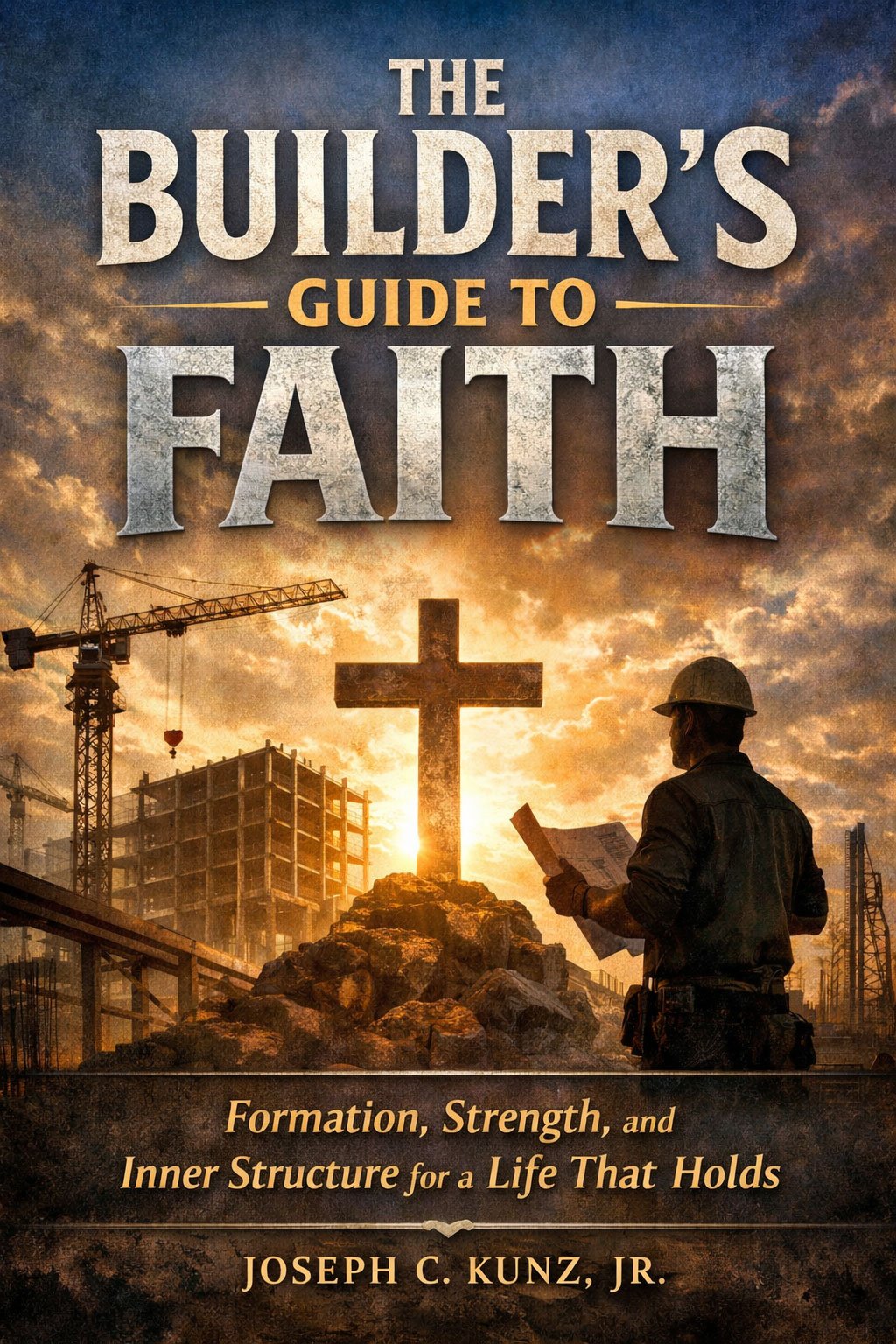
That is exactly why I wrote The Builder’s Guide to Faith.
This is not a soft religious book for people who want to feel inspired for ten minutes and then drift right back into the same shallow habits, weak convictions, and borrowed language. It is a book about building faith into the structure of your life so deeply that it stops being a performance and starts becoming strength. Real strength. Quiet strength. Load-bearing strength. The kind that holds when life gets ugly, when the culture gets hostile, and when you are forced to decide whether you actually believe what you claim to believe.
If you are tired of public Christianity with no backbone, sacred words with no reverence, and people using God-language like political cologne, this book was written for you. And if somewhere deep down you know your own faith needs more depth, more structure, more obedience, and more fire than it has right now, then stop circling the issue.
Step into The Builder’s Guide to Faith and start building a faith that can actually carry the weight of your life.
Coming soon.