Moral Clarity vs. Semantic Theft
When words stop serving truth, they start serving power. —Joseph C. Kunz, Jr.
Why a Culture That Cannot Define Its Words Cannot Govern Its Conscience
By Joseph C. Kunz, Jr.
Synopsis
This isn’t an argument about academic word games, dictionary debates, or the petty habit of correcting people for using imperfect language. In this essay, Joseph C. Kunz, Jr. argues that moral words must be defined honestly because words such as empathy, love, justice, mercy, truth, freedom, responsibility, and hate are not decorative. They shape conscience, judgment, character, family life, public life, and the moral decisions we make every day.
Kunz makes the case that much of our cultural disorder begins when movements steal serious moral words, empty them of their real meaning, and refill them with tribal meaning. Empathy becomes obedience. Love becomes approval. Hate becomes disagreement. Justice becomes ideology. Truth becomes narrative. Freedom becomes appetite. Responsibility becomes blame. Once that happens, we are no longer using words to clarify reality. We are using words to control moral perception.
The conclusion is simple: moral clarity gives us words we can live by. Semantic theft gives movements words they can use to control us. A culture that cannot define its moral words cannot govern its moral life.
A culture loses its conscience one stolen word at a time. —JCK
I. Introduction: The First Theft Is Meaning
The more I write, the more I realize that many of our deepest arguments are not really arguments about policy, politics, religion, education, family, money, identity, or culture.
They are arguments about words.
What does love mean?
What does justice mean?
What does empathy mean?
What does freedom mean?
What does responsibility mean?
What does truth mean?
What does hate mean?
Those questions sound simple until a culture begins answering them dishonestly.
A society can survive many disagreements. It can survive intense political debate. It can survive arguments about taxation, schools, immigration, healthcare, welfare, policing, religion, business, and foreign policy. A free people will always disagree about many things.
But a society cannot survive forever when its moral vocabulary is stolen.
That is what I mean by semantic theft.
Semantic theft happens when a serious moral word is taken from its proper meaning, emptied out, and refilled with a meaning that serves a movement, a tribe, an institution, a party, a personality, or an appetite.
The word still sounds moral.
The word still carries emotional force.
The word still makes us feel accused, approved, enlightened, compassionate, brave, guilty, righteous, or ashamed.
But it no longer serves truth.
It serves power.
That is why the corruption of language is never merely intellectual. It enters the conscience. It enters the family. It enters the school. It enters the church. It enters politics. It enters the workplace. It enters money. It enters legacy. It reaches the places where real life is actually built or broken.
Before we can live truthfully, we must be able to name reality truthfully.
That is where moral clarity begins.
II. Words Are Load-Bearing
Words are not decorative.
They are not verbal wallpaper.
They are not little noises we attach to feelings.
Words carry meaning, and meaning carries judgment. Judgment shapes action. Action shapes character. Character shapes families, institutions, nations, and generations.
A child who is never taught the difference between love and approval will grow up confused about both.
A citizen who is trained to believe that disagreement is hatred will eventually lose the ability to hear correction.
A believer who is taught that mercy means removing every moral boundary will struggle to understand repentance.
A worker who is told that success is greed may resent the discipline that could make him stable, useful, and generous.
A parent who confuses compassion with indulgence may call it kindness while quietly weakening a child.
This is why definitions matter.
Definitions are not academic decorations. They are load-bearing beams. If the beams are weakened, the whole structure begins to bend.
A culture does not collapse only when laws change. It collapses when the words needed to understand law, liberty, duty, truth, justice, family, sin, grace, work, wealth, and love no longer mean what they should mean.
Once words lose their proper meaning, we do not merely speak badly.
We judge badly.
And once we judge badly, we live badly.
III. What Moral Clarity Is
Moral clarity is not the same as harshness.
It is not the same as certainty without humility.
It is not the same as shouting louder than the next person.
It is not the same as reducing complicated questions to slogans.
Moral clarity means seeing a thing clearly enough to name it truthfully and respond to it responsibly.
It means love is not approval.
It means mercy is not permissiveness.
It means compassion is not surrendering judgment.
It means justice is not revenge.
It means truth is not cruelty.
It means freedom is not appetite.
It means responsibility is not blame.
It means empathy is not weakness.
It means courage is not contempt.
It means humility is not silence before lies.
Moral clarity gives us usable words. It helps us know what we are dealing with. It helps us distinguish between a wound and an excuse, mercy and enabling, courage and arrogance, discipline and control, freedom and self-destruction.
This kind of clarity is not cold. It is merciful because it refuses to leave us trapped inside confusion.
A father needs moral clarity.
A mother needs moral clarity.
A pastor needs moral clarity.
A teacher needs moral clarity.
A business owner needs moral clarity.
A nurse needs moral clarity.
A citizen needs moral clarity.
A young person needs moral clarity before the culture hands him a vocabulary designed to weaken him.
Moral clarity is one of the ways truth becomes useful.
It is not enough to believe that truth exists. We must be able to speak it clearly enough for ordinary serious people to live by it.
IV. What Semantic Theft Is
Semantic theft is different from ordinary disagreement.
We can disagree honestly about what a word means at the edges. We can debate how a moral principle applies in a difficult case. We can argue over facts, consequences, duties, responsibilities, and remedies.
That is normal.
Semantic theft is more dishonest than that.
It happens when a word with moral authority is captured and made to serve something smaller than truth.
The stolen word keeps its emotional weight but loses its honest meaning.
Empathy becomes: agree with my policy or you are cruel.
Love becomes: approve what I approve or you hate people.
Justice becomes: support my ideology or you defend oppression.
Truth becomes: repeat my side’s narrative.
Freedom becomes: let me obey my appetites without consequence.
Responsibility becomes: shame the person I want blamed.
Mercy becomes: remove the boundary.
Safety becomes: silence the person who makes me uncomfortable.
Progress becomes: accept whatever change my side demands.
Inclusion becomes: include every identity except the people who disagree with the ideology of inclusion.
This is not language growing richer.
It is language being drafted into service.
The theft is especially dangerous because moral words have authority over us, especially when we are trying to be decent. Most of us do not want to be hateful, cruel, unjust, selfish, unloving, or indifferent. So when those words are manipulated, we can be pressured through our own desire to be good.
That is why semantic theft is so effective.
It does not always need censorship.
It often works through guilt.
It teaches us to accept the new meaning of a word because resisting the new meaning feels morally dangerous.
V. How the Theft Works
Semantic theft usually follows a pattern.
First, a good word is expanded beyond its proper meaning.
Love no longer means willing the good of another person. It becomes affirming whatever another person wants. Empathy no longer means entering another person’s experience with understanding. It becomes adopting that person’s interpretation of reality. Justice no longer means giving what is due. It becomes producing the outcome preferred by a movement.
Second, the old meaning becomes suspect.
If you say love requires truth, you are called unloving. If you say empathy does not require agreement, you are accused of lacking empathy. If you say justice must also be fair, you are treated as someone defending injustice.
Third, the stolen word becomes a test of loyalty.
Do you believe in compassion?
Do you believe in inclusion?
Do you believe in justice?
Do you believe in freedom?
Those questions can be honest. But they can also become traps when the speaker has already redefined the word so that only one approved answer is allowed.
Fourth, disagreement becomes moral guilt.
You are no longer wrong.
You are cruel.
You are hateful.
You are unsafe.
You are oppressive.
You are on the wrong side of history.
You are unchristian.
You are disloyal.
At that point, the word is no longer being used to clarify reality. It is being used to control the person who wants to remain morally decent.
That is how semantic theft moves from language into conscience.
VI. The Theft of Empathy
The recent argument over empathy is a perfect example.
One side can twist empathy into political obedience.
In that version, empathy means that if I recognize another person’s suffering, I must accept a particular explanation of that suffering, a particular list of causes, and a particular policy remedy. If I disagree with the remedy, I am accused of lacking empathy.
That is false.
Empathy can alert the conscience. It can make me pause, listen, soften, notice, and resist the temptation to turn away from another person’s pain.
But empathy does not automatically settle every question of truth, responsibility, cause, remedy, policy, consequence, or justice.
A hungry child matters.
A frightened migrant matters.
A sick patient matters.
A lonely teenager matters.
A poor family matters.
A struggling worker matters.
A fearful parent matters.
Empathy helps me see that the person matters. It does not by itself tell me what the wisest, most truthful, most just, and most responsible response must be.
But the other side can also twist empathy.
Some people now speak as if empathy itself is weakness, manipulation, softness, or moral danger. They are right to warn that empathy can be weaponized. They are wrong if they begin treating empathy as something beneath a serious Christian, a serious man, or a serious citizen.
That is also semantic theft.
Empathy is not obedience.
Empathy is not weakness.
Empathy is the disciplined capacity to recognize another person’s experience without surrendering truth.
A Christian conscience should be able to feel pain without being ruled by emotion. It should be able to tell the truth without becoming hard. It should be able to listen without becoming gullible. It should be able to care without being controlled.
That is moral clarity.
Both distortions must be refused.
VII. The Theft of Love and Hate
Love may be the most stolen word in public life.
In Christian terms, love is not mere sentiment. It is not approval. It is not emotional warmth alone. It is willing the good of another person, even when that good requires truth, patience, sacrifice, correction, forgiveness, restraint, or courage.
A parent who loves a child does not approve everything the child wants.
A friend who loves another friend does not bless every self-destructive choice.
A pastor who loves his people does not remove every hard teaching.
A citizen who loves his country does not pretend every national failure is imaginary.
Love without truth becomes sentimentality.
Truth without love becomes a weapon.
But when love is stolen, it becomes approval. Then the person who refuses to approve is accused of hatred.
That is the companion theft.
Hate no longer means hatred.
It means disagreement.
It means boundary.
It means correction.
It means refusal to participate.
It means moral judgment.
Once hate is redefined this way, ordinary moral life becomes almost impossible. Parents cannot correct without being accused of rejection. Christians cannot uphold doctrine without being accused of cruelty. Citizens cannot defend law without being accused of malice. Workers cannot question unfairness without being accused of lacking compassion.
A culture that cannot distinguish hatred from disagreement will eventually lose both truth and love.
Because if every disagreement is hatred, then actual hatred becomes harder to name.
That is one of the hidden costs of semantic theft. It does not only punish innocent disagreement. It weakens our ability to confront the real evil the stolen word once named.
VIII. The Theft of Justice and Mercy
Justice is another word that carries great moral authority.
It should.
Justice matters because human beings matter. Wrongs should be named. Victims should not be ignored. Power should not be allowed to abuse the weak. Law should not become a costume for favoritism. A society without justice cannot remain decent.
But justice is stolen when it becomes whatever outcome a movement demands.
Justice is not simply helping my side win.
Justice is not punishing one group to flatter another.
Justice is not replacing one unfairness with another unfairness and calling the second one progress.
Justice is not a slogan that frees us from evidence, proportion, due process, truth, mercy, or responsibility.
Justice must remain tied to reality. It must ask what happened, who did what, what is owed, what is fair, what can be repaired, what cannot be repaired, and how we protect both the victim and the moral order.
Mercy is also stolen.
Mercy does not mean pretending wrong is not wrong.
Mercy does not mean every boundary is cruel.
Mercy does not mean consequences are always unloving.
Mercy does not mean the victim must remain endlessly available to the offender.
Mercy is kindness beyond strict desert, but it does not erase truth. In Christian life, mercy and truth meet. Mercy without truth becomes indulgence. Truth without mercy becomes hardness.
A family needs both.
A church needs both.
A country needs both.
A conscience needs both.
When justice is stolen, we become self-righteous.
When mercy is stolen, we become permissive.
When both are stolen, the culture loses the ability to correct evil without becoming evil in the process.
IX. The Theft of Freedom and Responsibility
Freedom is one of the great words of human life.
But freedom may be the easiest word to cheapen.
A free person is not merely a person who can do whatever he wants. A free person is capable of governing himself. He can say yes to what is good and no to what deforms him. He can carry duty. He can restrain appetite. He can make promises and keep them. He can build a life that is not ruled by impulse.
Freedom requires inner structure.
That is why responsibility is not the enemy of freedom. Responsibility is what makes freedom possible.
But when freedom is stolen, it becomes appetite.
I want, therefore I should.
I feel, therefore I am.
I desire, therefore you must affirm.
I choose, therefore consequence is oppression.
That is not freedom.
That is slavery with better public relations.
Responsibility is stolen in a different way.
Sometimes responsibility is twisted into blame. We use it to dismiss suffering, crush weakness, or refuse help. We say “be responsible” when we really mean “your pain is inconvenient to me.”
That is not responsibility.
That is coldness using a serious word as camouflage.
Other times responsibility is erased altogether. Every failure is blamed on systems, trauma, history, family, economics, identity, oppression, biology, bad luck, or someone else’s choices. Some of those things may be real. Some may matter deeply. But none of them eliminates the human responsibility to respond as faithfully as possible to the life actually given.
A mature society must be able to say two things at once:
We are shaped by circumstances we did not choose.
We are still responsible for what we do with the life entrusted to us.
That is not cruelty.
That is moral adulthood.
X. Faith Cannot Survive Stolen Words
Semantic theft becomes especially dangerous inside Christianity.
Christianity depends on words that must not be emptied out.
Sin.
Grace.
Mercy.
Repentance.
Forgiveness.
Judgment.
Love.
Truth.
Faith.
Lord.
Savior.
Cross.
Resurrection.
If those words are softened, politicized, sentimentalized, or reduced to slogans, Christianity does not remain intact. It becomes religious decoration.
Sin becomes trauma.
Grace becomes self-acceptance.
Mercy becomes permission.
Repentance becomes self-improvement.
Forgiveness becomes emotional release.
Faith becomes optimism.
Love becomes approval.
Judgment becomes meanness.
Truth becomes my personal journey.
Jesus becomes a mascot for whatever moral mood the culture already prefers.
That is not Christian formation.
It is spiritual confusion with Christian vocabulary.
A believer cannot be formed by words that have been hollowed out.
This is why churches must be especially careful with language. A pastor does not serve people by making the faith sound easier than it is. A Christian leader does not serve people by attaching sacred words to political conclusions and calling the result discipleship. A teacher does not serve people by using mercy to remove repentance or using truth to remove mercy.
The Christian conscience needs words strong enough to carry reality.
It needs sin to mean sin.
Grace to mean grace.
Mercy to mean mercy.
Truth to mean truth.
Love to mean love.
Lord to mean Lord.
Without that clarity, faith becomes a vocabulary we use rather than a foundation we stand on.
XI. Work, Wealth, and the Theft of Economic Words
Semantic theft does not stop with politics and religion. It also enters work and wealth.
Success gets stolen.
Sometimes success is treated as proof of virtue. If a person has money, status, growth, influence, or visibility, we may assume he must be wise.
That is false.
Success can be earned through discipline, service, competence, sacrifice, and stewardship. It can also be gained through vanity, exploitation, manipulation, luck, or appetite.
Success needs moral judgment.
But success is also stolen in the opposite direction. Some people treat success as automatically suspect. Wealth becomes greed. Ambition becomes exploitation. Profit becomes theft. Independence becomes selfishness. Business becomes oppression.
That is also false.
Work is not greed.
Wealth is not automatically corruption.
Ambition is not automatically pride.
Profit is not automatically exploitation.
Independence is not automatically selfishness.
A person can build wealth as stewardship. A business can serve customers, employ workers, support families, fund generosity, and create stability. Money can become a tool for freedom, provision, charity, responsibility, and legacy.
But that requires clear words.
Greed must mean greed.
Stewardship must mean stewardship.
Wealth must mean wealth.
Provision must mean provision.
Exploitation must mean exploitation.
If those words are stolen, we will either worship money or despise the disciplines that make financial strength possible.
Both errors damage ordinary families.
A well-built life needs work and wealth language that is morally clear enough to resist both greed and resentment.
XII. Legacy Depends on Honest Transmission
Legacy is not only what we leave behind.
It is what we hand forward.
That includes money, property, businesses, books, habits, stories, family memories, warnings, examples, and faith. But it also includes words.
A generation that cannot define its moral vocabulary cannot faithfully form the next generation.
What will children inherit if love means approval, discipline means harm, freedom means appetite, justice means ideology, truth means preference, and faith means comfort?
They will inherit confusion.
They may have technology.
They may have credentials.
They may have entertainment.
They may have information.
They may even have money.
But they will not have the moral architecture needed to build a life that holds.
This is why parents and grandparents must care about language. Not because we want children to sound old-fashioned or repeat phrases from another era, but because we want them to possess words strong enough to help them live truthfully.
A child needs to know that love may correct him.
A teenager needs to know that freedom requires self-government.
A young adult needs to know that work is not punishment.
A husband needs to know that sacrifice is not oppression.
A wife needs to know that strength is not domination.
A citizen needs to know that disagreement is not hatred.
A believer needs to know that grace is not permission to remain unchanged.
This is transmission.
This is legacy.
A civilization does not pass itself forward only through monuments, documents, and holidays. It passes itself forward through words that still mean something.
XIII. Why Politics Loves Stolen Words
Politics loves stolen words because stolen words make persuasion easier.
It is hard to persuade us with careful arguments.
It is easier to capture a word we already respect.
No political movement wants to say, “Support us because we want power.”
It says justice.
It says freedom.
It says compassion.
It says safety.
It says democracy.
It says equality.
It says patriotism.
It says the common good.
Some of those words may be used honestly. Public life cannot function without moral language. Citizens should argue about justice, freedom, safety, order, compassion, rights, duties, and the common good.
The problem is not that politics uses moral words.
The problem is that politics often steals them.
Once a political side defines every moral word in its own favor, it no longer needs to answer hard questions. It can accuse instead.
You do not support our program?
Then you oppose justice.
You do not accept our theory?
Then you reject truth.
You do not approve our demand?
Then you are hateful.
You do not trust our authority?
Then you are dangerous.
This happens on the left.
It happens on the right.
It happens in churches.
It happens in universities.
It happens in corporations.
It happens in media.
It happens wherever people discover that controlling words is easier than earning trust.
That is why moral clarity is a civic duty.
A citizen who cannot define words cannot resist being manipulated by them.
XIV. The Duty of People Entrusted with Words
Some people carry a special responsibility here.
Pastors carry it.
Teachers carry it.
Writers carry it.
Parents carry it.
Professors carry it.
Journalists carry it.
Editors carry it.
Public officials carry it.
Anyone who has been entrusted with language, learning, teaching, preaching, publishing, or influence carries a duty to clarify rather than confuse.
That does not mean every sentence must be perfect.
It does not mean ordinary people should be shamed for using imprecise language.
It means that those who know better have no moral right to make confusion worse.
A pastor should not use Christian words to hide political pressure.
A teacher should not use education to make students unable to name reality.
A journalist should not use moral labels as shortcuts for thought.
A writer should not use cleverness to decorate confusion.
A parent should not hand a child slogans where definitions are needed.
Language is a trust.
When the people entrusted with language betray that trust, they do not remain neutral. They become part of the disorder.
This is not anti-intellectual.
It is pro-duty.
The greater the gift, the greater the responsibility.
If a person has been given education, words, books, platforms, pulpits, classrooms, or public trust, then he has a duty to use those gifts in service of truth.
When he does not, language becomes fog.
And fog is useful to people who do not want to be seen clearly.
XV. Rebuilding the Vocabulary of a Well-Built Life
The answer is not to stop using moral words.
That would surrender the field.
The answer is to recover them.
We need to define words carefully, use them honestly, and refuse to let any movement steal them without resistance.
This begins in ordinary life.
At the family table.
In church.
In schools.
In conversations with children and grandchildren.
In business decisions.
In political arguments.
In private self-examination.
In the words we use when no audience is applauding us.
A well-built life needs a well-built vocabulary.
Faith needs words like truth, sin, grace, repentance, mercy, surrender, and Lord.
Responsibility needs words like duty, discipline, courage, self-government, prudence, and accountability.
Work and wealth need words like stewardship, provision, competence, independence, profit, generosity, and greed.
Legacy needs words like family, formation, inheritance, transmission, wisdom, memory, and honor.
These words cannot be left undefended.
They are part of the structure.
If we want to build lives that hold, we must learn to ask:
What does this word actually mean?
Who benefits if the meaning changes?
What truth is being clarified?
What truth is being hidden?
Is this word forming my conscience or pressuring it?
Is it helping me see reality or helping someone control how I see reality?
Those questions are not small.
They are how we resist manipulation.
They are how families rebuild judgment.
They are how believers protect conscience.
They are how citizens remain free.
XVI. Conclusion: Recover the Words, Recover the Conscience
We will not fix everything by defining words.
Definitions alone do not save souls, raise children, build businesses, heal families, govern nations, or make people virtuous.
But without honest words, those things become harder to do.
A person cannot repent if sin has no meaning.
A parent cannot correct if love has been reduced to approval.
A citizen cannot debate if disagreement has been renamed hate.
A pastor cannot form conscience if mercy has been detached from truth.
A worker cannot build if success and greed are treated as the same thing.
A society cannot pursue justice if justice means only victory for one side.
A culture cannot pass on wisdom if its deepest words have been stolen.
That is why moral clarity matters.
It gives us words we can live by.
Semantic theft gives movements words they can use to control us.
The difference is not academic.
It is civilizational.
It is spiritual.
It is personal.
It reaches the home, the church, the classroom, the workplace, the ballot box, the hospital room, the business, the marriage, the conscience, and the inheritance.
Every generation must decide whether it will hand forward truth or fog.
We cannot govern ourselves if we cannot define our words.
We cannot form children if we cannot tell them what love, truth, discipline, mercy, freedom, responsibility, and faith mean.
We cannot rebuild a culture while speaking in stolen language.
The conclusion is simple: recover the words, and you begin recovering judgment. Recover judgment, and you begin recovering responsibility. Recover responsibility, and you begin rebuilding lives that can carry faith, work, wealth, family, and legacy without collapsing under the weight of confusion.
A culture that cannot define its moral words cannot govern its moral life.
And if we want to live truthfully, we must begin by refusing to let our words be stolen.
Recover the words, and you begin recovering the conscience. Lose the words, and the conscience will eventually learn to speak in the language of power. —JCK
Related Essays: When Words Become Moral Pressure
These essays continue the work of recovering moral language from both sentimentality and ideological control.
Christian compassion is not weakness, but it must be formed by truth, mercy, practical wisdom, and moral courage so empathy does not become sentimentality and truth does not become cruelty.
Reader Comment: Read this alongside Moral Clarity vs. Semantic Theft because empathy is one of the clearest examples of a good moral word being twisted by more than one side.
Quote: Empathy can open the heart, but it cannot replace the conscience. —JCK
2. When Compassion Becomes Political Obedience
Christian leaders should form believers capable of carrying mercy, truth, practical wisdom, and responsibility together, not use compassion to demand political obedience.
Reader Comment: This is the direct companion essay because it shows how stolen moral language can move from public debate into the pulpit, the conscience, and the believer’s sense of Christian duty.
Quote: The moment political agreement becomes the required proof of Christian compassion, formation has begun turning into control. —JCK
Related Book: Handing Forward Words Strong Enough to Hold
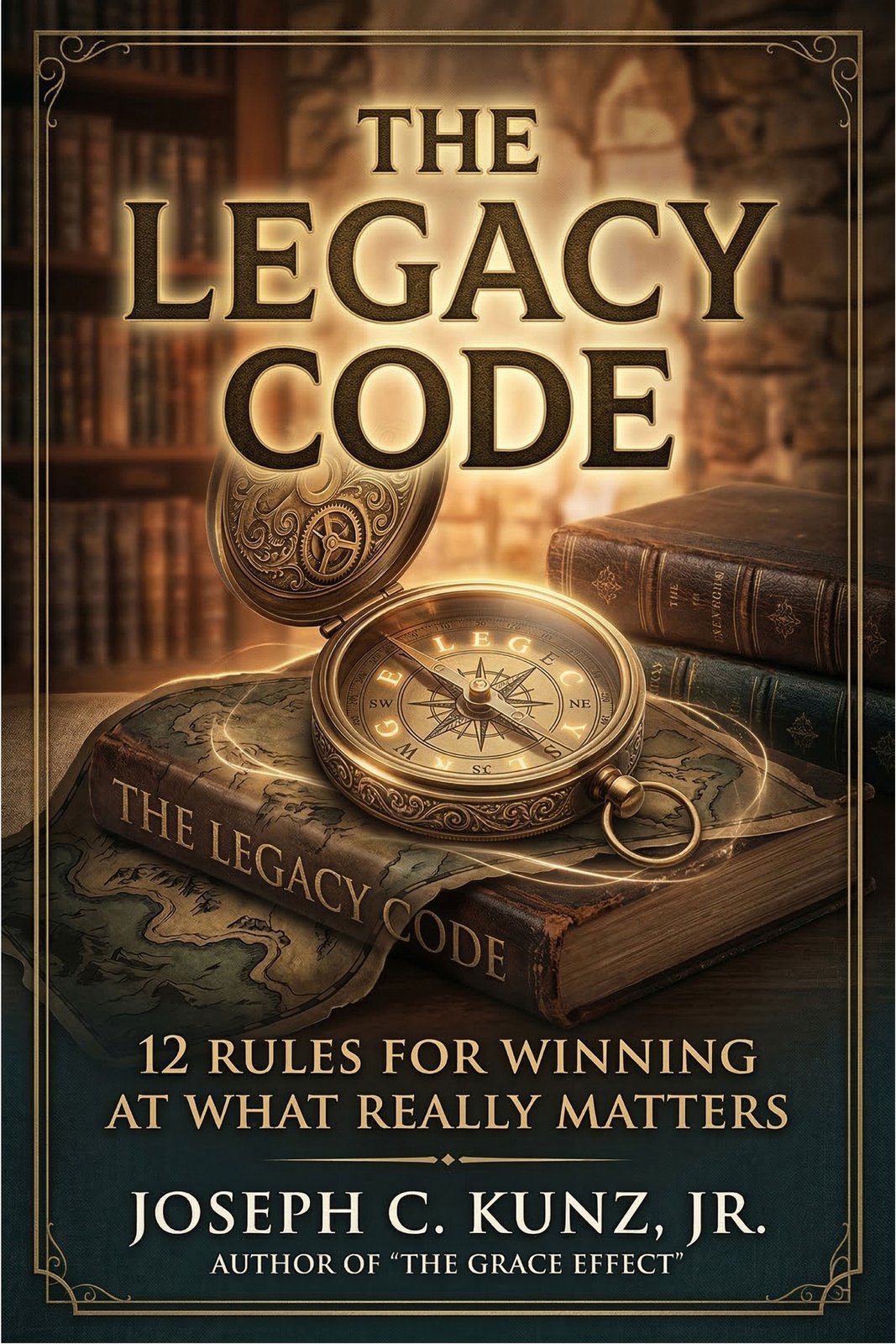
Every generation inherits more than money. It inherits words. And when those words are weakened, stolen, or emptied out, the next generation receives confusion disguised as freedom, sentiment disguised as love, appetite disguised as identity, and slogans disguised as wisdom.
The Legacy Code is being written for people who understand that legacy is not only what sits in a bank account, a will, a house, a business, or a family name. Legacy is also the moral vocabulary, faith, discipline, judgment, memory, and example we hand forward before we are gone.
If you want your children and grandchildren to inherit more than possessions, this book is for you.
If you believe wisdom must be transmitted before it disappears, this book is for you.
If you want to hand forward words strong enough to help the next generation build lives that hold, this book is being built for exactly that purpose.
Being Built to Hold: The Legacy Code