Making Money Without Losing Your Soul
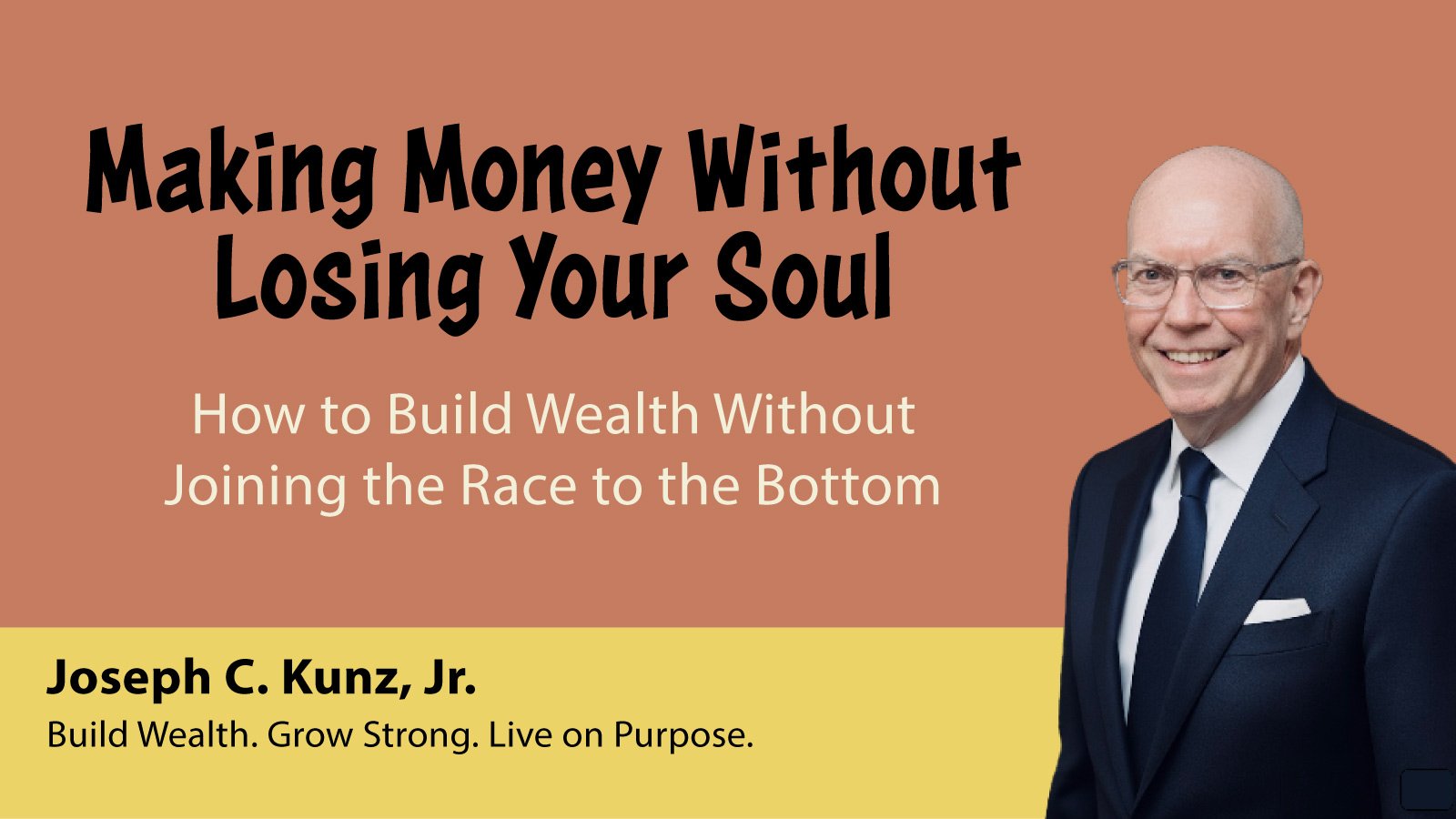
You don’t need to sell your soul to get rich—you just need the discipline to play the long game, protect your values, and build a reputation so strong that people gladly pay you more than your competition. —Joseph C. Kunz, Jr.
How to Build Wealth Without Joining the Race to the Bottom
By Joseph C. Kunz, Jr.
Synopsis
In a culture obsessed with fast money, too many people trade their values for a payday—and end up bankrupt in character even if their bank account grows. In this essay, Kunz shows how to create real wealth without compromising your principles, why faith is your most valuable business advantage, and how a reputation for honesty, reliability, and service can make you not just successful but irreplaceable.
Integrity isn’t a limitation in business—it’s the advantage your competitors can’t copy. —JCK.
I. Introduction
If making money means losing yourself, you’re not getting richer—you’re getting poorer.
The headlines are full of people who traded their integrity for a payday: corporate executives, politicians, influencers, and everyday folks who decided the quick score was worth it. They had the money—for a while. But they lost the one thing you can’t buy back: their soul.
Here’s the truth most people don’t want to hear: you can build wealth without selling out your beliefs, but it takes clarity, conviction, and the willingness to walk away from easy money. The easy road often leads straight into a ditch.
I’ve seen it in business, investing, and life. The people who get ahead and stay ahead aren’t the ones who cut the most corners—they’re the ones who draw the clearest lines.
II. The Myth of Morality as a Handicap
There’s a toxic idea floating around that morality makes you weak in business. That if you “play fair,” you’ll get eaten alive by the sharks. That’s only true if you’re playing the wrong game.
In the short term, sure—the hustler who lies about the numbers, fakes the effort, or plays dirty might grab some quick wins. But in the long game, those wins rot from the inside.
• Customers stop trusting them.
• Partners stop working with them.
• Their reputation becomes a warning label.
Integrity is not a handicap. It’s a moat. It’s the thing that keeps you from constantly rebuilding after every moral collapse.
The people who last in business and wealth-building are the ones you trust to keep their word even when no one’s watching. That’s not weakness—that’s unshakable strength.
In the long game, integrity compounds faster than money. —JCK
III. Why Faith and Wealth Aren’t Opposites
Some people think faith and wealth live on opposite ends of the street. Faith is about humility, service, and sacrifice; wealth is about ambition, power, and accumulation.
That’s a false choice. Faith isn’t an obstacle to wealth—it’s the compass that keeps you from driving off the cliff.
The principles of my faith—stewardship, hard work, honesty, generosity—are not just morally right, they’re financially smart.
• Stewardship keeps you from wasting resources.
• Hard work creates value others will pay for.
• Honesty builds trust, which is the foundation of every transaction.
• Generosity keeps greed from warping your judgment.
Without that compass, money becomes the master instead of the servant. That’s when people start justifying things they swore they’d never do.
Faith and wealth are not enemies—they’re allies when you put them in the right order.
IV. Signs You’re Selling Out
You don’t lose your soul in one dramatic moment. You lose it in a series of small trades you tell yourself don’t matter.
Watch for these warning signs:
• You take a deal that makes you uncomfortable but tell yourself, “it’s just this once.”
• You start keeping two sets of rules: one for business, one for personal life.
• You measure opportunities only by the payday, not by whether they align with your values.
• You start neglecting your health, marriage, or kids in the name of “building a future” that may never arrive.
The problem isn’t that you’re making money. The problem is when the money starts making you.
V. The Power of Value‑Aligned Wealth
When your money and your values are pulling in the same direction, everything changes.
• Decisions get easier. You know exactly what you will and won’t do.
• Your reputation strengthens. People know you can be trusted—which attracts better opportunities.
• Your relationships last. Integrity builds loyalty that money alone never will.
• You sleep at night. Peace of mind is worth more than any investment return.
I’ve worked with people who made fortunes on shaky deals. Some ended up bankrupt, others in prison, others just bitter and alone. I’ve also worked with people who got rich slow, by doing things the right way. They didn’t just have money—they had respect, peace, and freedom.
That’s the wealth worth chasing.
VI. Practical Rules for Making Money Without Losing Your Soul
This isn’t complicated. It’s not easy—but it’s simple.
• Set your non‑negotiables early. Decide now what you will never do for money. If you wait until you’re tempted, it’s already too late. Example: I’ve turned down large contracts that required cutting corners on safety—because once you cross that line, you can’t go back.
• Choose the long game. Walk away from deals that only work if you compromise your principles. Example: I’ve watched competitors win a quick bid with a lowball offer and cheap materials—and then lose the client forever when the work failed.
• Align your work with your purpose. If your income doesn’t support your mission, it will eventually fight it. Example: A business that feeds your soul will get more of your energy and creativity than one that drains you just to pay bills.
• Guard your time like treasure. Money can be made again; lost time and integrity cannot. Example: I block off time for my priorities, and I don’t let “urgent but unimportant” requests steal it.
• Be transparent. Honesty is not a marketing strategy—it’s a survival strategy. Example: I’d rather over‑explain a delay or problem to a client than risk them finding out the hard way. It always earns trust in the long run.
VII. The Unfair Advantage of Simply Doing the Basics
Here’s a secret most business schools won’t tell you: you can beat out and outperform most of your competition simply by doing the basics—and doing them consistently.
Be honest. Mean what you say. Show up on time. Finish the job. Follow up with your customers and clients. That’s it. Do those few things, and you will win more trust, more repeat business, and more referrals than the people chasing shortcuts.
And here’s the real kicker: when you do these things consistently, over time, you can raise your prices. In my businesses, we’ve never competed on price—we compete on reputation, quality, and service. After a few years of showing up, delivering, and taking care of people, you build a base of customers and clients who come back to you again and again, gladly paying more because they know they’re getting unmatched value.
VIII. Choose Your Clients as Carefully as You Choose Your Prices
In our business, we try to avoid the “tire‑kickers”—the people looking for endless information, endless quotes, and endless attention without any real intention of hiring us. We also steer clear of the discount‑hunters who only care about finding the cheapest deal.
You will learn very quickly that these customers are usually trouble. They take up more time than they’re worth. They nitpick every detail. They pay late—if they pay at all. And worst of all, they rarely turn into loyal, repeat clients.
The clients who value quality, service, and professionalism will pay a fair price — and they’ll treat you like a partner, not a servant. When you focus on serving them, your business gets stronger, your work gets easier, and your reputation grows.
None of these things are complicated or time‑consuming. They’re not glamorous, but they work—because most people simply won’t do them. And when you do, you’ll not only stand out, you’ll earn the freedom to set your own rates, work with the best clients, and build a business that grows stronger and bigger every year.
That’s integrity in action—and it’s profitable.
IX. The Role of Generosity
If you want to keep your soul while building wealth, you need a habit that keeps greed in check—and generosity is that habit.
I’m not talking about being a pushover, working for free, or giving away money you can’t afford. I’m talking about making generosity part of your business DNA so it shapes how you treat people and how people see you.
A. Generosity in business looks like this:
1. Taking extra time to help a client even when you’re not getting paid for it.
2. Sharing valuable advice without worrying if it’ll make you a sale today.
3. Giving a loyal customer a little extra service or value without tacking it onto the invoice.
4. Supporting a cause that matters to your employees or community because it’s the right thing to do.
B. When you do these things consistently, three powerful things happen:
1. You stand out in a sea of takers. Clients remember you for going beyond the transaction.
2. You create loyalty that money alone can’t buy. People come back—and they send others to you.
3. You keep your focus on serving, not just selling. That keeps greed from steering your decisions.
Generosity keeps you human in a game that often rewards being cold. And the irony? The more generous you are in the right ways, the more profitable you tend to become—because most people are desperate to work with people they trust and respect.
X. The Payoff of Integrity
Integrity doesn’t just make you a better person—it makes you a better wealth‑builder.
• You avoid expensive mistakes that come from shady deals.
• You attract partners and clients who trust you enough to give you bigger opportunities.
• You build something that lasts because it’s on solid ground.
The payoff is more than financial. It’s emotional and spiritual. You don’t spend your life wondering who you’ve become. You don’t have to rewrite your own history to make it palatable.
XI. Conclusion
Money is a powerful tool—and a dangerous master. If you let it dictate your values, it will eventually consume them. But if you put it in its rightful place, it can fuel a life of purpose, service, and freedom.
You will be tempted—not once, but over and over—to trade a little piece of your integrity for a little more money. You will be told that “everybody does it.” You will see people cheat, cut corners, and get ahead, at least for a while. And you will wonder if maybe you’re the fool for playing it straight.
You’re not.
The truth is, wealth built on deception, exploitation, or broken promises isn’t really wealth—it’s a ticking time bomb. It might explode in public with a ruined reputation, a lawsuit, or a criminal charge. Or it might explode in private, when you look in the mirror and realize you’ve become someone you don’t even respect.
The real win is to get to the end of your career—and your life—with both a strong bank account and a clean conscience. To know that the people who worked with you, trusted you, and paid you their hard‑earned money would gladly do it all over again. That’s the definition of wealth worth chasing.
So, here’s the challenge: Decide now—not later—what kind of person you will be in business, investing, and wealth-building. Commit to the principles that matter most to you, and refuse to trade them for any amount of money. Build a reputation that makes people say, “If Joseph says it, it’s true. If Joseph promises it, it’s done.”
That’s the kind of wealth that can’t be stolen, taxed, or inflated away. And it’s the kind of wealth you can pass on—not just to your family’s bank accounts, but to their character.
Your reputation is your most valuable asset—guard it harder than your bank account, and the money will follow. —JCK
Related Essays: For Those Who Refuse to Trade Integrity for Income
If this essay challenged you, these will reinforce why wealth and values must walk hand in hand.
1. Wealth Is a Test. Here’s How to Pass It
Prosperity doesn’t just build freedom—it reveals your character more than adversity ever could.
2. Why Building Wealth Is a Moral Duty If You Love Your Family
Wealth built with intention and love becomes an act of stewardship for your family and legacy.
Reader Comment: This essay made me realize money isn’t selfish—it’s a responsibility to the people I love.
Related Book: Think you know how money works?
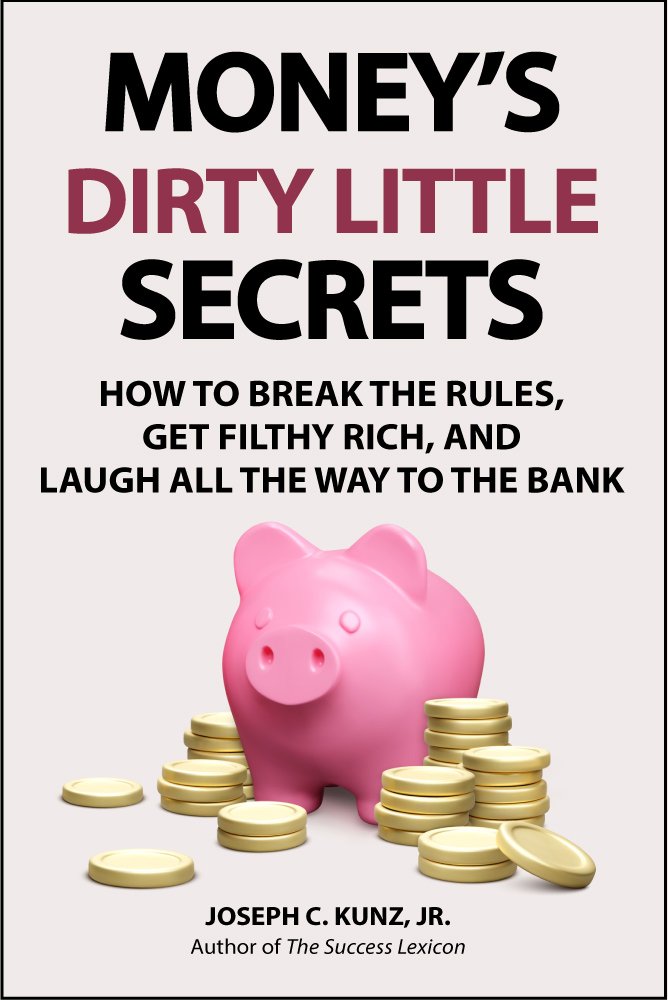
You don’t — and that’s exactly why the financial world eats people alive.
Money’s Dirty Little Secrets rips the polite mask off the system and shows you what really happens behind the curtain — the games, the traps, the lies, the “advice” designed to keep you predictable, compliant, and broke.
This isn’t another soft-spoken personal finance pep talk. It’s the handbook the insiders hope you never read. The one that explains:
• why the average person never gets ahead
• how the wealthy actually think
• and what rules you must break if you ever want to stop working for money and make money work for you
If you’re tired of feeling like the last one to the party… If you’re done watching everyone else build wealth while you settle for scraps… If you’re finally ready to stop being the sucker at the table and start stacking wealth on your own terms…
Grab the book now — before someone else takes your seat, your opportunity, and your future.
Read Money’s Dirty Little Secrets and flip the financial game in your favor.