Is Christianity a Zero-Sum Game?
Truth begins to sound like hatred when a culture forgets the difference between being corrected and being despised. —Joseph C. Kunz, Jr.
When Truth Is Mistaken for Hatred
By Joseph C. Kunz, Jr.
Synopsis
This isn’t a defense of religious arrogance, spiritual bullying, or the false idea that Christians have always spoken the truth with the humility their faith requires. In this essay, Joseph C. Kunz, Jr. argues that Christianity is often treated as a zero-sum game because it makes exclusive claims about God, truth, sin, salvation, and moral order. But exclusive truth is not the same thing as hatred, and Christian conviction does not give the believer permission to despise anyone.
Kunz makes the case that the modern world increasingly treats disagreement as injury, correction as cruelty, and moral conviction as domination. That confusion matters because it pressures Christians to choose between two false options: either surrender Christian truth in the name of kindness, or defend Christian truth with anger, contempt, and fear. Both choices are failures. Christianity demands something harder: truth without hatred, love without cowardice, conviction without cruelty, and mercy without moral surrender.
The conclusion is simple: Christianity is exclusive about ultimate truth, but it is not supposed to be hostile toward human beings. Christ does not ask His followers to hate in order to be faithful. He asks them to love enough to tell the truth, and to tell the truth humbly enough that love remains visible.
Christianity is exclusive at the level of ultimate truth and expansive at the level of human love. Confusing those two is where much of the modern argument goes wrong. —JCK
I. The Accusation Beneath the Words
I overheard someone say that religion is a zero-sum game.
That phrase stayed with me.
A zero-sum game is a situation where one side can gain only if the other side loses. If I win, you lose. If you win, I lose. There is only so much space, only so much power, only so much victory to divide.
I understand why someone might apply that phrase to religion.
If one religion says, “This is true,” then another religion making a different claim cannot be equally true in the same way. If Christianity says Jesus Christ is Lord, that is not a small claim. If Christianity says sin is real, grace is necessary, repentance matters, and salvation comes through Christ, then Christianity is not merely offering one lifestyle option among many.
It is making a claim about reality.
That is where many modern people become uncomfortable.
They may not use the phrase “zero-sum game,” but they often make the same accusation in other language.
They say Christianity is intolerant.
They say Christianity is exclusionary.
They say Christian morality is hateful.
They say Christians want to impose their beliefs.
They say public Christianity threatens freedom.
They say that if Christians are allowed to speak with confidence, someone else must be losing dignity, power, identity, or safety.
That is the accusation beneath the words.
Christianity is being treated not merely as a faith, but as a threat.
II. Why the Accusation Sounds Persuasive
The accusation sounds persuasive because Christianity really does make exclusive claims.
That needs to be admitted plainly.
Christianity does not say all religions are equally true.
Christianity does not say every moral choice is equally ordered.
Christianity does not say the human person is self-created, self-saving, and self-governing in the deepest sense.
Christianity does not say Jesus is one inspiring teacher among many.
Christianity says God is real.
It says Christ is Lord.
It says the human person is made in the image of God.
It says sin is real.
It says grace is necessary.
It says truth is not invented by appetite, emotion, culture, politics, or personal preference.
It says the self is not sovereign.
Those claims are not vague.
They have edges.
And in a culture that treats edges as cruelty, Christianity will always sound suspicious.
That is why the accusation works. It takes something true about Christianity — its exclusive claim about reality — and twists it into something false: the idea that Christians must therefore hate, dominate, or diminish everyone who disagrees.
That is the move.
It turns conviction into aggression.
It turns moral clarity into emotional violence.
It turns disagreement into injury.
It turns truth into hatred.
III. Christianity Is Not Embarrassed by Truth
A serious Christian should not apologize for believing Christianity is true.
That does not mean he should be arrogant.
It does not mean he should be harsh.
It does not mean he should speak as if he personally owns the truth rather than stands under it.
But he should not pretend Christianity is something less than it is.
Christianity is not merely a tradition.
It is not merely a culture.
It is not merely a private comfort system.
It is not merely a moral influence.
It is not merely a family heritage, a political identity, or a set of inspiring holidays.
Christianity is a truth claim about God, man, sin, grace, death, judgment, salvation, and eternal life.
That is why it cannot be reduced to “whatever helps you be a good person.”
A person can be polite and still be spiritually lost.
A person can be sincere and still be wrong.
A person can be wounded and still need repentance.
A person can be intelligent and still resist grace.
A person can be religious and still keep God at the edge of life instead of at the center.
Christianity presses deeper than manners, sincerity, feelings, and social peace.
It asks: What is true?
It asks: Who is Lord?
It asks: What must I surrender?
It asks: What must be forgiven?
It asks: What must be rebuilt?
Those questions will always disturb a world that wants comfort without conversion.
IV. Truth Is Not the Same as Contempt
Here is the distinction that must be defended:
A truth claim is not an insult.
If I say something is true, I am not automatically saying that every person who disagrees with me is worthless.
If I say a road is dangerous, I am not hating the driver.
If a doctor says the test results are serious, he is not attacking the patient.
If a father tells his child, “That path will hurt you,” he is not denying the child’s dignity.
If a friend says, “You are destroying yourself,” he is not necessarily being cruel.
He may be the only one loving enough to stop flattering.
Truth and contempt are different things.
Correction and hatred are different things.
Disagreement and dehumanization are different things.
This should be obvious.
But much of modern life has been trained to forget it.
We now live in a culture where many people demand not only tolerance, but affirmation. Not only legal space, but moral approval. Not only civility, but celebration. Under that new emotional law, the Christian who refuses to affirm everything is accused of attacking everyone.
That is not reason.
That is emotional blackmail dressed up as compassion.
And Christians must not surrender to it.
V. When Disagreement Is Renamed Injury
One of the great confusions of our age is the belief that disagreement wounds identity.
If I disagree with what you believe, I am said to be denying your existence.
If I question your moral claim, I am said to be attacking your dignity.
If I refuse to affirm your choice, I am said to be making you unsafe.
If I believe Christianity is true, I am said to be threatening everyone who does not believe it.
That way of thinking makes honest life almost impossible.
It turns conversation into combat.
It turns correction into abuse.
It turns moral standards into oppression.
It turns religion into a private hobby that may be tolerated only as long as it never speaks with authority.
But Christianity cannot accept that bargain.
A faith that may speak only when the culture approves its conclusions is no longer faith.
It is decoration.
It is permitted religion.
It becomes religion that serves the culture instead of challenging it.
Christianity cannot be reduced to that.
Christ did not say, “I am one option among many, as long as everyone feels affirmed.”
He said, “Follow me.”
That claim either means something or it does not.
VI. Christians Have Sometimes Made the Accusation Easier
This is where Christians must be honest.
Some Christians have made the accusation easier.
Some have spoken truth without love.
Some have confused courage with harshness.
Some have treated lost people as enemies rather than neighbors.
Some have acted as if winning an argument mattered more than bearing witness to Christ.
Some have treated politics as if it were the gospel.
Some have enjoyed the fight too much.
Some have spoken about sin with no visible memory of grace.
Some have used Christian language as a weapon for personal anger, tribal identity, or cultural resentment.
That is real.
And it should be admitted.
A Christian who tells the truth with contempt is not being more faithful. He is being less faithful.
A Christian who loves argument more than souls is not defending the faith well.
A Christian who speaks of sin without humility has forgotten what he himself has been saved from.
A Christian who enjoys humiliating others does not look like Christ.
Truth does not become false because a Christian handles it badly.
But bad handling does damage.
It gives critics an easier target.
It hides the beauty of the truth behind the ugliness of the messenger.
It makes Christianity look like what its critics already suspected: a weapon for control rather than a call to grace.
That is why responsibility matters.
Christians are responsible not only for whether they speak truth, but for how they speak it.
VII. Love Is Not Moral Surrender
The answer is not to stop speaking.
The answer is to stop confusing love with surrender.
Love does not require me to call falsehood true.
Love does not require me to call disorder freedom.
Love does not require me to call sin health.
Love does not require me to affirm every desire, approve every choice, or bless every direction a person wants to take.
That is not love.
That is cowardice with good manners.
Real love wants the good of the other person.
And if Christianity is true, then the good of the other person cannot be separated from truth, grace, repentance, forgiveness, and union with God.
A parent understands this.
A parent who loves a child does not affirm every impulse.
A doctor understands this.
A doctor who loves healing does not flatter disease.
A real friend understands this.
A real friend does not watch someone walk toward destruction and call silence compassion.
Christian love is not less serious than those examples.
It is more serious.
Because Christianity is not only concerned with comfort, approval, and emotional ease. It is concerned with the soul.
That is why Christian love can be tender and firm at the same time.
Mercy and truth are not enemies.
They belong together.
VIII. Where Christianity Really Is Zero-Sum
There is one sense in which Christianity is zero-sum.
Not in the sense that one person’s dignity must be destroyed so another person’s faith can stand.
Not in the sense that Christians must win by making enemies lose.
Not in the sense that love requires domination.
But Christianity is zero-sum about ultimate lordship.
God is God, or He is not.
Christ is Lord, or He is not.
Truth governs me, or appetite does.
Grace saves me, or I remain trapped in myself.
The self cannot occupy the throne and still call Christ Lord.
That is where the real conflict lives.
Not first between Christian and non-Christian.
Not first between church and culture.
Not first between religion and politics.
First, it is inside the human soul.
Who rules?
God or self?
Truth or desire?
Grace or pride?
Obedience or autonomy?
Humility or self-invention?
That is the zero-sum place Christianity exposes.
A man cannot finally serve two masters.
He cannot build his life on God and ego as equal foundations.
He cannot say Christ is Lord while keeping a locked room where Christ may not enter.
He cannot use faith as decoration while self-will remains the structure.
That is not hatred.
That is conversion.
And that is what many people resist most.
IX. Why the Culture Feels Threatened
Christianity feels threatening to the modern world because it challenges the central modern fantasy: the fantasy that the individual can define reality for himself.
That fantasy is everywhere.
You are whatever you say you are.
Your desires are your identity.
Your feelings are your truth.
Your freedom is your right to be affirmed.
Your body is raw material.
Your limits are oppressive.
Your past is irrelevant.
Your obligations are negotiable.
Your self-expression is sacred.
Christianity interrupts that fantasy.
It says you are not self-created.
It says your body matters.
It says your choices form you.
It says your desires must be disciplined.
It says your conscience must be trained.
It says your freedom must be governed by truth.
It says your life belongs to God before it belongs to you.
That sounds like oppression only to a culture that has mistaken appetite for freedom.
But a builder knows better.
A house is not oppressed by its foundation.
A bridge is not oppressed by its engineering.
A life is not oppressed by truth.
Truth is what keeps the structure from collapsing.
X. Where This Lands in Ordinary Life
This is not just a debate for theologians, professors, activists, and television panels.
It lands in ordinary life.
It lands when parents are afraid to teach their children moral boundaries because someone might call them hateful.
It lands when a Christian business owner wonders whether he must hide his convictions to be accepted.
It lands when a pastor softens every hard truth until the sermon becomes spiritual weather: pleasant, vague, and useless.
It lands when a young person believes that love means approval and that correction means rejection.
It lands when a family member is destroying himself and everyone around him, but no one wants to say the truth because truth might disturb the peace.
It lands when Christians become so afraid of being called hateful that they confuse silence with kindness.
That is not peace.
That is surrender.
And surrendering truth does not produce love.
It produces confusion.
It produces weak homes.
It produces shallow churches.
It produces children with no moral frame.
It produces adults who cannot tell the difference between compassion and indulgence.
It produces a culture where everyone is affirmed and almost no one is formed.
That is not mercy.
That is neglect.
XI. The Christian Responsibility
The Christian responsibility is harder than either side wants to admit.
The angry side wants truth without patience.
The cowardly side wants love without truth.
Christianity allows neither escape.
The Christian must speak truth.
But he must not speak it like a man who enjoys being right more than he desires another person’s good.
The Christian must love his neighbor.
But he must not define love as agreement with whatever the neighbor wants to believe.
The Christian must resist falsehood.
But he must not turn resistance into contempt.
The Christian must refuse moral surrender.
But he must not confuse firmness with cruelty.
This requires maturity.
It requires self-government.
It requires prayer.
It requires humility.
It requires remembering that the truth I speak also stands over me.
That is one of the safeguards against arrogance.
The Christian does not speak truth as its owner.
He speaks as one accountable to it.
He is not above the person he corrects.
He is under the same God.
He needs the same grace.
He stands before the same judgment.
That should change the tone.
XII. What Christian Witness Should Look Like
Christian witness should be clear enough to be understood and humble enough to be trusted.
That does not mean everyone will agree with it.
They will not.
It does not mean everyone will call it loving.
They will not.
It does not mean Christianity can avoid offense.
It cannot.
But there is a difference between the offense of truth and the offense of arrogance.
There is a difference between being hated for righteousness and being disliked because we are harsh, careless, smug, or needlessly insulting.
A Christian should not try to remove the offense of the cross.
But he should remove the offense of his own ego wherever he can.
Speak clearly.
Refuse contempt.
Name falsehood.
Honor the person.
Do not flatter sin.
Do not enjoy condemnation.
Do not let the fear of being misunderstood become an excuse for silence.
Do not let anger become proof of courage.
Do not let kindness become surrender.
Do not let the world define love for you.
And do not let the world convince you that truth becomes hatred the moment someone does not want to hear it.
XIII. Conclusion: Truth Does Not Need Hatred to Stand
Christianity is not a zero-sum game in the way its critics often suggest.
Christ does not become Lord by humiliating people.
Truth does not become stronger when Christians become cruel.
The Church does not become more faithful by treating lost people as enemies.
A Christian does not love God more by loving his neighbor less.
But Christianity is exclusive where it must be exclusive.
God is not one lifestyle accessory among many.
Christ is not one moral influencer among many.
Truth is not one personal preference among many.
The soul is not saved by self-expression.
Freedom is not built by appetite.
Love is not proven by moral surrender.
A Christian must be able to say those things without apology.
But he must say them as a man who knows he also needs grace.
That is the burden and beauty of Christian witness.
We do not get to trade truth for approval.
We do not get to trade love for victory.
We do not get to trade humility for cowardice.
We do not get to trade conviction for hatred.
The conclusion is simple: Christianity is not hateful because it tells the truth. Christians become unfaithful when they tell the truth without love, or when they abandon truth and call that love.
Truth does not need hatred to stand. It needs witnesses strong enough to speak clearly, humbly, and without surrender. —JCK
Related Essays: Truth, Compassion, and the Life That Holds
These essays continue the argument that faith must be both clear and humane: strong enough to tell the truth, and humble enough not to turn truth into contempt.
This essay argues that Christian compassion requires both mercy and moral backbone, because empathy becomes dangerous when it is used to silence truth, excuse disorder, or demand moral surrender.
Reader Comment: Read this next because it handles the other side of the same problem. If this essay explains why truth is not hatred, Empathy Is Not Weakness explains why compassion is not cowardice.
Quote: Compassion without truth does not heal. It often protects the wound from the medicine. —JCK
2. The Hunger for What Is Real
This essay argues that people are tired of fake confidence, fake freedom, fake spirituality, and fake wisdom because the soul eventually hungers for truth, structure, responsibility, and faith that can actually hold.
Reader Comment: This is the broader cultural companion to this essay. It shows why Christianity still speaks to people who are exhausted by slogans and hungry for something real.
Quote: A starving generation does not need more noise. It needs something real enough to build on. —JCK
Related Book: Faith That Can Tell the Truth Without Becoming Cruel
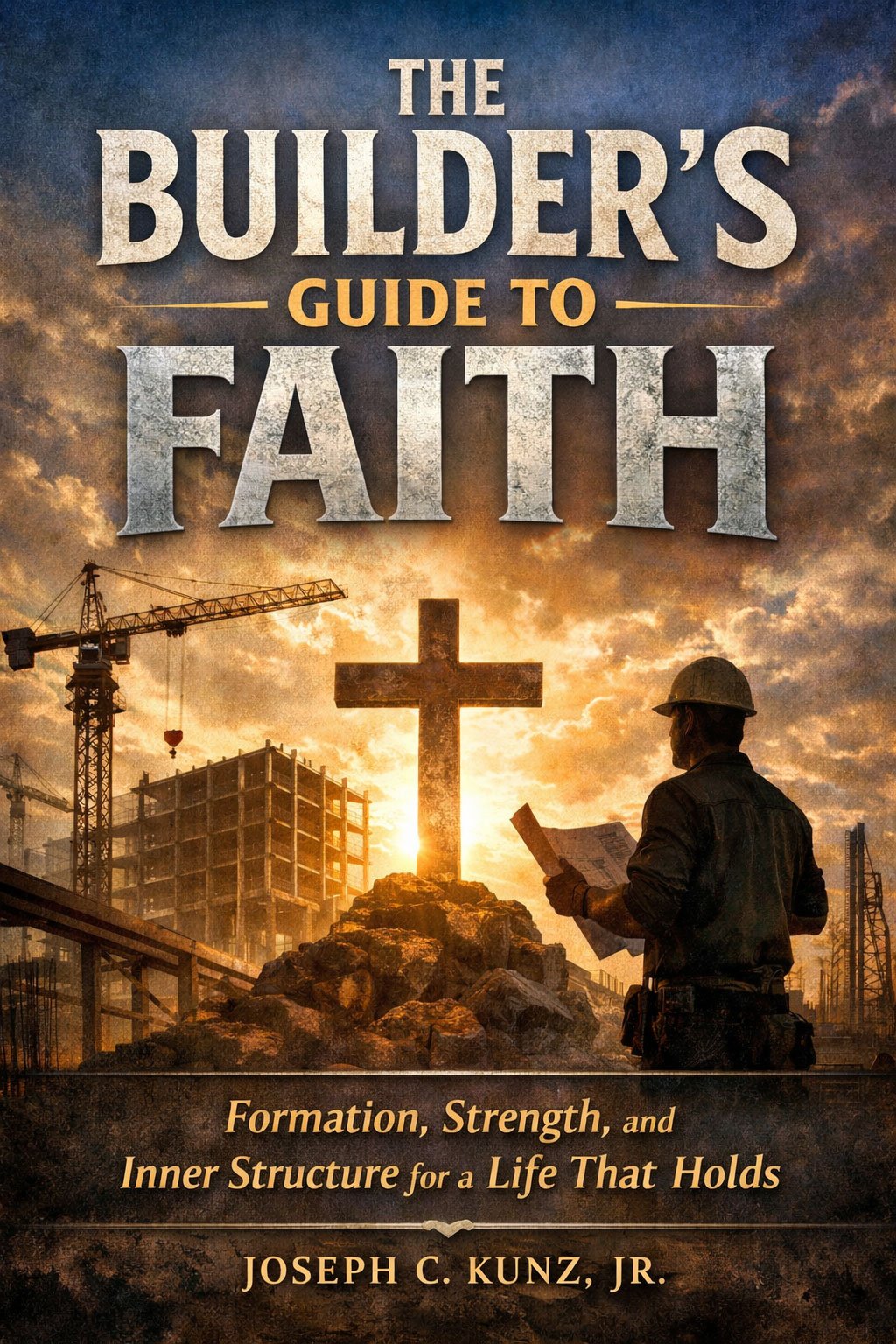
A weak faith hides when the culture gets loud. A harsh faith shouts because it does not know how to stand. Neither one is enough.
The Builder’s Guide to Faith is being written for people who are tired of soft religion, borrowed belief, spiritual decoration, and slogans that collapse under pressure. It is for men and women who need a faith strong enough to govern fear, ambition, money, work, family, suffering, public pressure, and legacy.
This book is not about sounding spiritual.
It is about being formed.
It is about faith as foundation, surrender as strength, truth as structure, responsibility under God, and the courage to keep building without pretending you are the foundation.
If you are tired of a culture that calls conviction hatred, this book is for you.
If you want to tell the truth without becoming hard, this book is for you.
If you want a faith that can love without surrendering reality, this book is being built for exactly that purpose.
Being Built to Hold: The Builder’s Guide to Faith