Faith in the Marketplace: Why Belief Belongs in Business

Why faith isn’t a private matter but the foundation of good judgment, steady discipline, and lasting trust—the qualities that turn business from profit-chasing into legacy-building. —Joseph C. Kunz, Jr.
How Christian Values Sharpen Judgment, Discipline, and Trust in Business
By Joseph C. Kunz, Jr.
Synopsis
The modern world loves to split life into compartments: faith on Sunday, family at home, business at work—never mix them. In this essay, Joseph C. Kunz, Jr. argues that this “faith-free marketplace” idea is a myth, and a dangerous one. Whether you admit it or not, your beliefs show up in every decision you make—how you judge risk, how you treat people, what shortcuts you refuse, and what kind of reputation you build over time.
Kunz makes the case that Christian values aren’t a handicap in business—they’re the foundation of three things every lasting enterprise requires: clear judgment, steady discipline, and earned trust. He explains how faith strengthens conscience under pressure, gives discipline staying power when willpower runs dry, and turns integrity into a long-term asset customers can feel. Profit keeps the lights on, but faith keeps the builder honest—and transforms business from mere profit-chasing into legacy-building.
Faith isn’t a private matter—it’s the hidden engine of trust and discipline in business. –JCK
I. Introduction: The Myth of Faith-Free Business
We live in a culture that loves to compartmentalize. Faith goes in one box, family in another, and business in its own separate container. The message is clear: don’t mix them. Keep your faith at church on Sunday, your business goals at the office on Monday, and your family life for the weekends.
But real life doesn’t work like that—and neither does business. The truth is, your faith walks with you into every meeting, every handshake, and every decision, whether you admit it or not. You can’t hang it on a hook like a coat when you walk into the office. It’s part of who you are, and it shows up in what you build.
I’ve been in business long enough to see the difference between men who run their lives by principle and men who run their lives by convenience. The ones guided by principle—their businesses endure. The ones driven only by convenience—their businesses might flash bright for a moment, but they rarely last. And that’s why I know faith isn’t a liability in the marketplace. It’s the foundation.
II. Faith Sharpens Judgment
Every business owner knows that judgment is everything. You can have the best spreadsheets, the most talented team, and all the market data in the world—but at some point, you still need to decide. You still need to say “yes” or “no,” and you’ll be held accountable for it.
Faith sharpens that judgment. Why? Because it ties every decision to something bigger than the immediate gain. It teaches you to think beyond quarterly earnings or short-term applause. It forces you to ask questions that aren’t always comfortable:
• Is this honest?
• Would I be proud if my grandchildren knew I made this call?
• Does this serve others, or just myself?
Those are not questions the market teaches you to ask. But they’re the questions that keep you grounded when temptations creep in. I’ve seen plenty of smart men ruin themselves by chasing shortcuts that looked profitable in the moment. Faith is what steadies your hand so you can say no when “everyone else is doing it.”
Judgment isn’t just about brainpower. It’s about conscience. And faith is what keeps the conscience clear.
III. Faith Fuels Discipline
Let’s be honest—business is not glamorous. There are seasons when nothing goes your way. The phones are quiet, the bills pile up, and the weight feels like it might crush you. That’s when discipline matters most.
But here’s the truth nobody tells young entrepreneurs: sheer willpower eventually runs dry. If you’re only showing up for the money, one bad month can break you. If you’re only grinding for the applause, one round of criticism can knock you off course.
Faith gives discipline its staying power. It roots your effort in purpose. You’re no longer just building a business—you’re stewarding something entrusted to you. You show up not because it’s fun, not because it’s easy, but because it’s the right thing to do.
When faith drives you, discipline stops being drudgery and becomes devotion. Every late night, every hard call, every steady step forward becomes an act of service—to your family, to your customers, and to God.
IV. Faith Builds Trust
Business is built on trust, plain and simple. You can advertise, sell, and negotiate all you want, but if people don’t trust you, you’re finished.
Here’s the thing: real trust isn’t created by clever marketing or polished branding. It’s earned—slowly, steadily—through consistency of character. And faith is what anchors that consistency.
When faith shapes your character, people notice. They see that you keep your word. They see that you treat people fairly, even when no one is looking. They see that your “yes” means yes and your “no” means no. Over time, that reputation becomes your greatest asset.
I can tell you from personal experience—deals come and go, money flows in and out, but a reputation for integrity keeps doors open long after the money has moved on. And a reputation built on faith doesn’t just earn clients. It earns loyalty, respect, and influence.
V. The Marketplace as Ministry
Some people think ministry only happens behind a pulpit. I see it differently. Every time you pay a supplier on time, every time you treat a customer with dignity, every time you give someone honest work for honest pay—that’s ministry too.
The marketplace is a mission field. It’s where you live out your values under pressure. It’s where your faith isn’t just something you talk about, but something you practice—sometimes in quiet ways no one else will see.
When you approach business as ministry, you stop asking, How much can I squeeze out of this? and start asking, How much value can I give while still building something strong and profitable? That shift in perspective changes everything. Business stops being just a career and becomes a calling.
VI. Legacy Over Profit
At the end of a career, the question isn’t “How much did you make?” It’s “What did you build? Who did you impact? What kind of legacy did you leave behind?”
Faith teaches us to look at profit not as the end goal, but as the fuel to keep serving, building, and blessing others. Profit matters—it keeps the lights on and the doors open. But legacy is what lasts.
A business grounded in faith outlives its founder because it passes on something more than money. It passes on judgment, discipline, and trust. It passes on values. And those values, lived out generation after generation, are the true inheritance.
VII. Conclusion: Belief Belongs in Business
The world may tell you to keep faith private, out of sight, tucked away in its own corner. But if you believe in something bigger than yourself, it will—and should—show up in the way you do business.
Faith sharpens your judgment so you can make wise decisions.
Faith fuels your discipline so you can keep showing up when it’s hard.
Faith builds trust so others know they can count on you.
And faith turns business from a profit machine into a legacy.
So, does belief belong in the marketplace? Absolutely. Not as a marketing gimmick. Not as a slogan. But as the quiet, steady, unshakable foundation beneath everything you build.
Business without faith is just profit-chasing. Business with faith becomes a legacy of judgment, discipline, and trust. –JCK
Related Essays: For Those Who Refuse to Separate Faith from Work
If this essay reminded you that belief has a place in business, these will drive the point home even harder.
1. God Doesn't Want You Comfortable — He Wants You Capable
Faith doesn’t promise ease—it demands strength, growth, and the courage to take on bigger challenges.
2. Making Money Without Losing Your Soul
How to build wealth with conviction—proving that integrity and prosperity don’t have to be at odds.
Reader Comment: This essay gave me hope that I can chase success without betraying the values I was raised with.
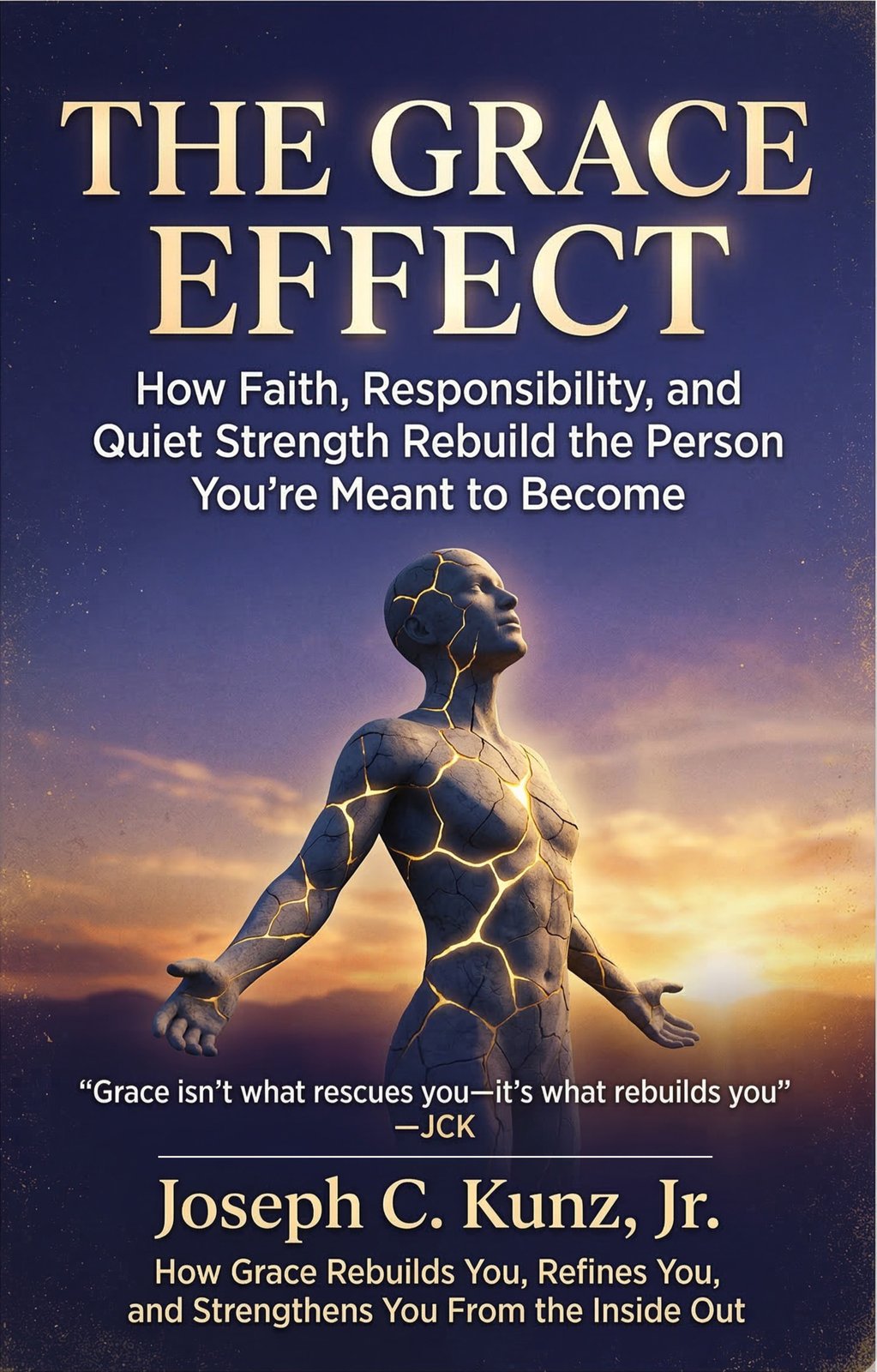
Related Book: Stop Hiding Your Edge — Live It Out Loud
You don’t need another “10 hacks to success” article. You don’t need another guru telling you to chase dollars like a dog after a car.
What you need is the one thing the world keeps telling you to shut up about: your faith.
Faith is your competitive edge. It sharpens your judgment, so you don’t fall for the quick fix.
It fuels your discipline when everyone else is whining about how “hard” it is. It builds the kind of trust money can’t buy.
Without it, you’re just another hustler chasing the next buck. With it, you’re building a legacy that your kids and grandkids can stand on.
That’s what The Grace Effect is about. It’s not theory. It’s not fluff. It’s a straight shot of truth about how grace—not gimmicks—changes the way you work, lead, and live.
If you’re done with shallow answers and ready to build something that actually matters, then stop hiding your edge.
Pick up The Grace Effect—and start living it out loud.
Stay tuned.