Economists Who Opened My Eyes
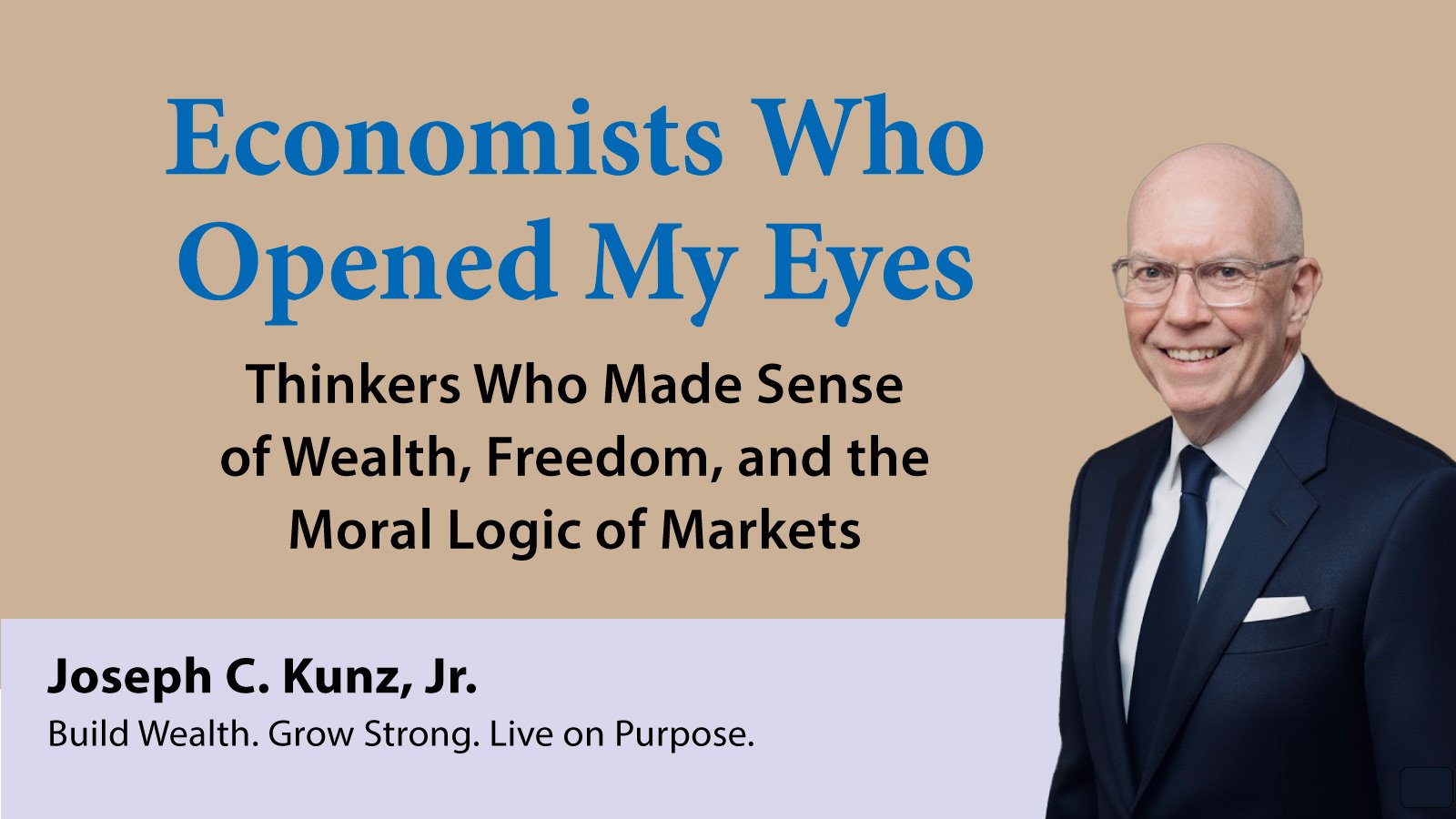
An acknowledgment of economic minds who taught that prosperity, liberty, and moral clarity go hand in hand. —Joseph C. Kunz, Jr.
Thinkers Who Made Sense of Wealth, Freedom, and the Moral Logic of Markets
By Joseph C. Kunz, Jr.
Synopsis
Economics isn’t just about markets or money—it’s about human behavior, moral responsibility, and freedom. In this essay, Joseph C. Kunz, Jr. reflects on the economists who cut through political sentiment, exposed comforting myths, and taught him how the world actually works.
From Thomas Sowell’s unsparing logic to Milton Friedman’s unapologetic defense of liberty, these thinkers revealed a hard but essential truth: prosperity, freedom, and responsibility rise—or fall—together. Economists Who Opened My Eyes is not an academic survey, but a personal reckoning—an account of how clear economic thinking sharpened Kunz’s instincts as a businessman, solidified his convictions as a citizen, and confirmed that capitalism, rightly understood, is not exploitation, but dignity in action.
Once you understand how incentives shape behavior, you’ll never see politics, business, or daily life the same way again. —JCK
I. Introduction
I never set out to become a student of economics. Like most people, I was busy building a life—running a business, raising a family, navigating real-world challenges that didn’t come with a textbook. But along the way, I started asking harder questions: Why do some policies help while others hurt? Why do good intentions so often lead to bad results? And why does common sense feel like it's disappearing from the public conversation?
That’s when I discovered these thinkers.
They weren’t just economists—they were truth-tellers. They exposed the hidden logic behind how money, power, and people actually work. They challenged the myths I’d been taught about fairness, freedom, and success. And most importantly, they gave me the language and clarity to defend what I believe: that capitalism, when grounded in personal responsibility and moral principle, is not only effective—it’s just.
These men helped shape the way I think about everything from taxes and incentives to freedom and human nature. They sharpened my instincts as a businessman and deepened my convictions as a citizen. Their words still echo in my writing, my decision-making, and the way I explain the world to my children and grandchildren.
If you want to cut through the noise and understand how things really work, start with these voices. They opened my eyes. They just might open yours too.
II. These are the economists who help me understand how things work:
1. Thomas Sowell
The sharpest mind in the fight for truth and clarity Sowell dismantles economic myths with brutal precision. Whether writing about race, poverty, education, or policy, he cuts through emotional noise and political spin with logic and evidence. A master of plain language and sharp thinking, he’s one of the clearest voices defending economic freedom, individual responsibility, and moral sanity. He taught me how to think, not just what to think. His work gave me the intellectual backbone to question everything I was taught about fairness, poverty, and success—and to do it with confidence, not apology. His work is timeless because it’s built on truth, not trends.
There are no solutions. There are only trade-offs. —Thomas Sowell
2. Milton Friedman
The cheerful warrior for free markets and free people Friedman made the case that economic freedom is the foundation of all freedom. His ideas—simple, elegant, and unapologetically capitalist—changed the world. He didn’t just debate theories; he explained them in ways everyday people could understand. He helped me realize that the free market isn’t just efficient—it’s fair, moral, and deeply human. He made me proud to believe in capitalism not just as an economic system, but as a way of life. Whether defending school choice, limited government, or monetary policy, Friedman made liberty make sense.
A society that puts equality before freedom will get neither. A society that puts freedom before equality will get a high degree of both. —Milton Friedman
3. Walter E. Williams
A truth-teller who never flinched Williams brought humor, logic, and a street-level honesty to his defense of liberty. A black economist who refused to play by political rules, he challenged the status quo with facts and fearlessness. His writing showed how personal responsibility, free markets, and limited government aren’t just conservative talking points—they’re tools for empowerment. He gave me the words—and the courage—to say what I already believed. He reminded me that real fairness comes from opportunity, not handouts. And that telling the truth isn’t cruelty—it’s respect.
The welfare state has done to black Americans what slavery couldn’t do… and that is to destroy the black family. —Walter E. Williams
4. Friedrich Hayek
The visionary who warned us about the road to tyranny Hayek showed the world what happens when central planners replace personal freedom with government control. His landmark book The Road to Serfdom is more than a warning—it’s a timeless blueprint for how free societies crumble when they forget the dangers of good intentions backed by unchecked power. He helped me see that freedom isn’t just a political issue—it’s an economic one. He taught me that when you give up economic liberty, you’re not far from giving up all liberty. Hayek understood that liberty and prosperity are inseparable—and that even well-meaning governments can destroy both.
Emergencies have always been the pretext on which the safeguards of individual liberty have been eroded. —Friedrich Hayek
5. Henry Hazlitt
The master of economic clarity and common sense Hazlitt’s Economics in One Lesson is still one of the best introductions to real-world economics ever written. He stripped away the noise, the wishful thinking, and the political spin, showing readers how to think long-term, see unintended consequences, and follow the money. His book sharpened my instincts and made me a better businessman—and a clearer thinker. He showed me how to spot the difference between feel-good nonsense and policies that actually work. Hazlitt proved that good economics isn’t complicated—it’s honest.
The bad economist focuses only on what is immediately visible; the good economist looks further. —Henry Hazlitt
6. James M. Buchanan
The economist who exposed the incentives behind big government Buchanan’s public choice theory pulled back the curtain on politics and showed that politicians and bureaucrats are driven by self-interest, not just public service. He dismantled the illusion that government always acts in the public’s best interest—and proved that economic logic applies in Washington just as much as it does on Wall Street or Main Street. He gave me the language to explain why more government usually means more waste and less accountability. Buchanan reminded me to always follow the incentives—not the speeches.
We should not be surprised when politicians and bureaucrats pursue their own interests any more than when a baker seeks to bake bread. —James M. Buchanan
7. Arthur Laffer
The man who made tax policy understandable—and dangerous to ignore Laffer’s famous curve showed that there’s a point where raising taxes actually reduces revenue—and kills growth. His work helped shape modern tax policy by reminding lawmakers that incentives matter, and that economic growth isn’t built on punishment. He made me think about taxes not as a moral obligation, but as a lever that either builds or breaks the economy. He taught me that the best policies don’t come from squeezing people—they come from trusting them.
When you tax something, you get less of it. —Arthur Laffer
III. Conclusion
Reading these economists didn’t just sharpen my business skills—it reshaped my worldview. They helped me see that economics isn’t a cold or detached subject. It’s a moral one. It's about how people live, work, earn, build, and dream. These thinkers gave me the tools to understand money with logic and to defend capitalism with confidence. They also reminded me that freedom always carries responsibility—and that true prosperity begins with clear thinking and strong principles. Their voices continue to guide how I lead, how I write, and how I live.
These economists didn’t just teach me how money works—they taught me how freedom works. And why protecting it is always worth the fight. —JCK
Related Essays: For Thinkers Who Want More Than Surface-Level Economics
If this essay expanded your perspective, these will sharpen it even more.
1. Money, Wealth, and Financial Truths
Explore the timeless truths about money that separate lasting wealth from empty illusions.
2. Why Rich People Think in Terms of Systems, Not Paychecks
Learn how the wealthy escape the time-for-money trap by building income-producing machines.
Reader Comment: “This essay flipped a switch for me—I finally understood why I was stuck trading hours for dollars.”
Related Book: The Right Ideas Don’t Just Change Minds — They Change Futures
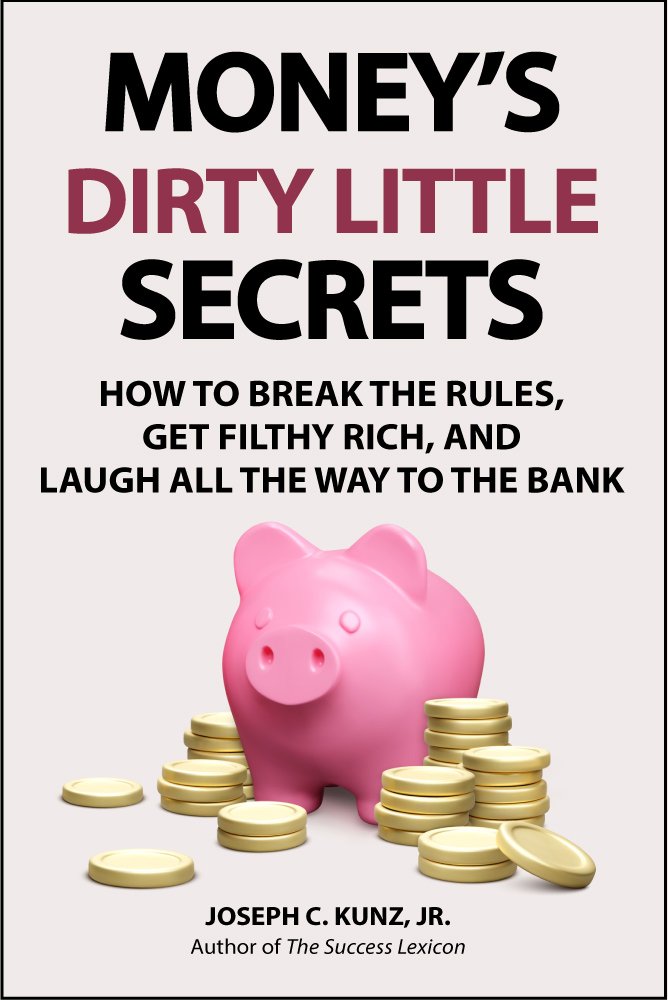
The economists who opened my eyes didn’t deal in theories alone—they handed me tools to see the world differently, to spot the traps, and to break free from them.
They showed me that money isn’t just numbers—it’s choices, power, and freedom.
That’s why I wrote Money’s Dirty Little Secrets. Because I know what it feels like to be stuck in the dark, lied to about money, and told to play by rules that were never made for you to win.
Every lesson in this book comes from clawing my way out of those lies and proving there’s another way.
Pick up your copy of Money’s Dirty Little Secrets and let it open your eyes, too—so you can stop playing defense with money and finally start building the freedom and future you deserve.