Businessmen Who Reflect the Values I Live By
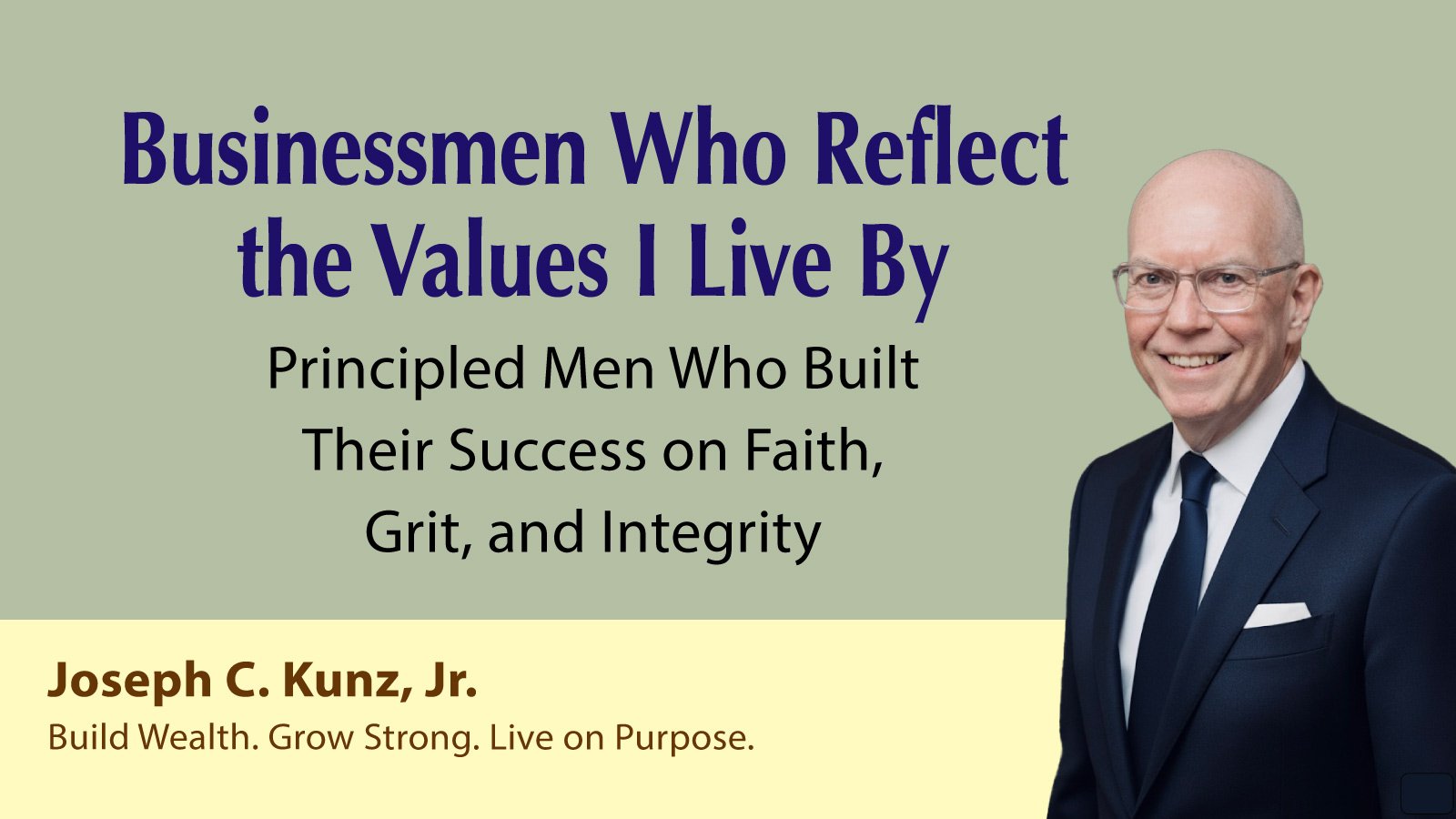
A tribute to men who prove that faith, discipline, and integrity can fuel both personal success and public impact. —Joseph C. Kunz, Jr.
Principled Men Who Built Their Success on Faith, Grit, and Integrity
By Joseph C. Kunz, Jr.
Synopsis
This essay is a tribute to businessmen who prove that success does not require compromise. In a culture that rewards noise, shortcuts, and moral flexibility, these men built enduring influence through faith, discipline, personal responsibility, and integrity.
Joseph C. Kunz, Jr. reflects on the leaders who shaped his understanding of what principled success looks like—men who treated business as a calling, wealth as a tool, and leadership as a form of service. Their lives stand as evidence that conviction is not a liability in the marketplace, but a competitive advantage. This is not about admiration—it’s about alignment. About building in a way that strengthens families, rewards effort, and leaves something worth standing on.
These are the men who remind me that success without character is just noise—and character without courage won’t build much of anything. —JCK
I. Introduction
I’ve spent my life building a business, supporting a family, and trying—imperfectly but persistently—to live by the principles I believe in: faith in God, personal responsibility, financial independence, and the quiet strength of doing things the right way, even when it’s hard.
Along that journey, I’ve looked to a handful of businessmen—not because they’re the loudest or the richest, but because they’ve built something meaningful without compromising what matters. These men have shown that it’s possible to succeed in the real world without selling your soul to it.
Some speak boldly about their faith. Others lead with character and common sense. All of them believe in the American way—free markets, earned success, strong families, and service to others. They don’t make excuses, and they don’t wait around for permission. They live out the kind of Americanism I believe in: not tribal, not ideological, but principled.
Their example reminds me that business isn’t just about profit—it’s about impact. And legacy. And living out what you say you believe.
II. These are the businessmen who reflect the values I try to live by:
1. Dave Ramsey
Dave Ramsey built more than a business—he built a movement grounded in Christian principles, personal discipline, and financial truth. Through his no-nonsense approach to debt, budgeting, and stewardship, Ramsey has helped millions regain control of their lives and money. What I admire most is his clarity and courage—he speaks directly to working families, not financial elites, and his message never wavers: live below your means, take responsibility, and build a future worth handing down. He proves that success and faith are not at odds—they're deeply connected.
You must gain control over your money, or the lack of it will forever control you. —Dave Ramsey
2. Charles Payne
Charles Payne brings boldness, grit, and common sense to the conversation about wealth and work. As a financial analyst, he doesn’t just report the news—he teaches everyday Americans how to think like owners, not victims. He speaks with deep respect for capitalism, character, and individual responsibility, and consistently pushes back against the defeatist mindset that’s infected too many young people. Payne reminds us that you don’t need a perfect background to succeed—you just need discipline, focus, and a willingness to fight for your future.
You don’t have to be perfect to succeed—you just need a plan, discipline, and the willingness to fight for your future. —Charles Payne
3. Dan Cathy
As the former CEO of Chick-fil-A, Dan Cathy showed the world what servant leadership really looks like. He ran one of the most successful restaurant chains in America while quietly but firmly keeping his Christian convictions at the center. He treated employees with dignity, prioritized generosity, and never compromised his values for public approval. Cathy didn’t lead with noise—he led with integrity. And in doing so, he built a business rooted in something deeper than profit.
We must focus on becoming better people and not just bigger companies. —Dan Cathy
4. Kevin O’Leary
Kevin O’Leary may be best known for his tough-love persona on Shark Tank, but beneath that sharp edge is a sharp mind with a serious commitment to free markets and personal accountability. He has zero tolerance for excuses and even less for entitlement. What I respect most about O’Leary is that he understands capitalism as a moral system—one where wealth is earned by serving others, solving problems, and staying disciplined. He reminds us that pursuing wealth isn't greedy—it's the pursuit of freedom.
The pursuit of wealth is not evil. It is the pursuit of freedom. —Kevin O’Leary
5. & 6. Dave Donaldson & Pete Peterson
Dave Donaldson and Pete Peterson are not just nonprofit leaders—they’re entrepreneurs of compassion. As the founders of CityServe, they operate at the intersection of business principles and Christian mission. They’ve created a model that restores families and communities by focusing on service, dignity, and local empowerment. What I admire is how they turn faith into action—not just by preaching hope, but by building systems that deliver it. Their work is a reminder that impact and excellence should walk hand in hand.
We don’t need more government. We need stronger families, stronger churches, and stronger people. —Dave Donaldson
7. Timothy Goeglein
While not a traditional businessman, Timothy Goeglein belongs on this list because of how powerfully he blends public service, cultural engagement, and faith. As a vice president at Focus on the Family and a former White House aide, Goeglein writes and speaks with clarity about the importance of virtue, civic responsibility, and restoring Christian culture. His work affirms that moral conviction is not a private matter—it’s a public necessity. In a time when character is in short supply, he makes the case that moral leadership is leadership.
The greatest threat to America is not external—it is the loss of moral conviction within. —Timothy Goeglein
III. Conclusion: Success with Conviction, Not Compromise
Each of these men reminds me that business isn’t just a means to earn a living—it’s a way to live out your convictions. They’ve shown that you can build something great without compromising what’s right. In a world that often rewards shortcuts and noise, they chose discipline, faith, and principle. Their example encourages me to keep building quietly and purposefully—to lead my family, run my business, and write my books with the kind of clarity and conviction that lasts. These are the voices I look to when I need to be reminded: it’s still possible to succeed without selling out.
They built their lives on principle, not applause—and proved that doing the right thing isn’t just moral, it’s practical. —JCK
Related Essays: For Builders Who Care About More Than the Bottom Line
If this essay spoke to your values, these will push them into action.
1. Why Rich People Think in Terms of Systems, Not Paychecks
Learn how the wealthy escape the time-for-money trap by building income-producing machines.
2. Mindset, Grit, & Personal Responsibility
Why success depends less on luck and more on the daily discipline of grit and accountability.
Reader Comment: This essay pushed me to stop making excuses and start owning my decisions.
Related Book: The Men I Admire Built More Than Wealth — They Built Freedom
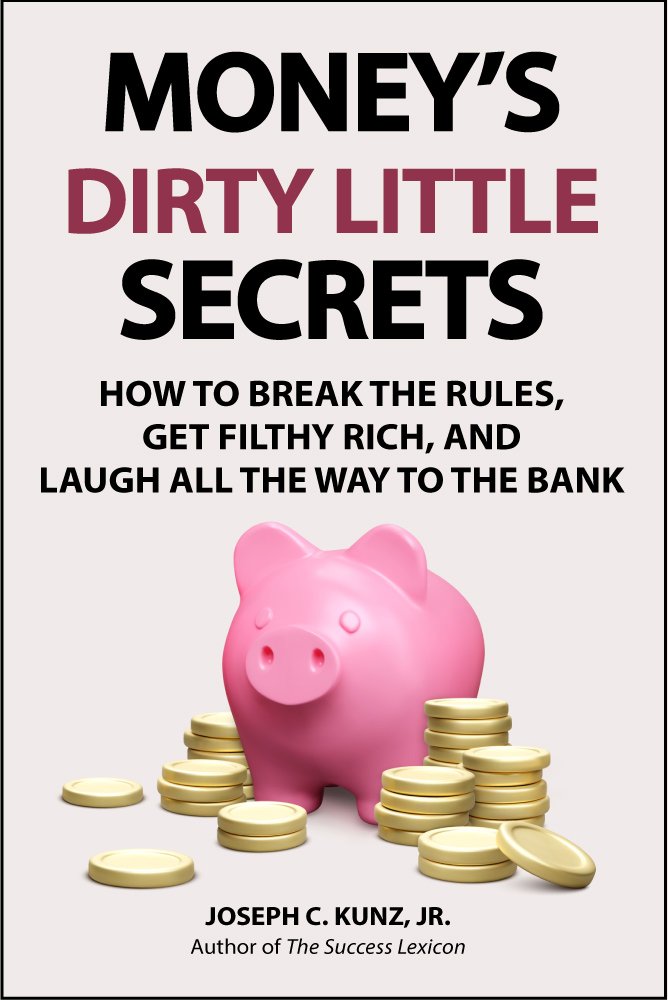
The businessmen who shaped me didn’t just chase dollars—they lived by values: grit, discipline, and responsibility.
They built wealth with backbone, not shortcuts. And that’s exactly why they thrived when others collapsed.
That’s why I poured my own battles and lessons into Money’s Dirty Little Secrets. Because money without values is just noise—but money built on truth, grit, and responsibility becomes freedom.
Every word in this book comes from the scars and victories of building wealth the hard way—and the right way.
Get your copy of Money’s Dirty Little Secrets and learn how to build not just money, but freedom you can be proud of—and a legacy that lasts.