Work Is Wealth in Disguise
If you think work is just about a paycheck, you’re missing its real power—it’s the first form of wealth that builds freedom. —Joseph C. Kunz, Jr.
Why Showing Up Every Day Is Your First Form of Capital
By Joseph C. Kunz, Jr.
Synopsis
This isn’t a “love your job” pep talk, and it’s not hustle worship disguised as wisdom. In this essay, Joseph C. Kunz, Jr. argues that most people misunderstand work because they only see the paycheck—when the real payoff is what work turns you into. Work is wealth in disguise: the first form of capital you ever own, long before you have money, assets, or investments.
Kunz attacks the modern myth that work is either a curse to escape or a status symbol to flaunt. Both mindsets miss the builder’s truth: freedom doesn’t come by avoiding effort—it comes by mastering it. He reframes daily labor as a compounding asset made of three forces most people ignore: discipline (a currency nobody can counterfeit), skills (equity that grows with every repetition), and reputation (collateral that earns you trust, responsibility, and bigger opportunities). He then draws a blunt line between winners and whiners—between people who let work shape their character and people who stay broke because they refuse to carry weight.
The essay lands on an unbreakable sequence that doesn’t bend for anyone: work, then wealth, then freedom. Skip the first step and the rest collapses. Embrace it and your “ordinary” days become the seed capital of independence—because the person who can consistently show up, follow through, and improve is the person who can eventually be trusted with real options.
Work isn’t a burden—it’s the seed capital of your future freedom. —JCK
I. Introduction
Work is one of the most misunderstood words in modern life. For many, it’s nothing more than a burden—the grind you endure so you can escape to the weekend or finally cash in on retirement. Others idolize it as a status symbol, wearing busyness like a badge of honor. But both views miss the truth.
Work is neither punishment nor an idol. It’s wealth in disguise.
The hours you put in aren’t just about surviving the week or paying the bills. They’re about planting seeds that will grow into habits, character, relationships, and opportunities. Work is the raw material out of which discipline is forged, and discipline is the capital that produces wealth and, eventually, freedom.
This essay is a challenge to see work differently. Not as something to escape, but as the foundation of the wealth and freedom you say you want.
II. The Myth About Work
Let’s face it: some people hate work. They don’t just dislike their job—they despise the very idea of labor. They see work as punishment, as if it’s some curse handed down by an unfair universe. They daydream about “financial freedom” or “early retirement” as if freedom comes by avoiding effort, not by mastering it.
That mindset is poison.
If you grew up in America, you’ve probably heard someone brag about “beating the system” or “finding a shortcut.” It’s the fantasy of winning the lottery, cashing out on crypto, or striking it rich with zero effort. It’s the mirage of getting all the fruit without ever planting a seed.
But here’s the truth: freedom doesn’t come apart from work. It comes through work.
Every hour you show up, every job you complete, every task you refuse to half-do—you’re not just collecting dollars. You’re building yourself. You’re shaping your character. You’re creating a reputation. You’re laying the foundation of habits that will pay dividends long after the paycheck is gone.
This is the part some people will never understand: work isn’t just about earning money. It’s about building the kind of person who can be trusted with freedom.
Ask yourself: would you hand over financial freedom to someone who can’t wake up on time, can’t follow through, and can’t be counted on? Of course not. Why would the universe reward someone with wealth and freedom when they’ve never proven they can handle the basics?
The myth about work is that it steals your life. The truth about work is that it’s the first building block of a life worth living.
III. Work as Your First Capital
People love to talk about “capital.” They imagine it as money: cash in the bank, stocks, real estate, gold coins stacked in a vault. But here’s the reality—before you ever touch a dollar, your work is your first capital.
Think about it. A young person enters the workforce with no savings, no investments, and no portfolio. They might not even have good clothes or a reliable car. However, they do have one thing in common: their willingness to work. That’s the seed. That’s the initial capital. And it’s more powerful than most people realize.
A. Discipline as currency
Every time you show up on time, dressed properly, ready to perform, you’re making a deposit. You’re proving you can be trusted. Over weeks, months, and years, those little acts of discipline compound. Employers notice. Clients notice. Partners notice. They may not compliment you for it every day, but the reliability builds silently, like compound interest.
Discipline is the world’s most underrated currency. Nobody can counterfeit it, and once you own it, no one can steal it from you.
B. Skills as equity
Every task you perform, even the boring ones, is practice. The 100th time you do it, you’re sharper, faster, and more confident than the first. That difference is equity. Just like stocks, skills accumulate value—and in the marketplace, they can be bought, sold, and traded.
Want proof? Look at the difference in pay between someone who just shows up and someone who has mastered their craft. The gap is massive. Why? Because one person treated their daily work as drudgery, and the other treated it as an apprenticeship.
C. Reputation as collateral
Think about it: if you’re reliable, if you finish what you start, if your word actually means something, people will trust you with bigger responsibilities, better opportunities, and higher stakes. They’ll “loan” you credibility because they know you’ll deliver. That’s reputation functioning as collateral.
When you’re starting out, you might not have cash in the bank. But if you’ve got discipline, skills, and reputation, you’re already rich. You just don’t see it yet.
IV. Why Lazy People Stay Broke
Now, let’s get blunt. Winners and whiners don’t just live different lives—they live in different universes.
Winners understand that work shapes character. Whiners think work steals freedom. And that one belief is the dividing line between wealth and poverty, freedom and bondage, progress and stagnation.
Lazy people convince themselves they’re “saving time” by cutting corners, skipping shifts, or refusing to go the extra mile. But what they’re really saving is the very thing they’ll need most later: discipline. And once you’ve lost that, you’ve lost the game.
The lazy man says, “I don’t want to be a slave to work.” But the truth is, by avoiding work, he enslaves himself to envy, debt, and excuses.
The lazy woman says, “I want freedom now, not later.” But the truth is, she’s already in chains—chained to dependency, forever waiting for someone else to provide what she refused to build.
The result? Broke wallets, bitter hearts, and a lifetime of blaming “the system” instead of looking in the mirror.
Lazy people don’t just stay broke financially. They stay broke emotionally, relationally, spiritually. Why? Because they never learned the discipline that builds all other forms of wealth.
V. Work, Then Wealth, Then Freedom
Here’s the unbreakable sequence:
A. Work. It comes first. It shapes your habits, your discipline, your resilience. It proves you can be trusted. Without this stage, nothing else matters.
B. Wealth. Wealth is not a windfall. It’s the fruit of sustained work, responsibility, and wisdom. It grows from seeds planted in the soil of daily effort. It comes slowly at first, then rapidly, just like compound interest.
C. Freedom. Freedom is the dividend. It comes when wealth has compounded, and your habits keep you grounded. Freedom without wealth is a fantasy. Wealth without habits is a ticking time bomb.
Everyone wants to skip to stage three. They want the freedom without the grind. But the sequence doesn’t bend. You can’t skip steps. You can’t cheat the process.
Look at lottery winners. They get wealth without work. And within a few years, most are worse off than before. Why? Because without discipline, reputation, and skill, the money evaporates.
Now look at immigrants who arrive with nothing but a willingness to work. No language, no connections, no wealth. Just work. Ten years later, they own businesses, properties, and their children are on track to build even more. Why? Because they honored the sequence.
Work, then wealth, then freedom. No exceptions.
VI. A Personal Challenge
So, what do you do with this? How do you take it from theory to practice?
This week, reframe your work. Don’t just drag yourself to your shift or sit blankly at your desk. Start seeing every hour for what it really is—an investment.
• See discipline as currency. Punching the clock on time isn’t just obedience; it’s compounding reliability that will cash out later in promotions, opportunities, and trust.
• See reputation as collateral. Every time you keep your word—even in small things—you’re strengthening the credit line others extend to you.
• See every task as training. The boring jobs, the small assignments, the unseen efforts—these are the reps that make you stronger. Treat every task like it’s building your equity, because it is.
Most people drag themselves through work like zombies, waiting for life to start later. Don’t be one of them. See work for what it is: wealth in disguise.
VII. Conclusion
Work is not the enemy. It’s not the thing holding you back from freedom—it’s the very thing creating it. Every disciplined choice, every completed task, every kept promise is an investment that multiplies. Work lays the foundation, wealth grows on top of it, and freedom is the dividend that follows.
You can resent it, avoid it, or sleepwalk through it—but if you do, you’ll never see the wealth and freedom you claim to want. Or you can embrace it, master it, and let it shape you into someone who can handle the weight of freedom.
The choice is yours. But the law is unbreakable: work comes first. Always.
Work isn’t the enemy of wealth. It’s the raw material out of which wealth—and freedom—are forged. —JCK
Related Essays: For Those Who Know Work Is the First Capital
If this essay struck a chord, these will deepen your understanding of how discipline turns effort into freedom.
1. The First Rule of Wealth: Stop Making Excuses
Excuses are the surest way to stay broke—cut them out if you want to build real wealth.
2. Wealth and Money Mastery: The 10X Principle of Small Wins
Discover how stacking small, disciplined wins creates exponential results in both money and life.
Reader Comment: This essay reminded me that wealth isn’t a windfall—it’s the payoff of showing up and doing the small things daily.
Related Book: Stop Working for a Living — Start Building for Freedom
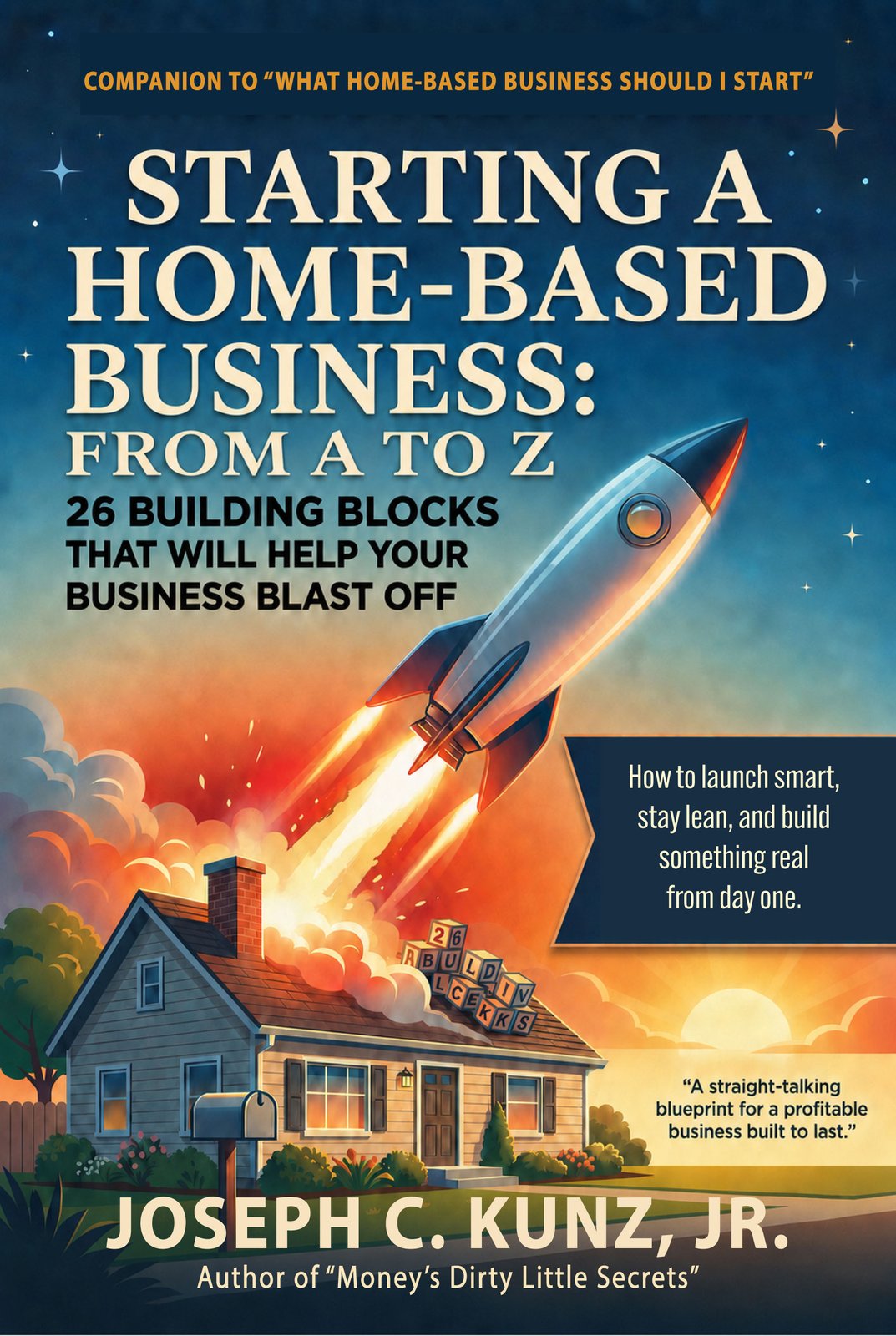
Starting a Home-Based Business
Starting a Home-Based Business: From A to Z
Most people work to survive. The smart ones work to build. The difference? Intent.
One sees effort as punishment. The other sees it as power.
If you’re ready to turn that power into independence, my book Starting a Home-Based Business: From A to Z will show you how. It’s not a motivational pep talk—it’s the unfiltered truth about building something real, profitable, and under your control.
You’ll learn how to:
-Start lean and smart—with no investors, hype, or gimmicks.
-Turn your time, skill, and effort into reliable cash flow.
-Market yourself without begging for attention.
-Build discipline that compounds into wealth and freedom.
-Create a business that serves your life, not the other way around.
Michele and I built our company the old-fashioned way—by working nights, weekends, and holidays, until the foundation was unshakable. No secrets. No luck. Just systems, sweat, and sanity.
If that sounds like your kind of success story, it’s time to stop watching other people chase their dreams—and start building your own.
Get your copy of Starting a Home-Based Business: From A to Z—and take control of your income, your time, and your future.
This is in the works—watch for the drop.