Why I’m Not a Libertarian: The Case for Christian Conservative Capitalism
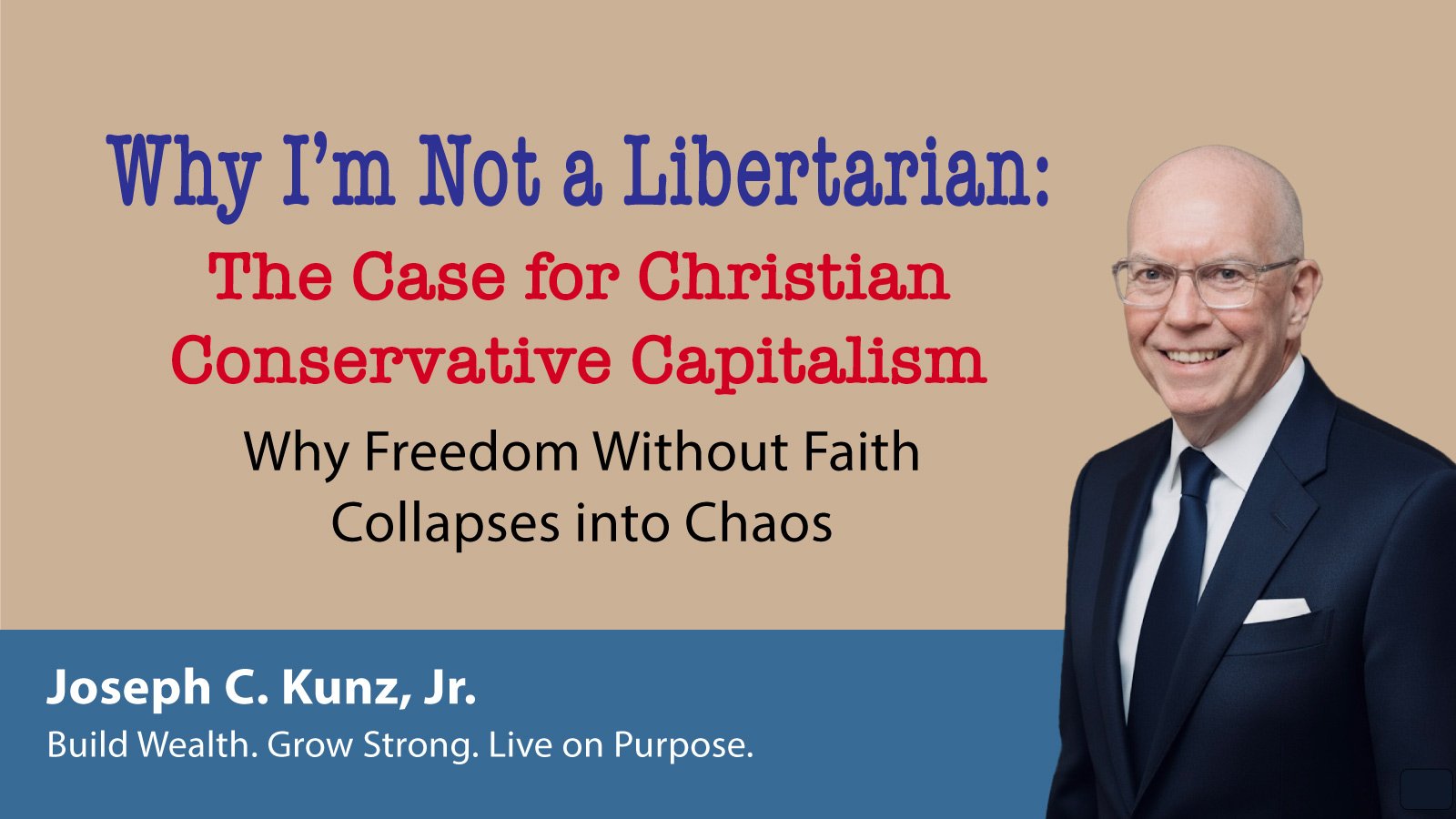
Libertarians celebrate freedom, but my life has shown me that freedom only works when it’s anchored in faith, responsibility, and the tested framework of Christian conservative capitalism. —Joseph C. Kunz, Jr.
Why Freedom Without Faith Collapses into Chaos
By Joseph C. Kunz, Jr.
Synopsis
Libertarianism sounds clean on paper: maximum freedom, minimum government, leave people alone and let the market work. In this essay, Joseph C. Kunz, Jr. argues that libertarians get freedom half-right—but miss the only thing that makes freedom survivable: faith, virtue, and responsibility. Because liberty isn’t self-sustaining. Without moral restraint, it doesn’t stay freedom for long—it collapses into chaos, selfishness, and social rot.
Kunz credits libertarians for their emphasis on personal responsibility, limited government, and suspicion of centralized power, but explains where the worldview breaks under real-life pressure: family life requires sacrifice, markets aren’t moral by themselves, and “do whatever you want” can’t hold a culture together. He makes the case for a tougher, more durable framework—Christian conservative capitalism—where faith anchors conscience, virtue disciplines appetite, and responsibility makes freedom functional. Freedom isn’t the goal by itself. It’s the reward of a life built in the right order.
Freedom without faith isn’t strength—it’s chaos waiting to happen. –JCK
I. Introduction
I’ve always found libertarian ideas interesting. On paper, they sound clean, bold, and liberating. Who doesn’t want more personal responsibility, less government interference, and the freedom to make your own way in the world? There’s a lot in libertarian thinking that appeals to me.
But after forty-plus years of building a business, raising a family, and trying to live out my faith in a complicated world, I’ve come to a simple conclusion: a purely libertarian society doesn’t work nearly as well as a society rooted in faith, responsibility, and free markets governed by virtue. In short, I’m not a libertarian. I’m a Christian conservative capitalist—and I believe that framework is what actually creates lasting freedom, prosperity, and purpose.
Key Terms: What I Mean (and Don’t Mean)
1. Capitalism: A system of free exchange and private ownership that rewards creativity and hard work. A powerful servant, but a dangerous master if not guided by faith.
2. Christian Conservative Capitalism: The tested road I walk—free markets, limited government, and personal responsibility, all anchored in Christian faith. It isn’t perfect, but it works in the grit of real life.
3. Conservatism: Preserving the moral and cultural order—faith, family, and responsibility—that makes freedom work. It’s not about nostalgia; it’s about stewardship.
4. Freedom: Not doing whatever you want, but the responsibility to do what’s right. Real freedom thrives only when it’s guided by virtue and anchored in faith.
5. Libertarianism: A philosophy that wants maximum individual freedom and minimum government. Inspiring in theory, but too fragile to handle the real demands of family, community, and human weakness.
6. Virtue: The habits of honesty, discipline, and responsibility that make freedom sustainable. Without virtue, liberty collapses into chaos.
II. What Libertarians Get Right
Let me start with a point of agreement. Libertarians are right about a few things that conservatives and progressives often forget.
1. The value of personal responsibility
Libertarians put a heavy emphasis on the idea that you are responsible for your life. That resonates with me. No government program or political party can replace the discipline of getting up every day, showing up for work, and doing what needs to be done. I’ve seen firsthand how people thrive when they take ownership of their choices—and how quickly life unravels when they don’t.
2. The dangers of government overreach
Libertarians have a healthy suspicion of government. They remind us that power tends to concentrate, and concentrated power tends to abuse. They warn us about the dangers of bureaucrats making decisions for people they’ll never meet, in places they’ll never visit. We hear the horror stories on the nightly news every day. I’ve dealt with enough regulations, taxes, and red tape in my career to know they’re right: unchecked government can choke innovation, stifle opportunity, and discourage hard work.
3. The importance of freedom
At the core, libertarians believe people should be free to live as they choose, so long as they don’t harm others. That belief in freedom, in many ways, is the foundation of America. It’s what allowed me to start a business from scratch and build it into something that supported my family for decades. It’s what allows people with ideas and grit to rise above their circumstances. Freedom matters, and libertarians do a good job of reminding us not to take it for granted.
III. Where Libertarians Go Too Far
So far, so good. But here’s where the libertarian dream starts to fall apart for me.
1. Freedom without virtue collapses into chaos
Libertarians often talk about freedom as if it’s self-sustaining. But freedom without virtue is just license. If everyone simply does what they want, with no higher sense of responsibility to God or neighbor, society doesn’t hold together.
Take family life. A libertarian framework might say that as long as no one’s rights are being violated, anything goes. But anyone who’s raised children knows better. Families thrive when there’s structure, sacrifice, and self-discipline—not just when everyone does what feels good in the moment. The same is true for communities and nations.
2. The myth of the self-made man
Libertarians love the image of the rugged individual, pulling himself up by his bootstraps. And to be clear, I’m all for hard work and grit. But the truth is, no one is entirely self-made. We’re shaped by family, mentors, teachers, and communities. We depend on the rule of law, stable markets, and cultural values that encourage honesty and trust. Pretending that individuals can thrive entirely on their own is not only unrealistic—it’s dangerous. It blinds us to the social fabric that makes real freedom possible.
3. A blind spot about markets
Here’s where it gets tricky. Libertarians believe in free markets almost as a kind of savior. And I do too—up to a point. Free markets are powerful tools for creating wealth, rewarding innovation, and giving people opportunities. But markets aren’t moral by themselves. Left unchecked, markets can reward greed, exploitation, and short-term thinking. Without a moral framework, capitalism can devour the very values that make it work.
Libertarians tend to assume the invisible hand of the market will sort everything out. My experience says otherwise. The market is a great servant but a terrible master. It needs to be guided by virtue, family values, and a culture that remembers people matter more than profits.
4. Limited government, not no government
Libertarians often talk as if government itself is the enemy. I’ve seen how damaging that attitude can be. Government has a legitimate role: protecting life, enforcing contracts, defending the nation, maintaining basic infrastructure. Without that minimal framework, chaos takes over. The challenge is to keep government limited and accountable—not to abolish it altogether.
IV. Why Conservatism Anchored in Christianity Works Better
So where does that leave me? If libertarianism goes too far, what works instead? For me, it’s the blend of capitalism, conservatism, and Christianity. Let me explain.
1. Capitalism, but with character
Capitalism rewards effort, creativity, and risk-taking. It gives people the chance to turn ideas into reality. But capitalism needs a moral compass. For me, that compass is Christianity. A business built only on profit will eventually rot from the inside. A business built on service, honesty, and fairness not only prospers longer—it actually blesses people along the way.
2. Conservatism, but with compassion
Conservatism values tradition, family, and stability. It reminds us that the wisdom of generations is worth preserving. But conservatism without compassion can become cold and rigid. Christianity softens conservatism by reminding us that people aren’t just units of production—they’re souls with infinite value.
3. Christianity as the foundation
This is where libertarianism and conservatism both fall short if left alone. Without faith, both systems can lose their soul. Libertarianism dissolves into selfishness; conservatism hardens into nostalgia. Christianity gives both direction and purpose. It says freedom is not for doing whatever you want—it’s for doing what’s right. It says wealth is not for hoarding—it’s for serving. It says family is not just a social unit—it’s a reflection of God’s love.
V. My Takeaway After 40+ Years in Business and Family Life
Looking back over my life, I see the strengths and weaknesses of each system. Libertarians are right about personal responsibility, limited government, and freedom. But they miss the glue that holds it all together: faith, virtue, and community.
Conservatism and capitalism, when grounded in Christian values, get much closer to the truth. They preserve what works, reward what’s good, and give people room to flourish. They’re not perfect, but they’re practical—and they’ve proven themselves in my own experience of building a business and raising a family.
That’s why I’ll never call myself a libertarian. I respect the ideas, I even share some of them, but I know that without Christianity, conservatism, and a moral compass, libertarianism collapses into chaos.
VI. Conclusion
Libertarians remind us that freedom matters. But freedom alone is not enough. Without virtue, freedom becomes an excuse for selfishness. Without faith, markets become idols. Without family, responsibility vanishes.
That’s why I’m not a libertarian. I’m a Christian conservative capitalist. It’s a mouthful, but it’s also a worldview that has stood the test of time in my own life. It’s given me freedom, purpose, and the ability to pass on something worthwhile to my children and grandchildren.
So, while I respect libertarians for their clarity, I’ll keep walking the road I know works: the road where faith anchors freedom, virtue guides markets, and family gives everything meaning.
I’ve lived long enough to know that systems built on selfishness collapse, but those anchored in faith and responsibility endure. —JCK
Related Essays: For Readers Who Want Freedom That Lasts
If this essay stirred you up, these will sharpen your edge.
1. Faith Gives Conservatism Its Moral Compass
Without faith, conservatism drifts into cold management; with it, principles gain clarity, courage, and strength.
Reader Comment: This essay opened my eyes—without faith, conservatism really does feel hollow and brittle.
2. Faith Isn’t a Crutch — It’s a Competitive Edge
Discover how faith sharpens clarity, resilience, and courage when others fold.
Quote: Faith makes freedom work—it keeps liberty from turning into chaos. –JCK
Related Book: Freedom Without Faith Is Just an Empty Slogan
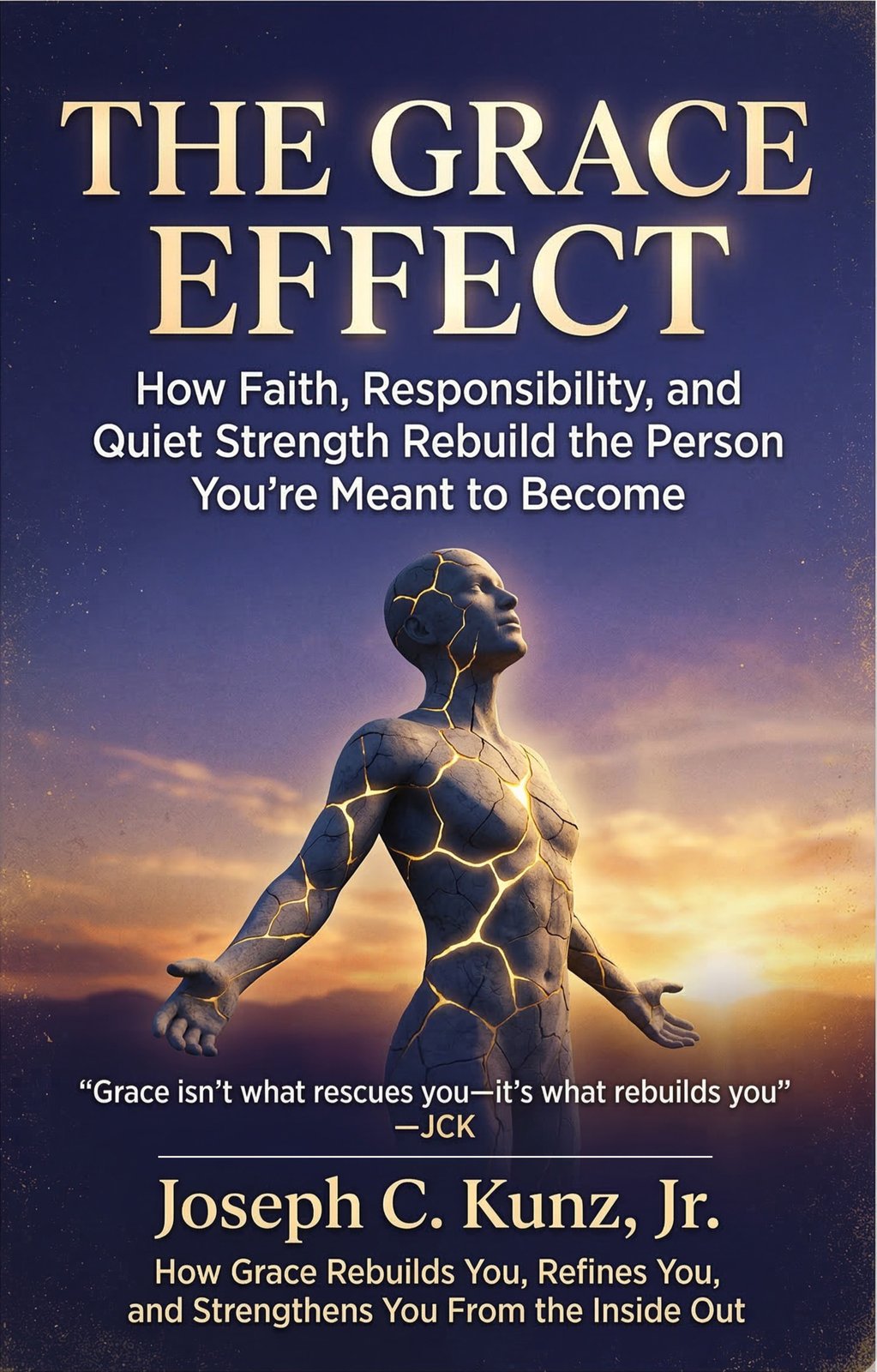
Libertarians love to shout about freedom. Sounds great. But here’s the gut-punch truth: freedom without faith is a ticking time bomb. It doesn’t produce families that last, businesses that endure, or legacies worth passing on. It produces chaos dressed up as liberty.
I’ve lived long enough to know the difference. I’ve seen what happens when “do whatever you want” collides with real life—marriages collapse, debt piles up, kids grow up rudderless, and people wake up broke in every way that matters. That isn’t freedom—it’s slavery with a shiny label.
Real freedom doesn’t come from shrinking government to nothing or worshiping the market. Real freedom comes when faith anchors your choices, when responsibility guides your work, and when love ties you to something bigger than yourself.
That’s the only freedom strong enough to survive hard times and hand down something solid to the next generation.
And that’s exactly what The Grace Effect is about. It’s not another theory. It’s about the kind of grace that takes freedom off the bumper sticker and builds it into your bones. Grace that gives you the steel to stand when everyone else folds, and the tenderness to love when the world goes cold.
If you’re tired of empty slogans about liberty and ready for the kind of freedom that actually works, grab The Grace Effect. Don’t settle for chaos—live anchored freedom.
Stay tuned.