The Conservatism That Actually Works

A results-based defense of a “Builder’s Conservatism” that rejects stylish reaction, contempt politics, and elite posturing in favor of faith, responsibility, ordered liberty, and real-world consequences. —Joseph C. Kunz, Jr.
Why My Conservatism Builds Instead of Sneers
By Joseph C. Kunz, Jr.
Synopsis
This isn’t a polite explanation of “labels,” and it’s not an insider fight about which faction on the right is the purest. In this essay, Joseph C. Kunz, Jr. argues that the real divide isn’t left vs. right—it’s builders vs. brooders. Modern life has become spiritually thin: appetite is rewarded, restraint is mocked, and meaning is reduced to preference. That’s why people are reaching again for tradition, order, limits, duty—and why the wrong cure is so tempting.
Kunz critiques a “stylish reaction” that substitutes posture for virtue: aesthetic aristocracy, permanent opposition, esoteric fog, anti-bourgeois sneering, and resentment dressed up as realism. He then explains why he rejects being lumped into paleoconservatism and defines his alternative: Builder’s Conservatism—rooted in Christian moral law, ordered liberty, responsibility, stewardship, and real-world consequences. His test is blunt: if a worldview can’t survive contact with marriage, work, failure, and temptation, it isn’t wisdom. It’s theater.
Some men build as an act of worship. Others sneer as an act of pride. One produces fruit. The other produces smoke. —JCK
I. Introduction
I don’t write this as an apology, and I don’t write it as a plea for acceptance.
I write it because clarity is mercy—especially now, when people are starving for something solid, and when the word conservative has become a junk drawer that holds everything from sober constitutionalism to aestheticized despair.
In recent years, I’ve noticed a pattern: the more I write about moral order, discipline, tradition, and responsibility, the more people assume I belong to a certain kind of right-wing world—often described as paleoconservative. I understand why. I share some of the diagnosis. I reject most of the cure.
This essay is for the skeptical newcomer who doesn’t want slogans—and for the long-time reader who wants a clean statement of where I stand.
It is not an attack on individuals.
It is a critique of a posture—a way of “being on the right” that looks serious but often produces nothing but contempt.
And it is a positive case for a conservatism that does what conservatism is supposed to do: build a life that holds.
I don’t have a PhD and I don’t speak in academic code. I’m not writing from a faculty lounge. I’m writing from the real world—where decisions have consequences, where people have to provide, where failure costs money and time and dignity. That’s not a weakness. It’s a filter. It keeps me honest. Reality grades harder than seminars do.
II. The Hunger for Seriousness
Modern Western life has become spiritually thin.
It trains appetite more than character. It produces desire at industrial scale—and then acts shocked when restraint collapses. It turns moral language into a public performance and treats conscience like a superstition.
We’re told morality is “subjective” right up until someone disagrees with the approved moral script.
And when meaning is reduced to preference, nothing is binding—everything is negotiable. Life becomes a sequence of impulses followed by rationalizations. That is not freedom. That is drift.
So yes—people are waking up. They sense that something essential has been stripped out of public life and replaced with therapy-speak, shallow incentives, and slogans that sound compassionate while making human beings weaker.
That’s why words like tradition, order, hierarchy, limits, and duty are returning. Not because everyone has suddenly become irrational. Because the void is real. And if a man cannot name what’s missing, he cannot rebuild it.
The problem is not the diagnosis.
The problem is the proposed cure.
III. The Shared Diagnosis: Modern Life Is Disordered
Let’s be plain: decadence and materialism are real. If someone denies this, they’re not dealing honestly with reality.
The family has been weakened. Work has been severed from vocation. Freedom has been reduced to impulse. Authority is either absolutized or mocked. Institutions that once restrained power now often serve it.
But agreement is not identity.
Two men can both see rot in the beams and still disagree about how to rebuild the house. One response clarifies and strengthens. Another merely postures.
That’s where the modern right begins to divide.
IV. The Temptation of Stylish Reaction
There is a seductive form of conservatism that thrives on alienation.
It speaks fluently about decline but rarely about duty. It is comfortable diagnosing decadence and uncomfortable cultivating virtue. It frames itself as “above” modern life while depending on modern life for relevance.
And it has recognizable traits.
First, aesthetic aristocracy—looking superior becomes a substitute for being virtuous. Style replaces substance. Contempt is mistaken for insight.
Second, permanent opposition—critique becomes an identity. The goal becomes negation, not restoration. The personality becomes a protest sign.
Third, esoteric fog—grand language replaces moral accountability. Mystique replaces proof. Symbolism becomes an escape hatch.
Fourth, anti-bourgeois sneering—ordinary life is treated as spiritually inferior. Marriage is dismissed as compromise. Work is treated as “materialistic.” Provision is mocked as middle-class weakness.
Fifth, resentment masquerading as realism—if the worldview makes a man bitter, it calls that “truth.” If it makes him sterile, it calls that “purity.”
The end result is predictable: it flatters the ego while leaving the soul unchanged. It offers superiority without responsibility. It produces a politics of scorn. It turns “being right” into a costume.
That is not strength.
That is vanity with a vocabulary.
V. Why I Reject Paleoconservatism
Paleoconservatism is not one thing, and not everyone associated with it holds the same beliefs. But as a tendency, it diverges from my convictions in fundamental ways.
A. Moral Law vs. Mythic Identity
My conservatism is grounded in moral law—knowable, binding, and universal—not in romanticized ancestry or identity.
Tradition matters because it carries wisdom. Tradition does not matter because it flatters pride.
B. Faith vs. Aesthetic Spirituality
I will not trade Christianity for vague spirituality, pagan symbolism, or esoteric hierarchy.
Faith is not a mood. Faith is not an aesthetic posture. Faith is moral accountability under God.
Any “spirituality” that preserves pride while bypassing repentance is not depth. It is evasion.
C. Ordered Liberty vs. Romantic Reaction
I defend constitutional liberty because it restrains power and protects moral agency.
Liberty is not chaos. Liberty is self-government. Limits on power are not “modern weakness”—they are moral realism. A system that restrains coercion and rewards responsibility is superior to one that concentrates power, no matter how “traditional” it claims to be.
D. Functional Hierarchy vs. Mystical Elitism
I accept hierarchy—but not the mystical kind.
Competence is not evenly distributed. Responsibility must be earned. Authority must be constrained and justified by outcomes.
Aesthetic severity is not wisdom.
E. Builders vs. Spectators
I judge worldviews by what they produce.
Do they strengthen families? Do they produce competent adults? Do they cultivate discipline? Do they increase courage and decrease bitterness?
If not, it isn’t conservatism. It’s commentary.
VI. The Test of Any Conservatism
The test is simple:
Does it help people build lives that hold under pressure?
Not rhetorically—practically.
A worldview that cannot survive contact with marriage, a mortgage, children, work, illness, aging, failure, temptation… is not a worldview. It is a mood.
If it produces brilliant critics and broken lives, it fails.
The right is not rescued by sharper sneers. It is rescued by stronger men and women.
And a conservatism that despises ordinary responsibility is not profound. It is corrosive. If your worldview makes you a better complainer than builder, it is a dead end. If it turns contempt into identity, it is spiritual rot in expensive packaging.
VII. What I Am Instead: Builder’s Conservatism
I am not interested in being defined by what I reject. I will name what I affirm:
Builder’s Conservatism—moral realism oriented toward responsibility, stewardship, and durable freedom.
It rests on plain pillars.
The world has moral order, and choices have consequences.
Freedom begins internally—through discipline—not externally through control.
Productive effort is dignifying, formative, and necessary.
Money is a tool. Not a god. Not a sin. A tool.
Strong families are the first institution of moral formation.
Local community is where responsibility becomes concrete, not theoretical.
Limited government matters because power must be restrained so conscience can function.
And grace must never be confused with softness—compassion is not permitted to lie about consequences.
This isn’t glamorous. It doesn’t flatter the ego. It doesn’t offer a costume.
It demands a life.
VIII. Why This Matters Now
We are living through a sorting moment.
More people sense modern life is failing to deliver meaning. The question is not whether they are right. The question is where they will turn.
Some will choose spectacle. Some will choose resentment. Some will choose nihilism with better tailoring.
Others will choose to build—quietly, deliberately, without needing applause.
Habits over hashtags. Discipline over disdain. Responsibility over resentment. Faith over fog.
And they will learn the real alternative to decadence is not superiority.
It is virtue.
IX. Conclusion: Build or Brood
I am not interested in being “right” in the fashionable sense.
I am interested in being right in the useful sense—the kind of right that produces men and women capable of building stable families, meaningful work, moral clarity, and lives that endure hardship without collapsing into bitterness.
Conservatism is not an aesthetic. It is not a mood. It is not a permanent sneer aimed at a world one refuses to engage.
It is discipline. Responsibility. A way of living that accepts limits, embraces duty, and understands that freedom is something you become worthy of.
There will always be those who stand apart, arms crossed, diagnosing decay with exquisite language while refusing the slow, unglamorous work of repair.
I wish them well.
But I will take my stand elsewhere—among builders.
Not because the world is perfect, but because it is broken—and worth fixing.
The age of credentialed contempt is not permanent. Reality always has the last word.
Some men call it sophistication when they’ve simply learned to avoid consequences in longer sentences. —JCK
Related Essays: For Those Who Refuse to Live on Posture Alone
If this essay clarified the difference between building and brooding, these go further—into action.
1. I’m Not John Senior — And Why That Matters A direct challenge to elite conservatism and academic diagnosis, arguing that renewal won’t come from towers or theories but from ordinary Americans living out faith, responsibility, clarity, and grit.
Reader Comment: This essay finally put words to what I’d been feeling—why elite critique never seemed to translate into real change.
Quote: Cultural renewal won’t come from better diagnosis alone. It comes from lives willing to carry weight. —JCK
2. The System Is Rigged—So Stop Playing by Their Rules Why opting out of rigged scripts isn’t rebellion—it’s responsibility—and how builders create leverage by refusing to live as permanent critics inside someone else’s game.
Reader Comment: This shifted my mindset from complaining about the system to realizing I had more agency than I thought.
Related Book: Stop Brooding. Start Building.
Your kids don’t need your politics. They need your backbone.
If this essay hit you in the chest, good. That means you still have a pulse—and you still know the difference between talking and carrying weight.
Because here’s the ugly truth nobody in the faculty lounge will tell you: you can win every argument and still lose your life. You can “see through the system” and still raise kids who drift. You can sneer at decadence and still become decadent—just with better vocabulary.
Your family doesn’t need another critic. They need a builder. A finisher. Someone who can absorb pressure without breaking—and who knows what matters when everything shakes.
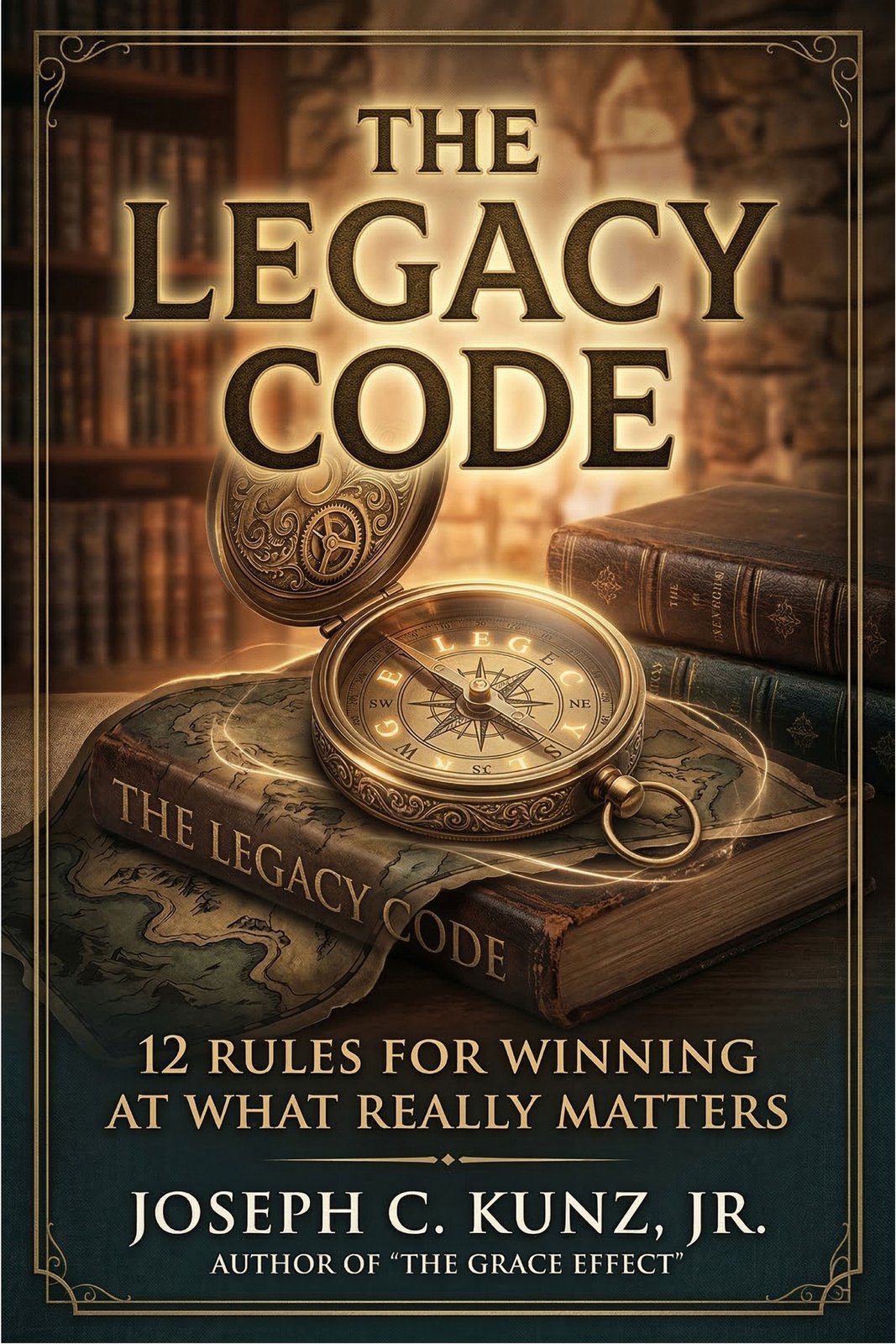
That’s why I wrote The Legacy Code: 12 Rules for Winning at What Really Matters.
Not as a motivational poster. As a blueprint.
Twelve rules that drag your life out of the abstract and slam it back into reality—faith, responsibility, work, marriage, money, courage, discipline, and the kind of legacy your grandchildren will feel when you’re gone.
Because “legacy” isn’t what people say at your funeral. Legacy is what your life trains other people to become.
Read the book here: The Legacy Code — 12 Rules for Winning at What Really Matters
And if you’re thinking, “I’ll get to it later,” remember this: later is where good intentions go to die.
Start now. Build something that holds.
Coming soon.