Fear Is the Green Light

Fear isn’t a warning to stop—it’s a signal to grow. And the moment you feel it is often the moment you’re standing at the edge of something that truly matters —Joseph C. Kunz, Jr.
Why You Should Run Toward What Scares You
By Joseph C. Kunz, Jr.
Synopsis
This essay reframes fear as a signal—not a stop sign. Joseph C. Kunz, Jr. argues that fear often shows up at the exact edge of growth: the conversation you’ve avoided, the risk that would expand your life, the truth you need to say, the work you need to ship. Drawing from his own experience — especially the hesitation that still hits before pressing “Publish” — Kunz makes a blunt case: you don’t need to be fearless to build something meaningful; you need to move while you’re afraid.
He draws a clean line between real warning and growth resistance, then gives readers a practical way to use fear instead of obeying it: name it, measure the real cost, and take the next right step anyway. The point isn’t drama or recklessness—it’s ownership. Because the people who build real lives don’t wait until they feel safe. They keep promises under pressure, and they treat fear like the green light that says: this matters—go.
Fear is the compass pointing toward the life you're meant to build. —JCK
I. Introduction: The Lie We’ve All Been Sold
Fear is bad. That’s the message we’ve been sold since we were kids.
Fear means danger. Weakness. Retreat. We’re told to avoid it, manage it, control it, run from it.
But here’s the truth no one wants to admit:
Fear isn’t a stop sign. It’s a green light.
Not always—some fear is a real warning. If you’re about to do something reckless, immoral, or pointlessly self-destructive, that’s not “growth.” That’s just stupidity with motivational music playing in the background.
But there’s another kind of fear—the kind that shows up when the risk is real and the outcome matters. The fear you feel before you speak the truth. Before you ship the work. Before you have the conversation. Before you step up and lead. That fear isn’t danger. It’s resistance. It’s the pressure that comes right before expansion.
Most people never move through it. They let fear shrink their world. They stop stretching. They stop risking. They stop building. They keep things safe, small, and predictable—and they call that “success.”
The people who build anything worth talking about treat fear differently. They treat it like a signpost that says: “You’re getting close. Keep going.”
II. Hitting “Publish” Is Still the Hardest Part
Let me get personal for a moment.
I’ve been writing and publishing for decades. I’ve launched businesses. I’ve taught classes. I’ve stood in front of rooms filled with professionals. You’d think I’d be accustomed to it by now.
But I’m not. Every time I hit “Publish” on an essay or book, I still hesitate.
Every time.
There’s this flash of doubt:
• What if this is the one people hate? • What if they misunderstand? • What if someone thinks I’ve lost my edge? • What if it’s just not good enough?
That fear has never gone away. And I’m not alone. I once read James Altucher say he won’t hit “Publish” unless he’s a little afraid of what people will think. Because that fear means he’s saying something real—something that matters.
He’s right. The more afraid I am to hit “Publish,” the more I know I need to hit it.
Because that fear usually means I’m not phoning it in. It means I’m not playing it safe. It means I’m pushing up against a line—maybe in myself, maybe in the reader.
And that’s why I do it anyway.
III. This Isn’t About Being Fearless
People love to throw around advice like, “Be fearless.”
But I don’t trust people who claim to be fearless. I trust people who feel it—and move anyway.
Fearlessness is a myth.
Growth doesn’t require the absence of fear. It requires the presence of courage.
And courage is uncomfortable.
It means writing something you know might not land perfectly. It means speaking the truth even when it makes you unpopular. It means launching something when there’s a chance it might fail.
If you wait until you’re fearless, you’ll wait forever.
IV. The Fear Test: A Rule That Rarely Fails Me
I’ve come to rely on a simple rule:
If it doesn’t scare me at least a little, it’s probably not worth doing.
This applies to:
• Writing something honest • Starting something new • Saying something unpopular but true • Admitting I was wrong • Reaching out when it’s easier to stay quiet
Fear is part of the deal.
It means you’re doing something that matters.
If you’re never afraid, you’re probably not growing.
You might be busy—but you’re not expanding.
V. What’s Your “Publish Button”?
For me, the fear shows up every time I hit “Publish.”
But for you, it might look different:
• Making the phone call • Asking for the raise • Quitting the job that’s killing you • Launching the side hustle you keep postponing • Having the conversation you’ve avoided for years
Everyone has a “Publish Button.”
The thing they know they should do…
…if only it didn’t scare them so much.
And if that’s you, here’s the uncomfortable possibility: the fear isn’t proof you shouldn’t do it. It may be proof you must.
VI. Why So Many People Stay Stuck
Let’s not sugarcoat it.
Most people stay stuck not because they don’t know what to do—but because they don’t want to feel fear.
They don’t want to risk being embarrassed, rejected, or judged.
So, they wait.
They wait for the fear to go away. They wait for the “right time.” They wait to feel “ready.”
And they never hit the button.
Eventually, fear doesn’t even need to show up anymore. The person has trained themselves to stay small.
Fear didn’t stop them. They promoted it to commander.
VII. Fear Isn’t a Curse — It’s a Catalyst
Here’s the shift:
Fear isn’t the enemy—it’s the signal.
It’s the surge of energy before you take the leap. It’s the weight in your gut before you say something that matters. It’s that internal friction that shows up when the outcome has meaning.
Fear is what tells you:
“This is real.” “This could change something.” “This is not a drill.”
You don’t need to kill the fear.
You need to walk through it—on purpose.
VIII. How to Use Fear Without Letting It Use You
Here’s how I’ve learned to deal with fear without letting it run my life:
1. Spot it. If you’re avoiding something, there’s probably fear underneath. Pay attention.
2. Call it out. Say it out loud. Write it down. Be honest: “I’m afraid people will think this is stupid.” “I’m afraid I’ll fail and look like a fool.” Naming the fear reduces its power.
3. Count the cost. What’s the real downside? And what’s the real cost of staying stuck for another year?
4. Do it anyway. This is the part no one can do for you. Don’t wait until the fear disappears. Move while it’s still there.
Courage isn’t a personality trait. It’s a habit. And like every habit, it compounds.
IX. Build a Legacy That Requires Courage
At the end of the day, no one’s going to praise you for how careful you were.
They’ll remember what you built. What you risked. What you stood for. How you showed up when it wasn’t easy.
You don’t need to be perfect. You need to be brave.
Because your legacy won’t be defined by your comfort. It will be defined by what you had the courage to do when it would’ve been easier to do nothing.
X. Conclusion: Press the Button
So, here’s my challenge to you:
Find your version of the “Publish Button.”
And press it.
Write the thing. Start the project. Make the call. Say the words. Take the risk.
You’ll feel the fear. That’s fine. Let it remind you that you’re alive—and moving.
And here’s what nobody tells you: the first time is the worst time. Then you do it again. And again. And one day you realize you didn’t become fearless—you became steady.
Fear is the green light. Press the button. Move forward. That’s how you grow. —JCK
Related Essays: For Those Who Refuse to Let Fear Call the Shots
If this essay lit a fire under you, these will push you even further toward bold, decisive action.
1. The First Rule of Wealth: Stop Making Excuses
Excuses are the fastest way to stay stuck—and the easiest habit to break once you see them for what they are.
Reader Comment: This essay snapped me awake—I realized how many excuses I was hiding behind without even knowing it.
2. Wealth and Money Mastery: The 10X Principle of Small Wins
Big results don’t come from giant leaps—they’re built from stacking small, consistent wins that multiply over time.
Related Book: When Fear Shows Up, Grace Steps In
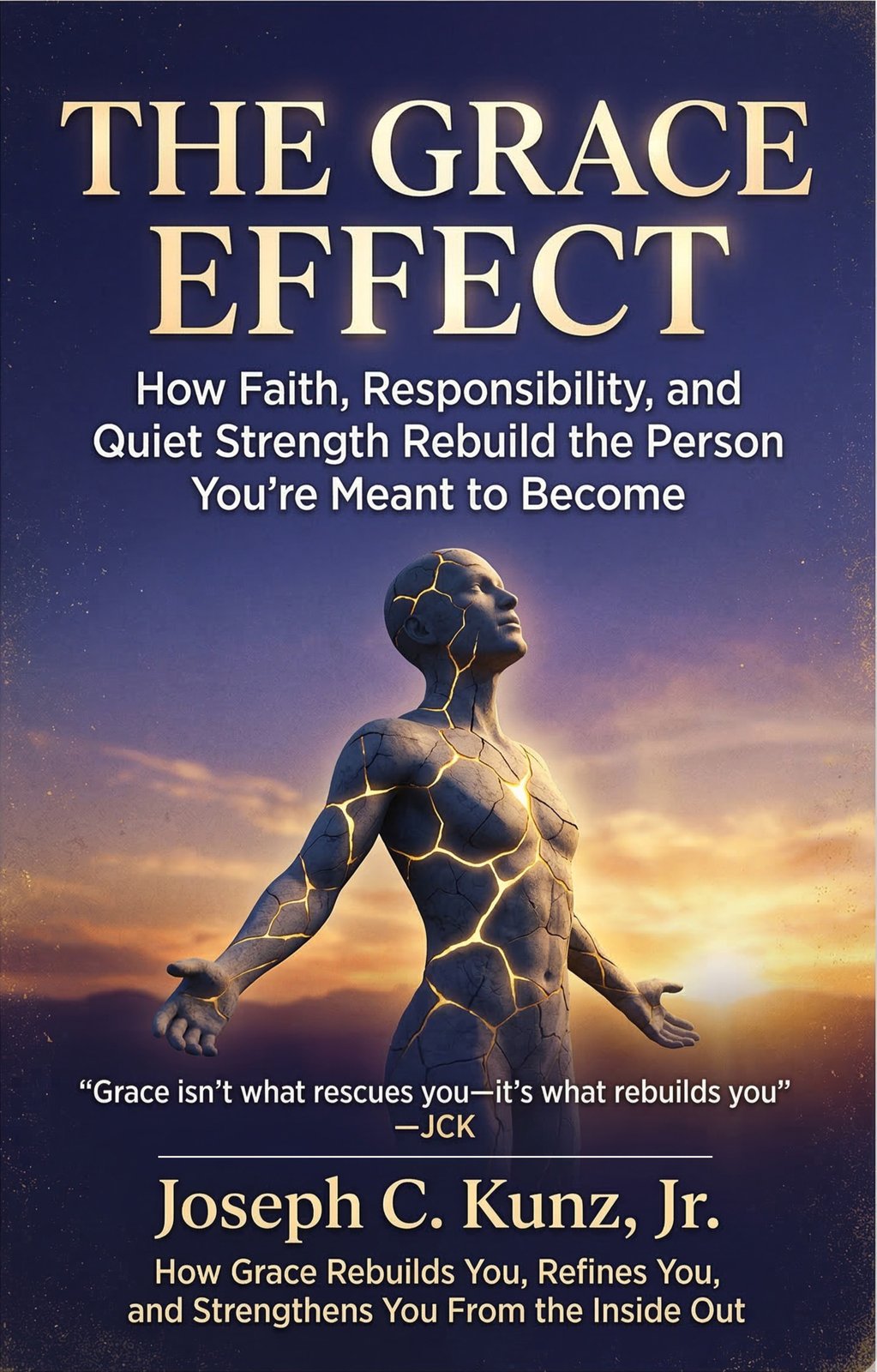
The Grace Effect
I wrote The Grace Effect because I know what it’s like to stare fear in the face—business risks, health scares, personal storms—and wonder if I had what it took to keep going.
Grit can get you started, but it’s grace that keeps you standing when fear is loud and the way forward feels impossible.
This isn’t theory for me. Every page was hammered out of my own battles, my own doubts, my own hard nights when quitting felt easier than fighting.
The Grace Effect is the book I wish someone had handed me when fear tried to own me. That’s why I had to write it—for you, and for anyone who’s ready to stop letting fear dictate their future.
Get your copy of The Grace Effect and learn how to face fear with something stronger than courage—grace.
It’s a guide to living with quiet courage, resilience, and purpose—even when fear shows up.
New release info soon.